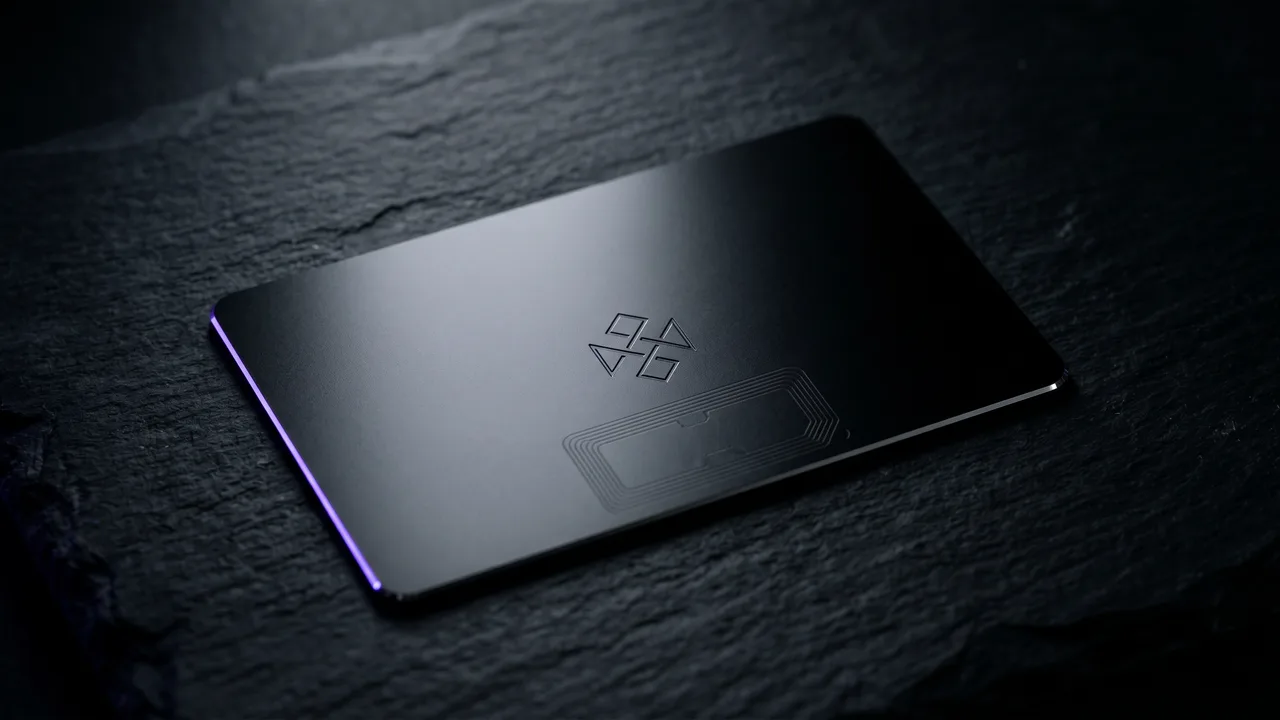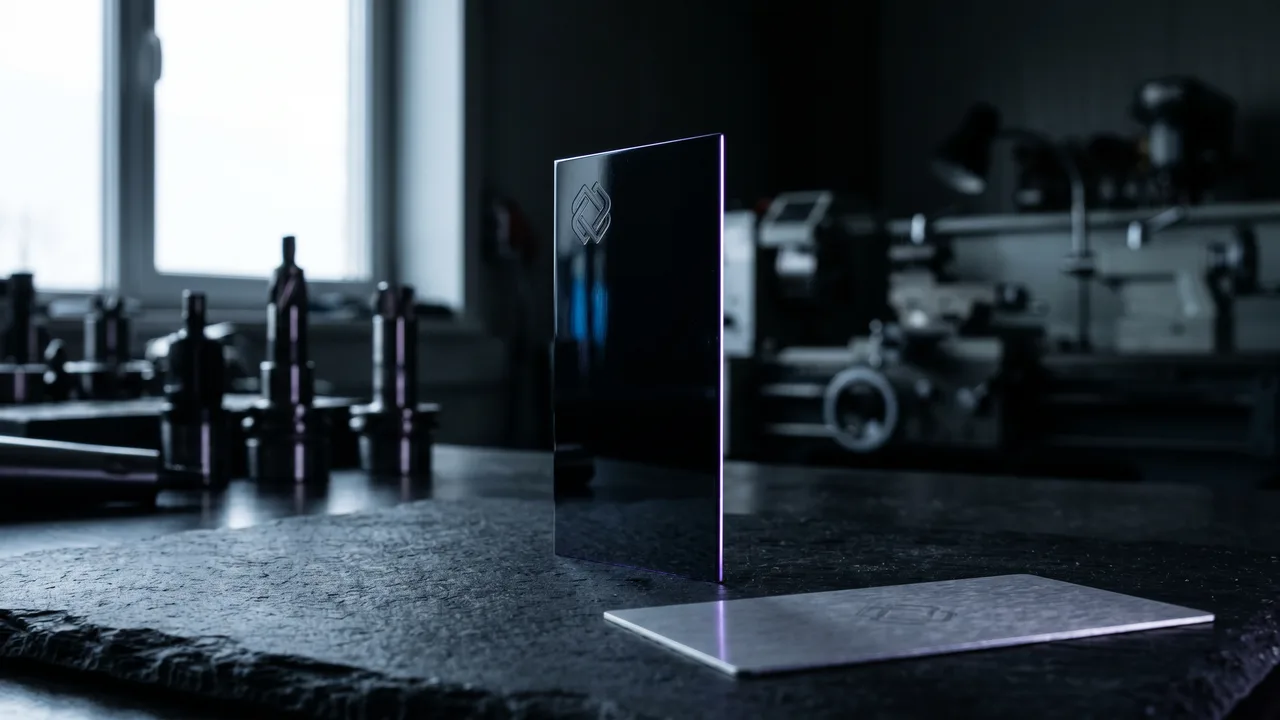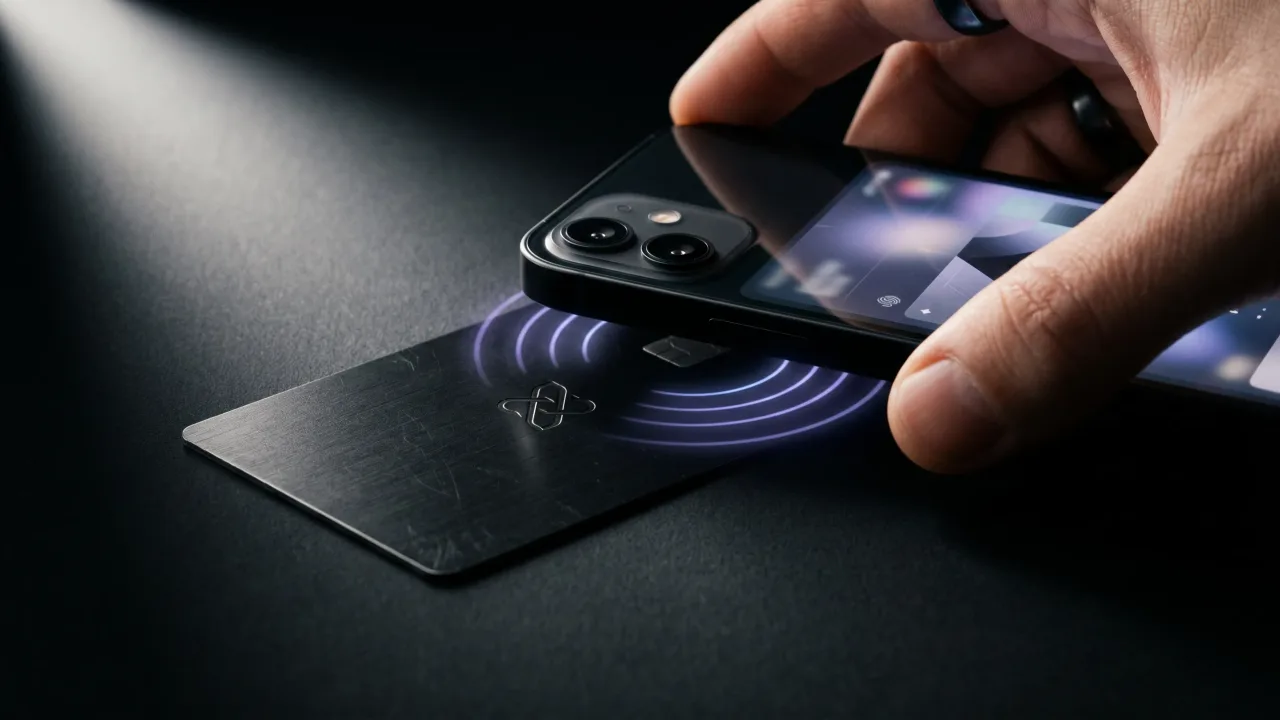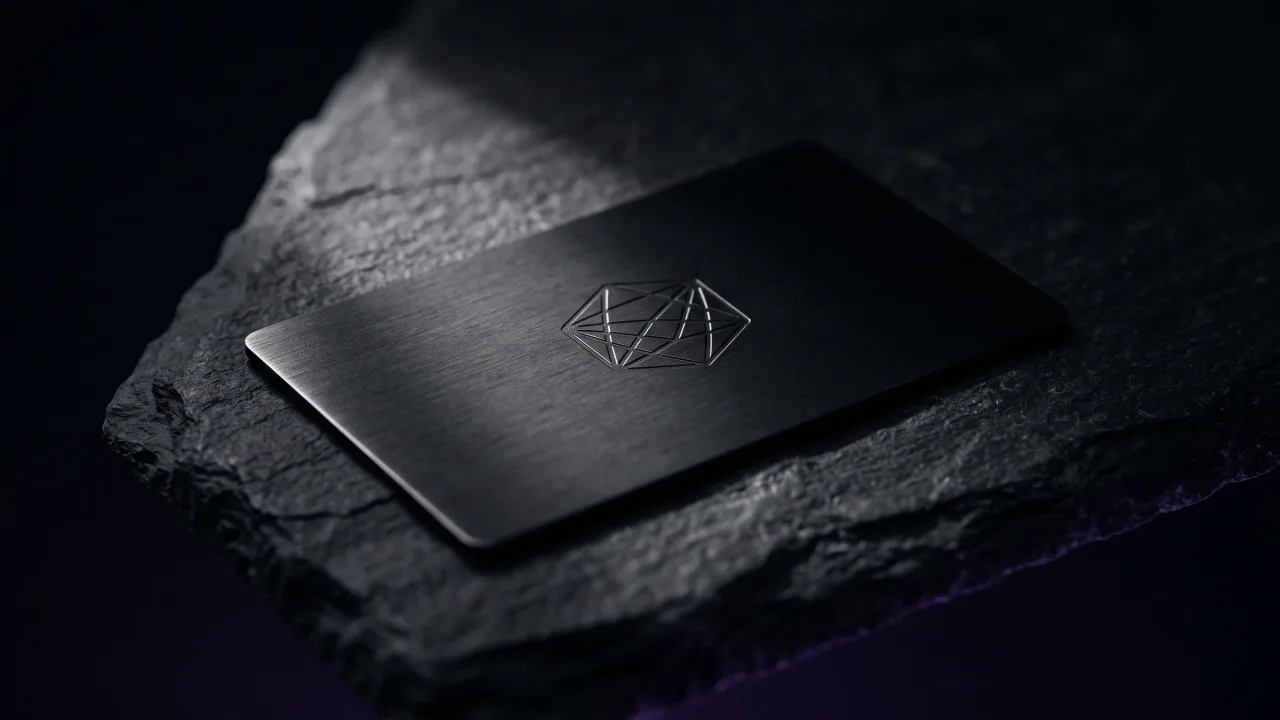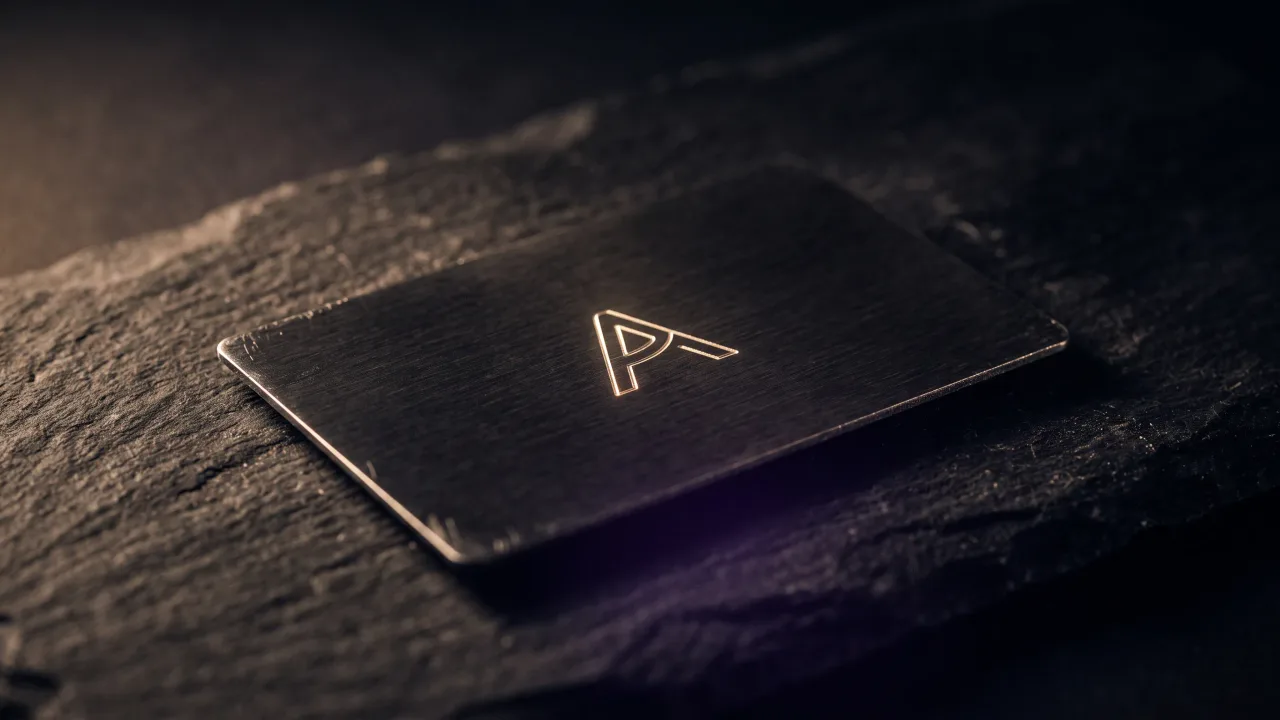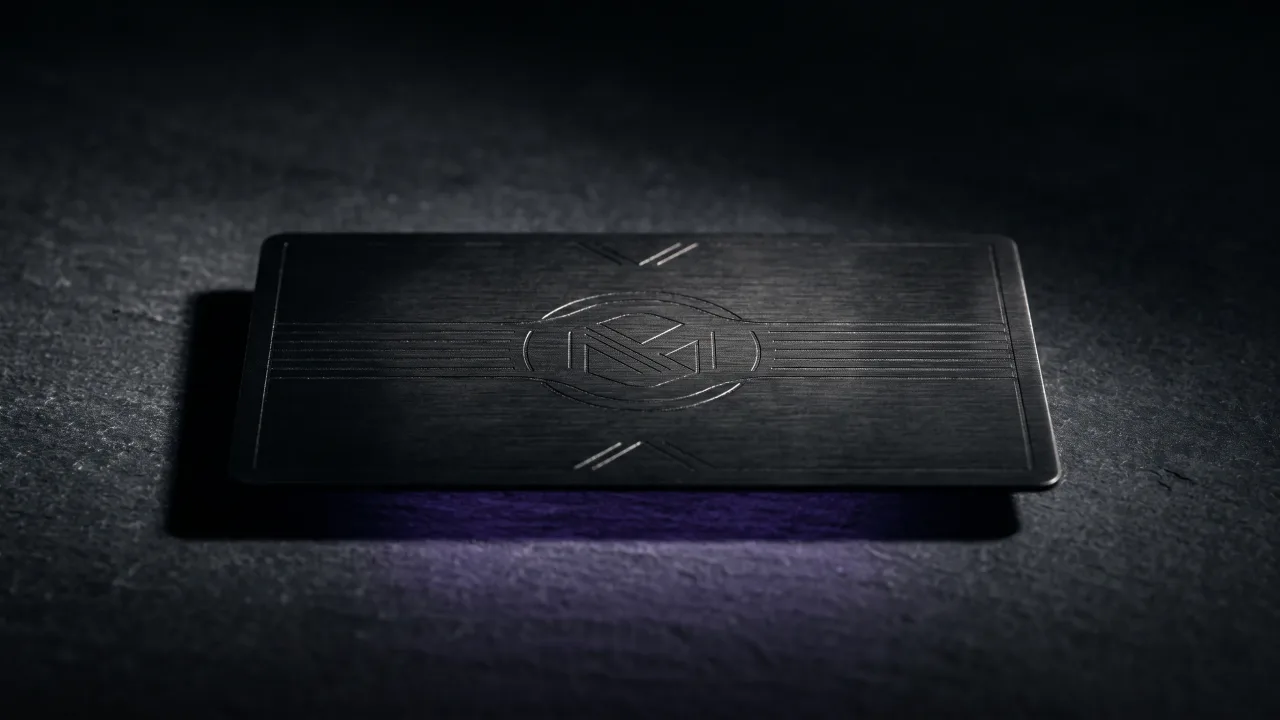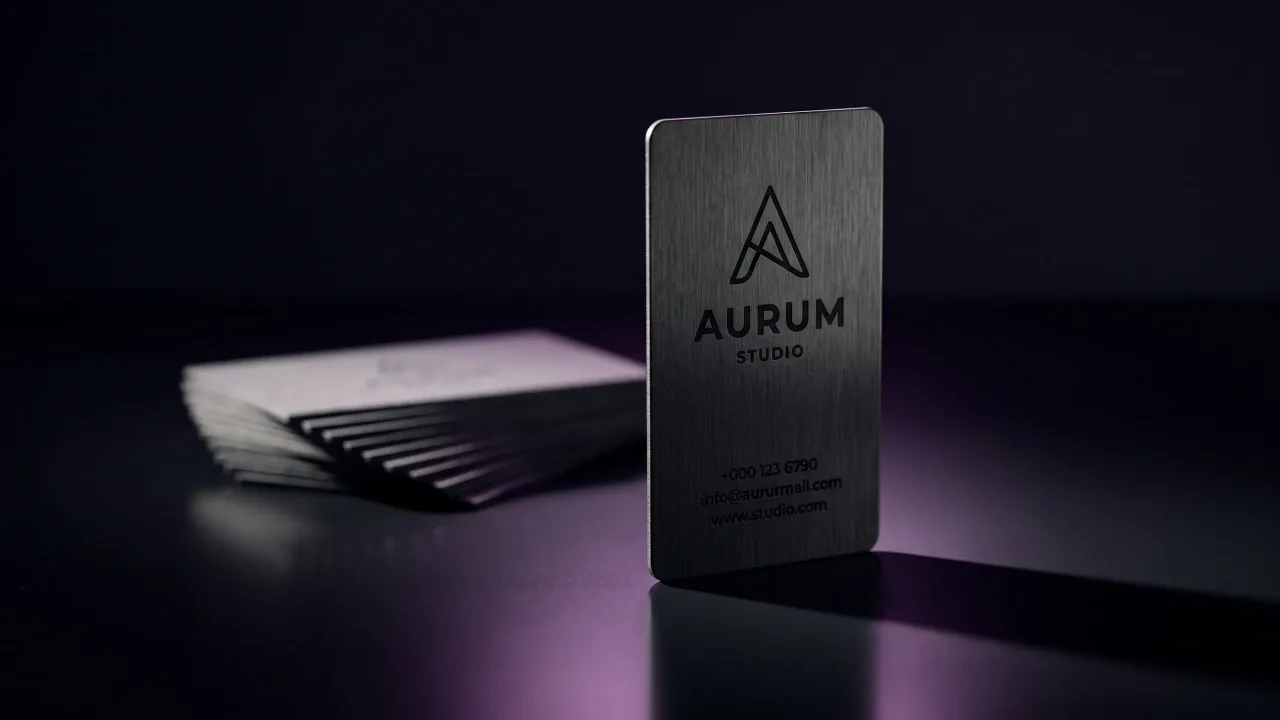
Most companies that sell metal NFC business cards will never show you the bench they are made on. The card arrives in a nice box and the process stays a trade secret. We are going to do the opposite and explain exactly how metal NFC business cards are made, step by step, from a flat sheet of steel to the second the card taps a phone.
None of this is proprietary magic. It is a sequence of unglamorous, repeatable steps: cut, route, seat, seal, encode, engrave, finish, test. The reason the finished object feels expensive is that every one of those steps is held to a tolerance paper printing never has to meet. Here is the whole sequence, with nothing skipped.
It starts with a sheet of steel, not a print queue
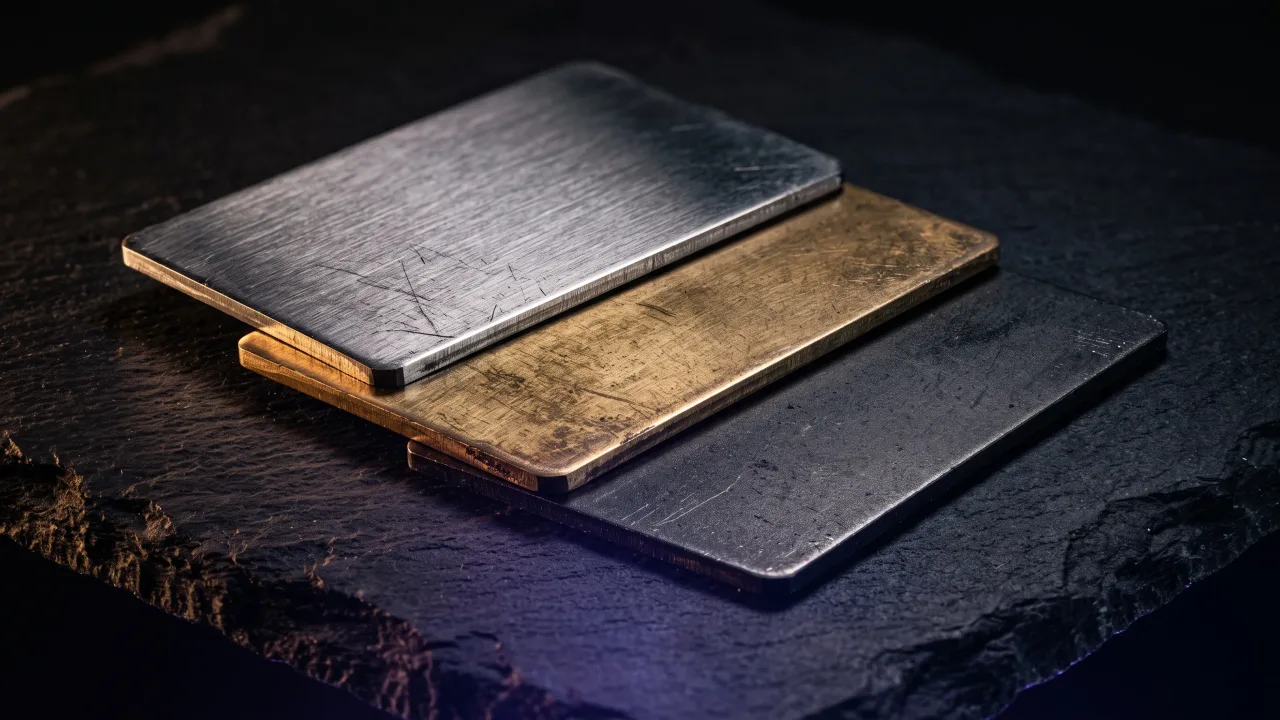
A paper card begins life in a print spooler. A Discard card begins as a sheet of 304-grade stainless steel, the same alloy family used for surgical tools and kitchen knives. We pick it for one reason: it does not corrode, discolour, or soften with handling. The card you carry in year three looks like the card you carried on day one.
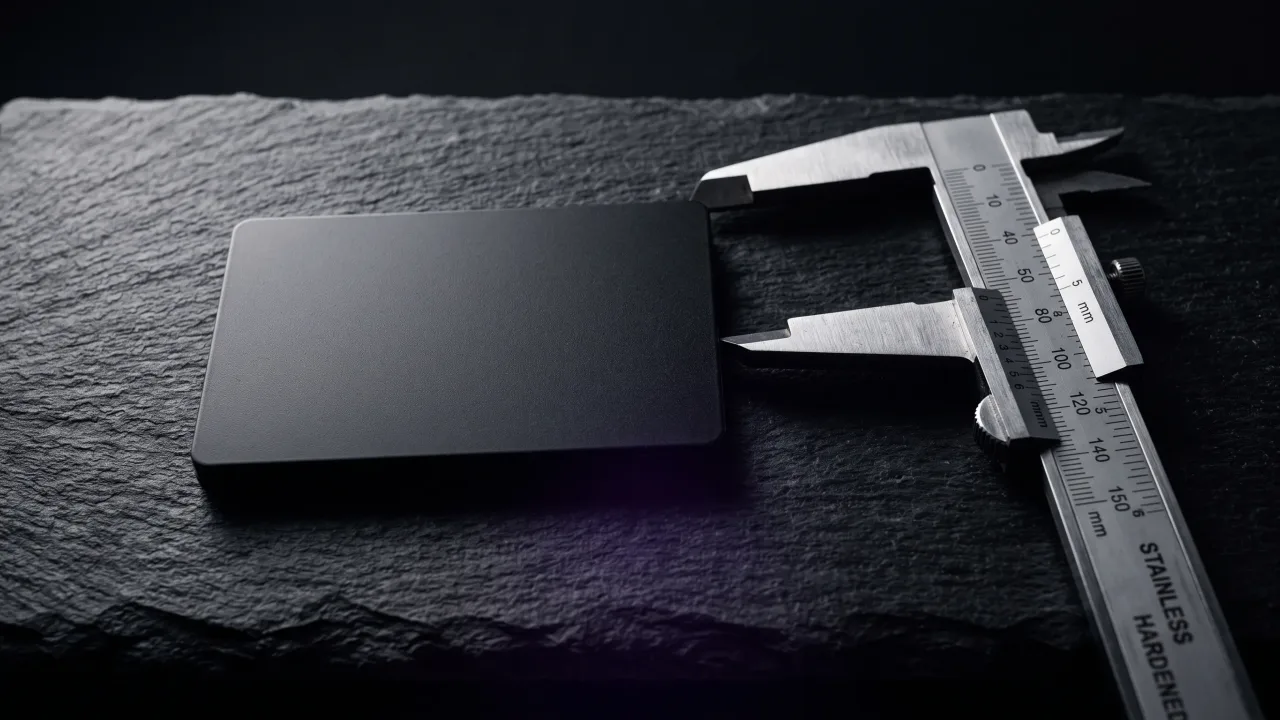
The stock is 0.5mm thick. That number is deliberate. It is roughly two credit cards stacked, heavy enough to register as metal the moment someone takes it, thin enough to sit in a wallet without bowing the leather. Thicker stock feels like a novelty coin. Thinner stock flexes like a shim. Half a millimetre is the line where a card reads as an instrument rather than a gimmick.
Cutting and deburring the blank
The sheet is cut to 85mm by 54mm, the ISO/IEC 7810 ID-1 format every wallet and cardholder is built around. The corners are radiused so the card does not bite a pocket or a thumb. Cutting metal leaves a microscopic burr along every edge, and a burr is the difference between a card that glides out of a wallet and one that snags.
So every blank is deburred and the edges are dressed by hand until they pass a simple test: drag the edge across the back of your wrist and feel nothing. This step adds time and shows up nowhere in the marketing photos. It is also the first place a cheap metal card gives itself away.
The problem nobody mentions: metal blocks the NFC signal
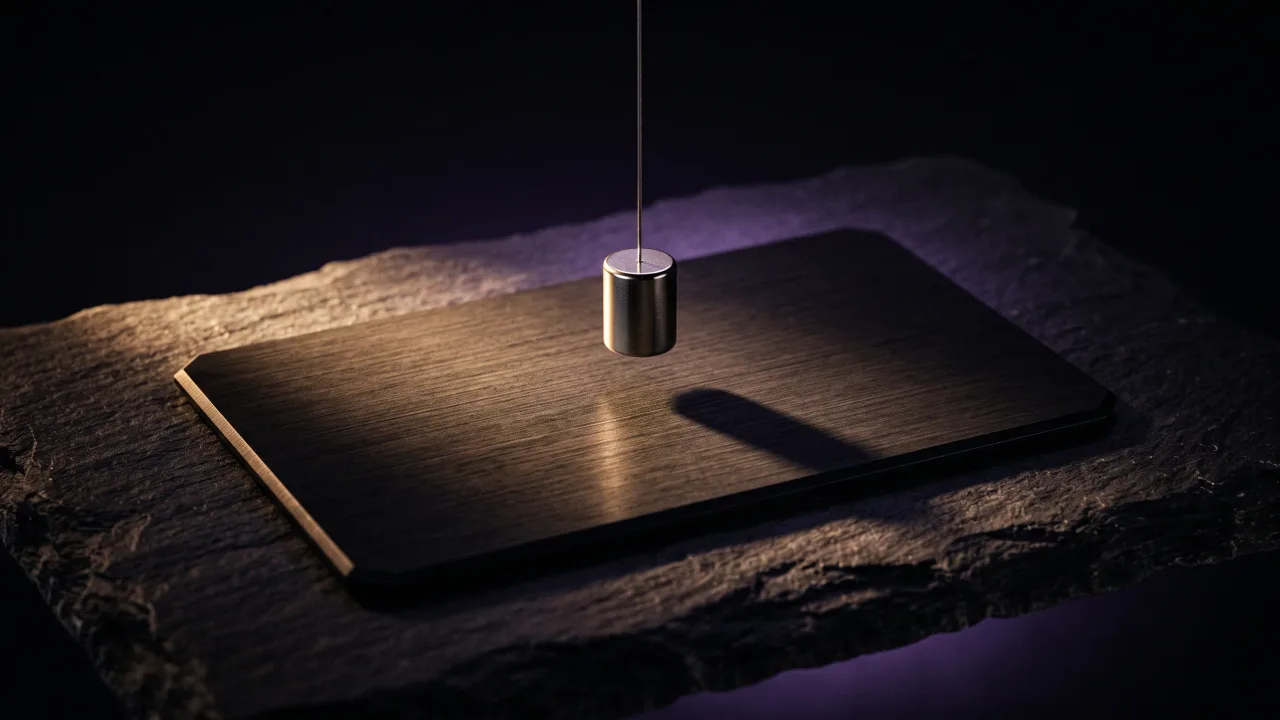
Here is the part of how metal NFC business cards are made that most sellers gloss over. Metal is conductive. An NFC chip works by coupling its antenna to the magnetic field a phone radiates at 13.56MHz, and a solid sheet of steel sitting behind that antenna absorbs and detunes the field. Near-field communication simply does not happen through bare metal. Glue a standard sticker chip to a steel card and you get a beautiful object that does nothing when tapped.
This is why a metal NFC card costs more to make than a metal card with no chip, and far more than a plastic one. The chip cannot sit on the metal. It has to sit in it, isolated from the steel, with the antenna given room to breathe. Solving that is the actual engineering of the product.
Routing a cavity and seating the chip
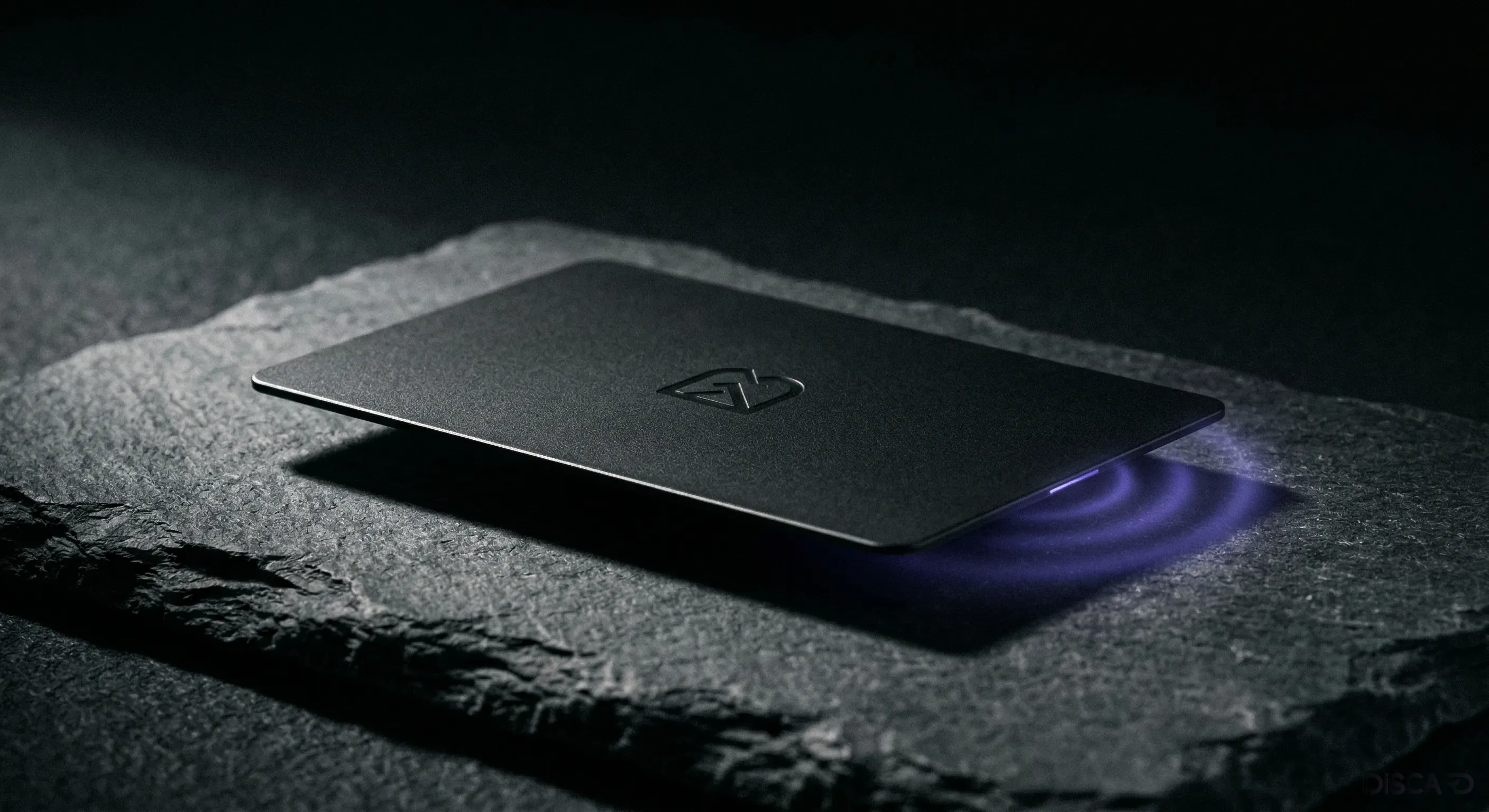
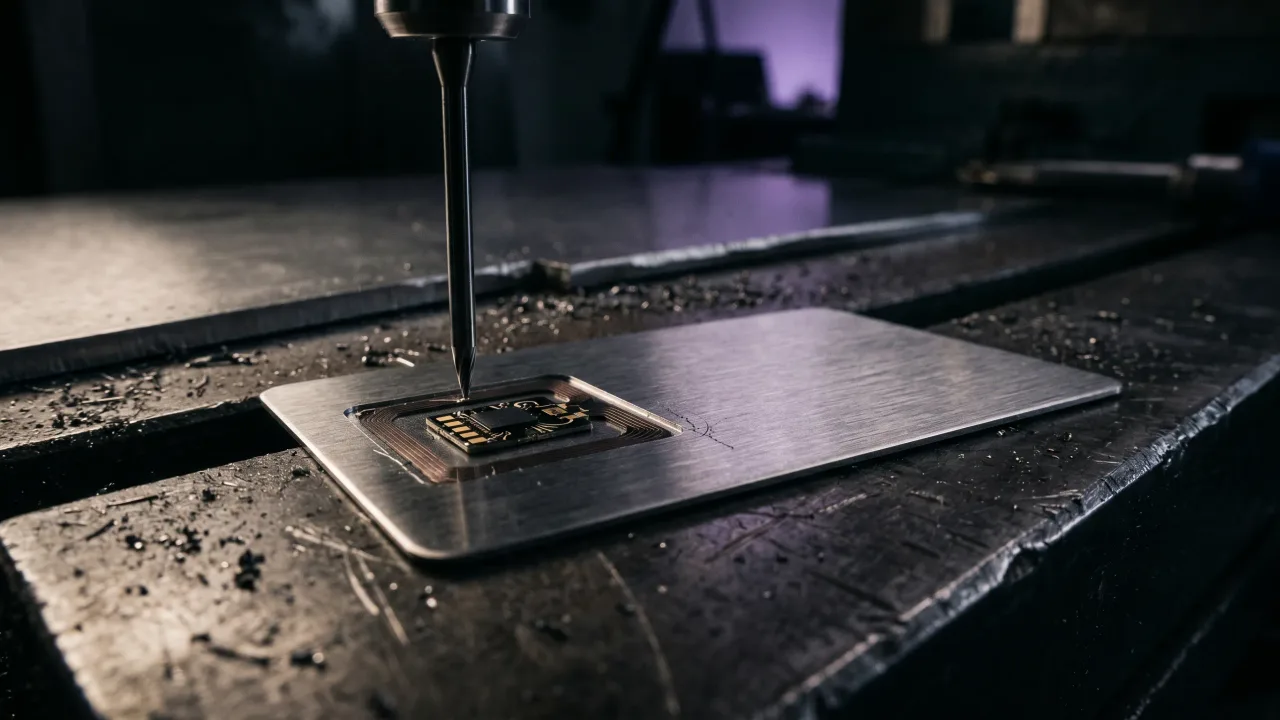
A shallow pocket is machined into the back of the card. Into that cavity goes an NFC inlay built on an NTAG-class chip with a ferrite layer behind the antenna. The ferrite is the trick: it shields the antenna from the steel and lets the magnetic field form the way it would in open air. The inlay sits in the pocket, not on the surface, so the front face stays unbroken.
The cavity is then filled flush and sealed so moisture, sweat, and wallet grit never reach the electronics. Done correctly, you cannot feel where the chip lives. The back is one continuous surface, and the read zone is a marked area you tap rather than a visible lump. A card where you can feel the chip is a card where the cavity work was rushed.
Encoding and locking the chip
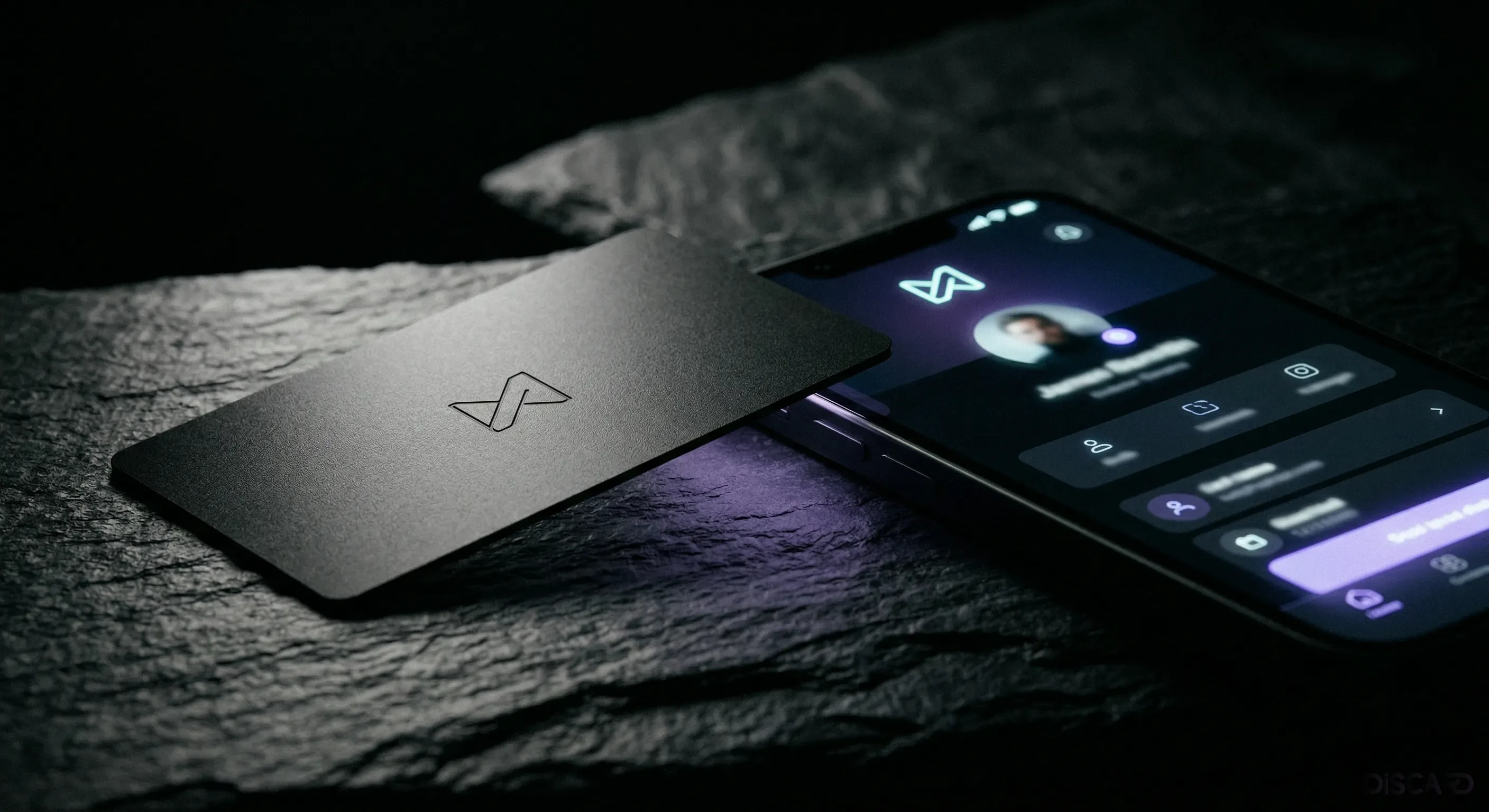
A chip with no data written to it is an inert tag. Each card is encoded with a single URL that points at your Discard digital profile. Tap the card and the phone opens that link in the browser. No app on either side, because NFC tag reading is native to every iPhone since the iPhone 7 and every modern Android.
After encoding, the tag is write-locked. The URL cannot be overwritten by a stranger waving a phone-app at your card on a train. The destination it points to is hosted, so you change the profile content from your dashboard whenever a job, a link, or a photo changes. The chip is permanent. What it opens is editable for life. That split is the entire reason a metal card does not need reprinting the way a paper one does.
Engraving, not printing
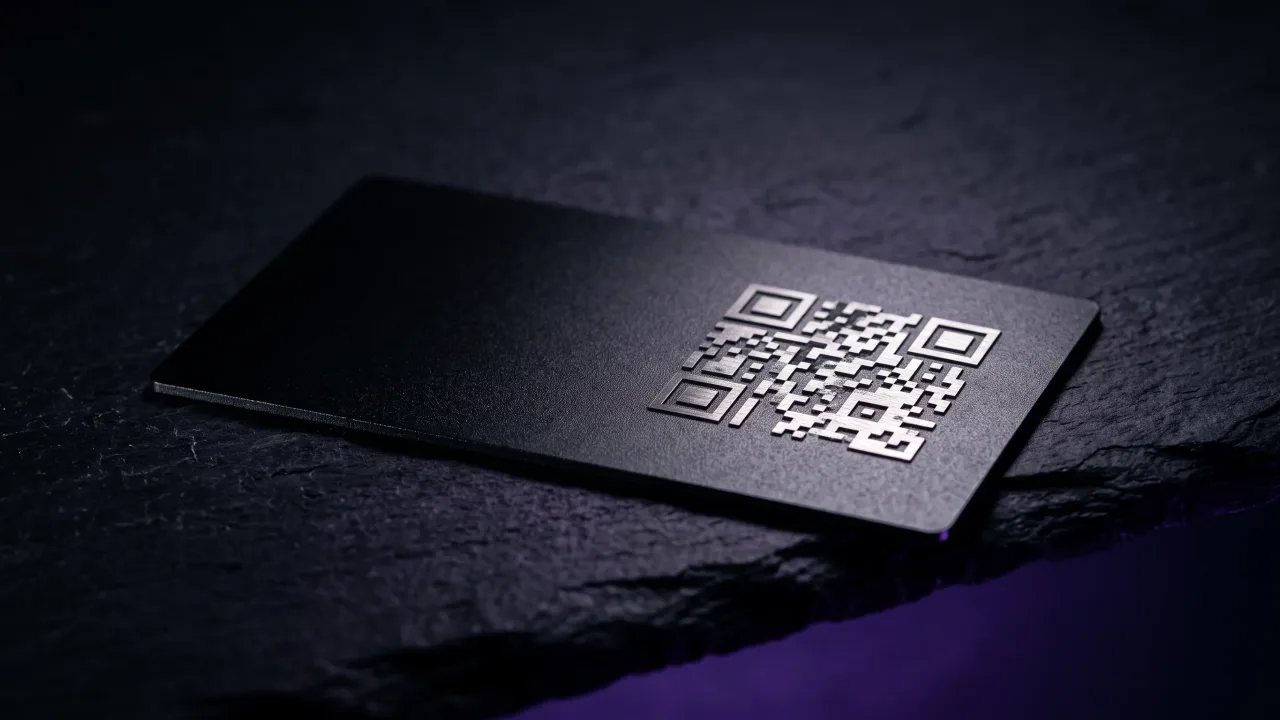
Paper cards are printed: ink sits on top of the surface and wears off from the top down. Discard cards are laser engraved, which removes material to cut the design into the steel itself. There is no layer to scratch off because the mark is the absence of metal, not an addition to it.
A laser tracks the vector outline of your name, logo, and layout and ablates the surface in microns. The result holds detail down to fine type and thin rules, and it survives a wallet for years because there is nothing sitting proud to abrade. This is the same logic watchmakers use for case-back marks: etched outlives printed by a wide margin. You can pick the layout and see the engraving previewed live in the card configurator before anything is cut.
Finishing the surface
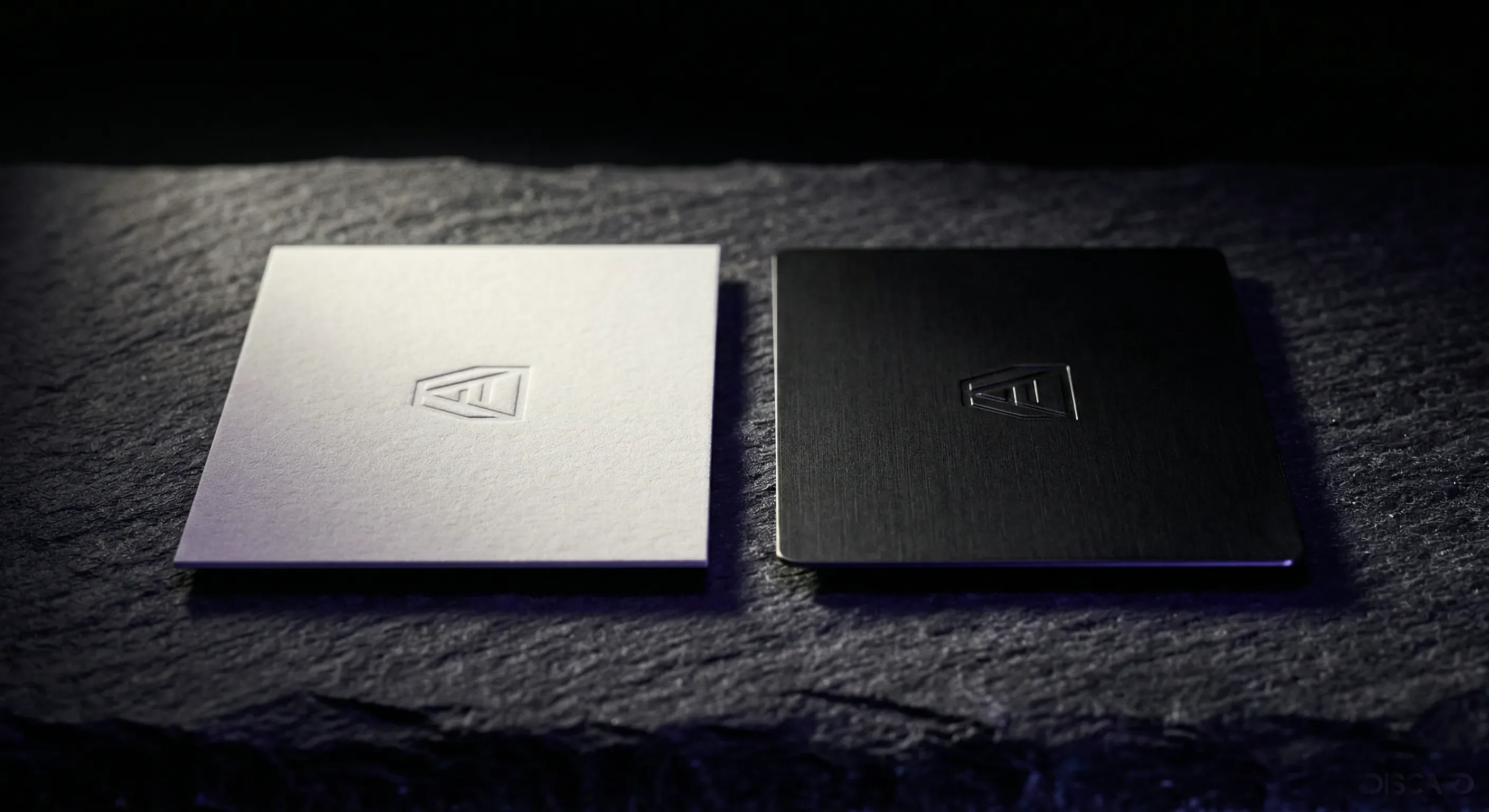
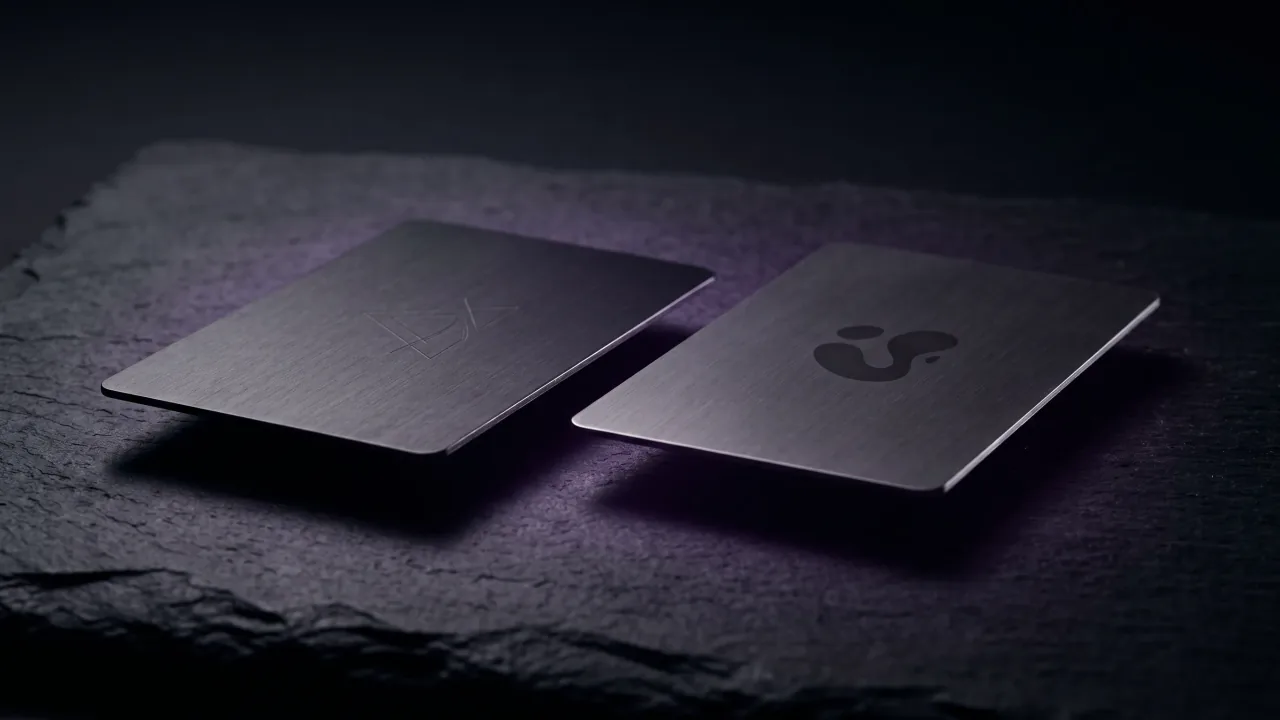
The blank now gets its final character. A brushed finish lays fine parallel grain across the face and reads quiet and technical. A matte black finish is electroplated onto the steel for a flat, light-absorbing surface that makes the engraving read as bright lines. A mirror finish is polished until it behaves like a small reflective panel. Each finish changes how the engraving catches light, so the choice is part of the design, not an afterthought.
Colour, where chosen, is electroplated rather than painted, so it bonds to the metal instead of sitting on it as a coat that can chip. The available finishes and how each one carries an engraved logo are laid out on the configurator, and the trade-offs are worth a minute before you commit. A mirror card photographs beautifully and fingerprints instantly. A matte card hides handling and reads sharper in a dim restaurant.
Quality control and the tap test
Every card is tapped before it ships. Not a sample from the batch. Every card, on both an iPhone and an Android, to confirm the encoded profile opens cleanly and fast. A metal NFC card that looks perfect and reads intermittently is worse than a paper card, because the failure happens in front of the person you most wanted to impress.
Alongside the read test, each card gets a visual pass under raking light: engraving depth even, edges clean, finish unmarked, no cavity ghost on the back. Cards that miss on any axis do not get reworked into the order. They are pulled. The yield cost of that policy is real, and it is the cost of the card behaving the way the object promises it will.
How long the whole thing takes
Design and proof come first. You build the layout in the configurator, approve a proof, and only then does any steel get cut. Production of the physical card runs in days, not weeks, because the steps above are a tuned line rather than a bespoke art project for each order.
Standard EU shipping from Bulgaria is three to five working days after approval, with no customs forms or import duty for buyers inside the EU. Teams ordering in volume run the same pipeline in one batch through the team workflow, so a ten-person studio gets a consistent set rather than ten slightly different cards.
Why we tell you all this
Transparency is not a marketing flourish here. The process is the product. A metal NFC card is not expensive because metal is exotic; it is steel. It is considered because the cavity work, the ferrite isolation, the encoding lock, the engraving, and the per-card tap test each take a step that printing a paper card never requires.
If you care about how the things you hand people are made, this is the answer in full. If you want the short version, compare the lifespan and feel directly in our paper vs metal breakdown. Either way, nothing above is a secret. It is just work that most of the category would rather you did not see.
The verdict
A metal NFC business card is made the way a tool is made, not the way a flyer is printed. Steel is cut and deburred, a cavity is routed so the chip can work through metal at all, an NTAG-class inlay is seated and sealed, the chip is encoded and locked to a profile you edit for life, the design is engraved rather than printed, the surface is finished, and every single card is tapped on two phones before it leaves. The price reflects that sequence, not the raw material. If you want an object that still works and still looks right in three years, this is what that costs to build. The rest is finish preference.
Build your layout and watch the engraving render live before a single sheet of steel is cut.
Open the ConfiguratorFrequently asked questions
Does metal block the NFC signal?
Yes, bare metal blocks NFC by absorbing and detuning the phone's 13.56MHz field. Metal NFC cards solve this by seating the chip in a routed cavity with a ferrite layer that isolates the antenna from the steel. A chip simply glued to a metal surface will not read.
Can the NFC chip be reprogrammed by someone else?
No. After the chip is encoded with your profile URL it is write-locked, so a stranger with a phone app cannot overwrite where it points. You still change the profile content itself any time from your dashboard, because the chip points at a hosted page rather than storing the data on the card.
How thick is a metal NFC business card?
A Discard card is 0.5mm stainless steel, roughly the thickness of two credit cards stacked. It is heavy enough to read as metal in the hand but thin enough to carry in a normal wallet without bowing the leather.
Will a metal card set off airport security?
No. The card is a small, thin piece of stainless steel with a passive chip and no battery or power source. It behaves like any metal object in a wallet and does not trigger security gates or interfere with scanners.
Is engraving more durable than printing?
Yes. Engraving cuts the design into the steel by removing material, so there is no ink layer sitting on the surface to scratch or rub off. A printed card wears from the top down; an engraved card keeps its detail for years of wallet carry.
How long does it take to make and receive a metal NFC card?
You approve a design proof first, then physical production runs in days rather than weeks. Standard EU shipping from Bulgaria is three to five working days after approval, with no customs forms or import duty for buyers inside the EU.