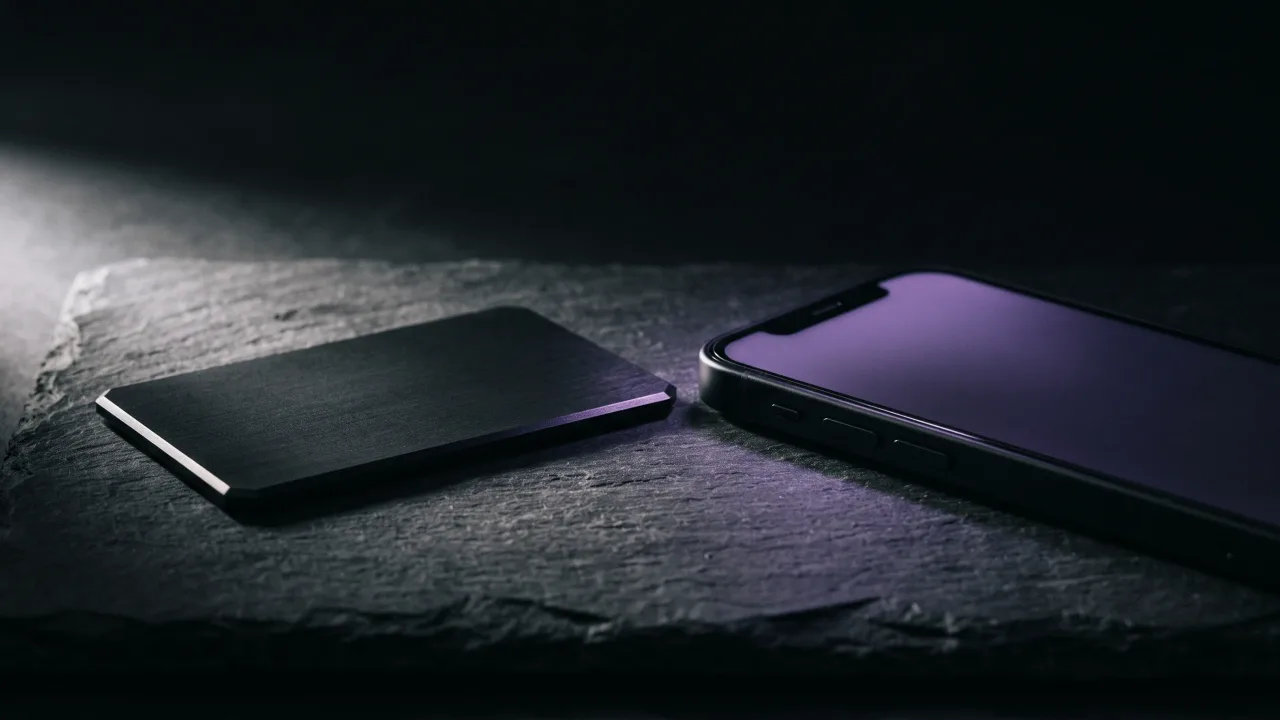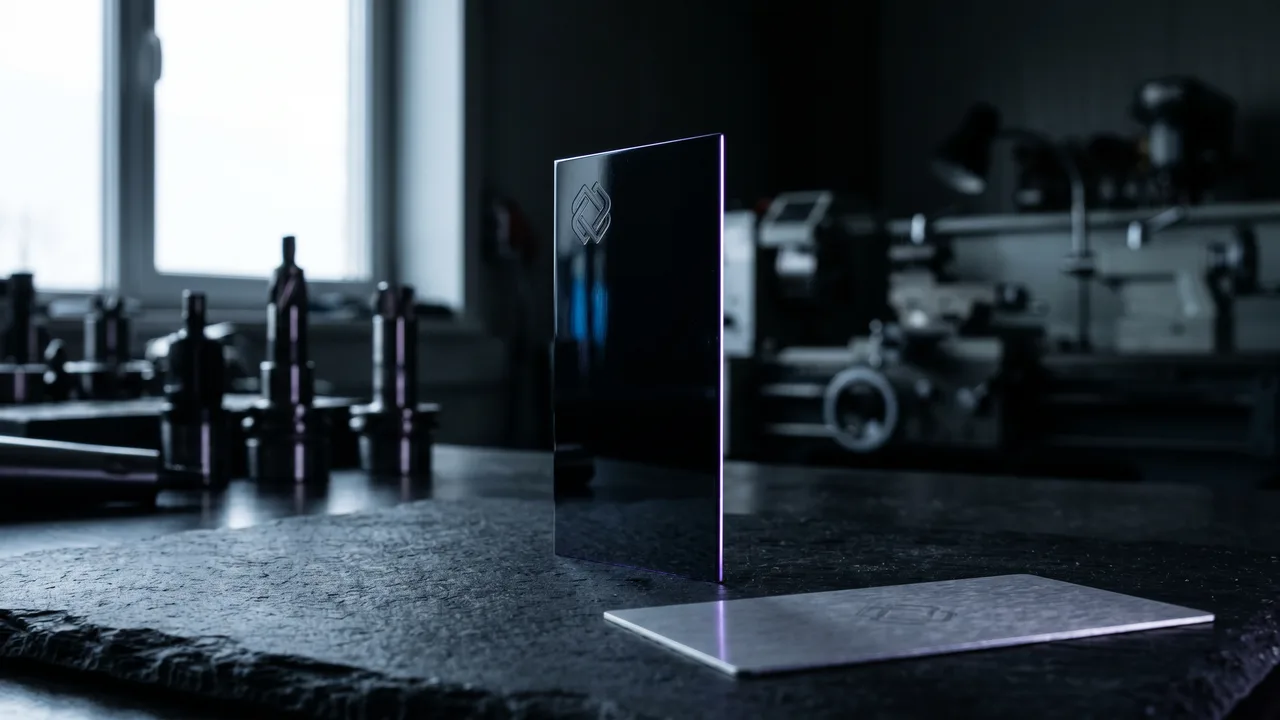
A made in Europe NFC business card matters for three concrete reasons: your profile data stays under EU privacy law, the card reaches you in days instead of weeks, and the metal is held to European manufacturing standards. The label is not a marketing flourish. It quietly decides where your information lives and who is allowed to touch it.
Most smart cards on the market are designed by a software company and assembled far from the person who buys them. The blank metal comes from one supplier, the chip from another, the data sits on servers you will never locate, and the finished card crosses a customs border to reach your desk. Where a card is made answers a question most buyers skip until something breaks: who is responsible for the object in your hand and the data behind the tap.
What made in Europe actually means for an NFC business card
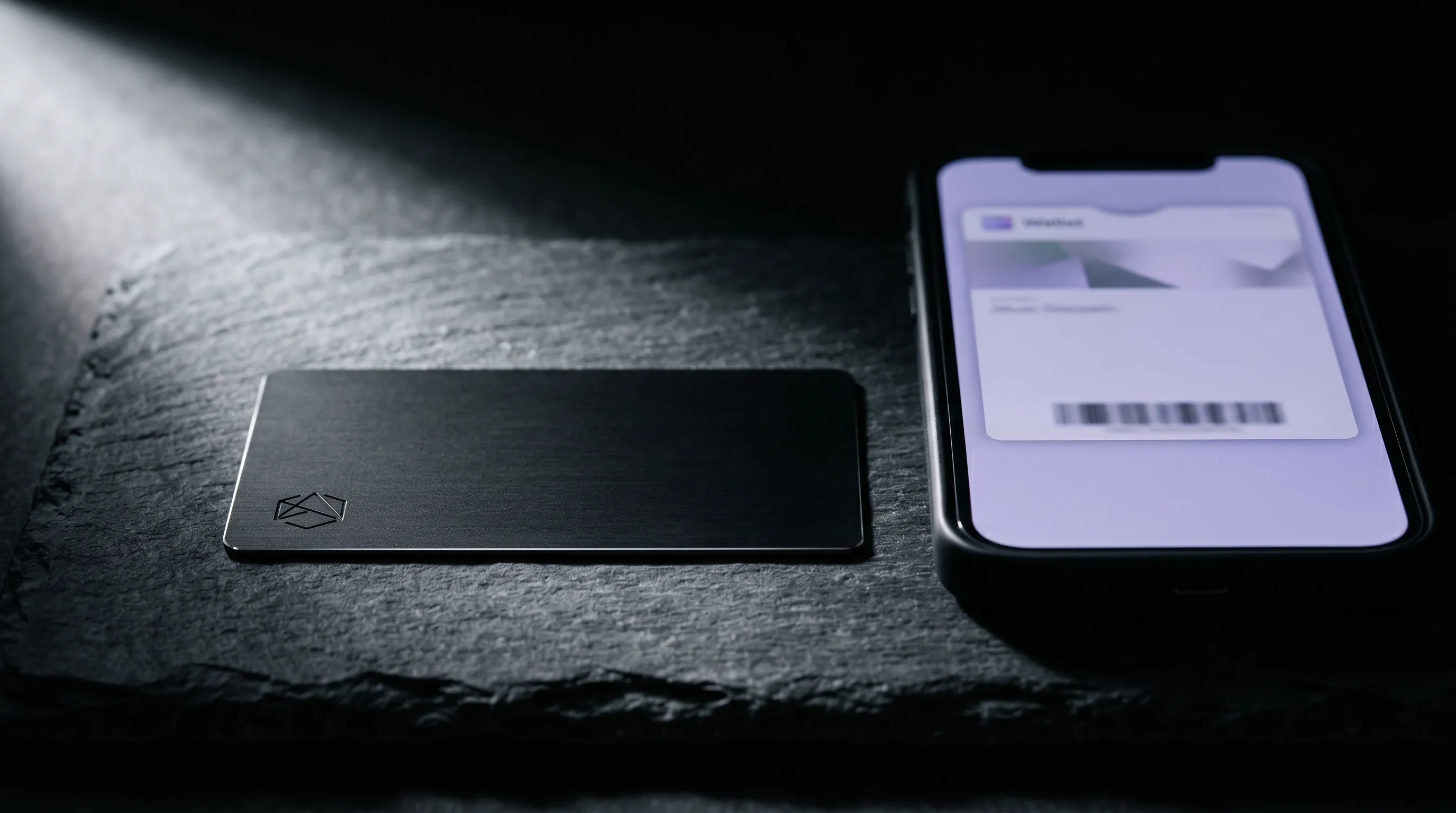
An NFC business card is really four things stacked together: a piece of metal, an embedded chip, an engraved design, and a digital profile that loads when someone taps it. Near-field communication is the short-range standard behind the tap, the same one your phone uses to pay. Each of those four layers can be made in a different country, which is why made in Europe means little unless it covers the whole chain rather than one convenient step.
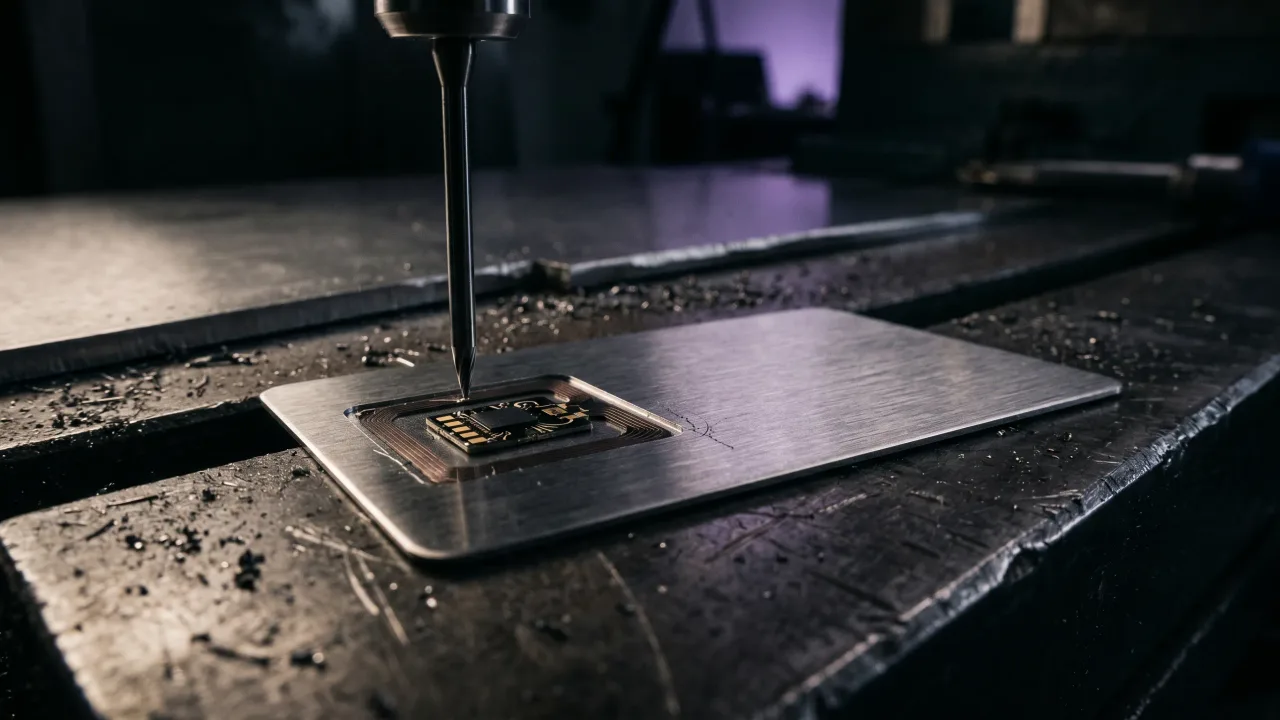
A genuinely European card is designed, manufactured, engraved, and hosted inside the EU. Discard cards are made in Europe and the profiles they open are hosted on EU servers, so the object and the data behind it sit under the same set of rules. You can see how the cards are physically produced in how metal NFC business cards are made.
Where your data lives when you tap a European-made card
Every tap opens a digital profile, and that profile has to be hosted somewhere. When the host sits inside the EU, your data falls under the General Data Protection Regulation, which gives you the right to see, correct, and delete what is stored and limits how it can be shared. The European Commission's data protection rules apply to the company holding the data, not to where you happen to live.
With a card hosted outside the EU, the contact details people leave with you and the analytics behind your profile can sit under weaker law, or under no clear law at all. That is a real consideration when your card collects other people's information, not only your own. Under EU law you can have that data deleted on request and limit what gets collected in the first place, which a host outside the bloc may not honour. A card whose digital profile is hosted in the EU keeps that whole exchange inside one accountable system.
Why an EU-made card reaches you faster
Origin decides logistics. A card manufactured in Europe ships to an EU address in a few days and never clears a customs border on the way. An imported card travels for weeks, can be held at customs, and sometimes arrives with an import VAT bill the seller never mentioned.
Speed matters more than it sounds for an object you order once and hand out for years. The same proximity helps after the sale: returns, reprints, and warranty claims go to a company in your timezone and under your consumer law, not to a support address eight hours ahead. We made the local-shipping case for the Bulgarian market in premium metal business cards in Sofia and Plovdiv.
Made in Europe vs imported NFC cards
The differences line up cleanly once you put them side by side. The table below compares a card made and hosted in Europe against a typical imported one.
| Factor | Made in Europe | Imported / assembled abroad |
|---|---|---|
| Where your data is hosted | EU servers, under GDPR | Often outside the EU, weaker or unclear law |
| Delivery to an EU address | A few days, no customs | Weeks, possible customs hold and import VAT |
| Warranty and support | Local entity, your consumer law | Distant support, harder claims |
| Manufacturing oversight | EU material and chemical standards | Varies by supplier, hard to verify |
| Who is accountable | A named EU company | A reseller between you and the factory |
None of this shows up in a product photo. A cheap imported card and a European one can look identical in the listing and feel completely different the first time you need support or a privacy answer.
Quality, materials, and the standards behind the metal
European manufacturing carries rules that travel with the product. Steel and coatings sold in the EU fall under chemical-safety regulation, so the metal against your fingers and the finish on the engraving are made to a known standard rather than a best guess. The NFC chip itself follows the same global standard everywhere, so the real difference is rarely the electronics; it is the metal, the lamination, and the engraving around it. That is part of why a European card can hold a crisp engraved line where a cheaper import smears.
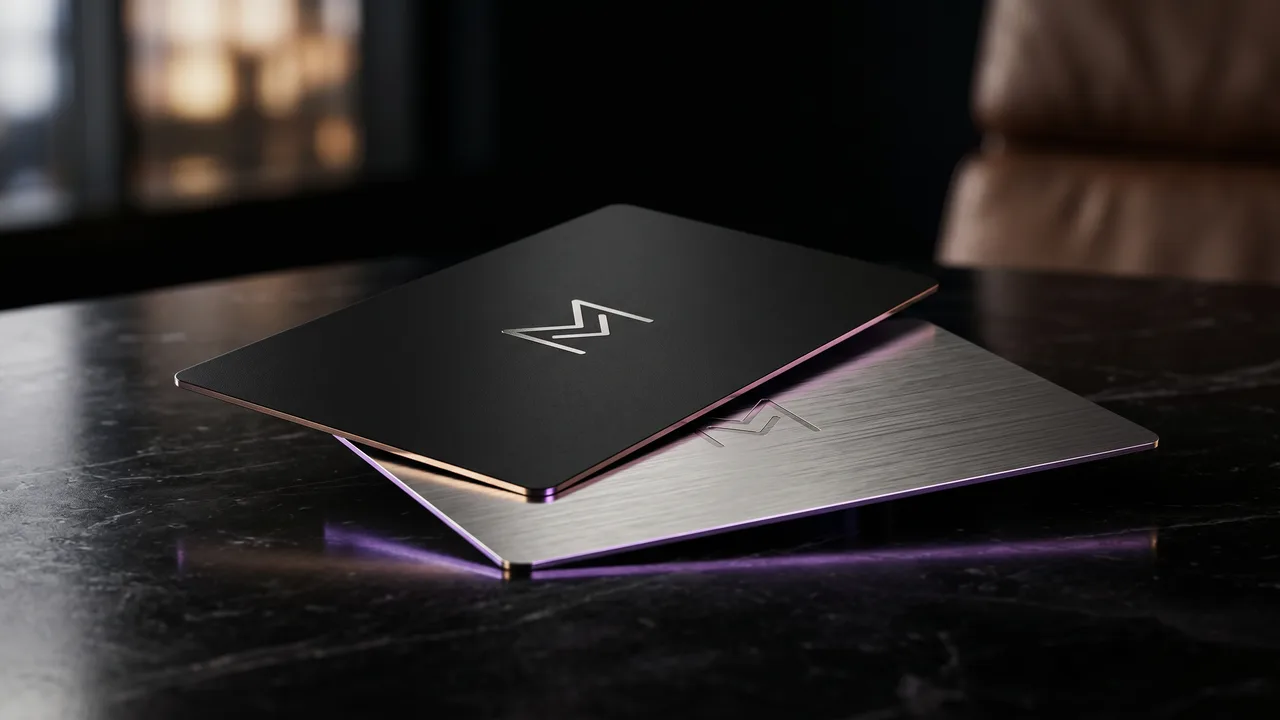
The finish is where the made-in-Europe difference becomes visible. You can compare how each surface takes an engraving on the materials page. A brushed or matte European card is built to look the same in three years as it does on day one, because the substrate and the laser work are controlled rather than handed to the lowest bid.
What to check before you buy a European NFC card
The label is easy to print and hard to verify, so a few questions separate a real European card from a relabelled import. Ask where the data is hosted, not just where the company is registered. "Designed in Europe" or "EU stock" usually means the card was made elsewhere and warehoused locally before it shipped.
Then check who you would actually contact for a warranty claim or a data request. A genuine European maker names an EU company and answers both. If the only address is a reseller and the data host is vague, the made-in-Europe line is doing marketing work the supply chain cannot back up.
Does made in Europe cost more?
A European card usually costs a little more per unit than a bulk import, and the reason is the same reason it is worth it. You are paying for data hosted under EU law, a support line you can reach, and metalwork held to a standard. For a metal NFC card the gap is smaller than people expect, because the expensive part is the engraving and the chip, not the shipping lane.
Set against the alternative, the maths is simple. An import that arrives late, smears at the engraving, or routes your contacts' data through an unknown server is not cheaper in any way that counts. You can price a European card and see the finishes in the configurator before you decide.
The verdict on made in Europe
Made in Europe on an NFC business card is not a premium sticker, it is a set of answers. It tells you where your data lives, how fast the card reaches you, and who picks up the phone when something goes wrong. For an everyday object that would be a footnote. For a card that carries your professional identity and routes other people's contact data through a server, those answers are the product. Buy the card that can answer all three, and treat any made-in-Europe line that dodges them as marketing.
Design a card that is made in Europe and hosted in the EU, with every detail living in a profile you control.
Design your cardFrequently asked questions
Are made in Europe NFC business cards GDPR compliant?
A card hosted on EU servers falls under the GDPR, which gives you and your contacts the right to access, correct, and delete stored data. Compliance depends on where the digital profile is hosted, not only where the card is sold, so confirm the data host sits inside the EU before you buy.
Where is my data stored with a European NFC business card?
With a genuinely European card the digital profile and the contacts it collects are hosted on EU servers, under EU law. Discard hosts its profiles in the EU. Cards assembled abroad often route this data through servers outside the EU, which can place it under weaker privacy rules.
Does a made in Europe NFC card ship faster?
Yes, to an EU address. A card made in Europe usually arrives within a few days and crosses no customs border, while an imported card can take weeks and may be held at customs or carry an import VAT charge.
Is made in Europe the same as designed in Europe?
No. "Designed in Europe" or "EU stock" often means the card was manufactured elsewhere and stored locally before shipping. A true made-in-Europe card is designed, produced, engraved, and hosted inside the EU, across the whole supply chain rather than one step.
Does made in Europe mean the NFC card costs more?
Usually a little more per unit than a bulk import, but the gap is smaller for metal cards because the cost sits in the chip and the engraving, not the shipping. The extra pays for EU data hosting, reachable support, and controlled materials.
Is a Discard NFC card made in Europe?
Yes. Discard cards are designed and manufactured in Europe, and the digital profiles they open are hosted on EU servers, so both the object and the data behind the tap stay under EU law. You can walk through the production steps in our guide to how metal NFC business cards are made.
Are European NFC business cards better quality?
European cards are made under EU material and chemical-safety standards, so the metal and the engraving are held to a known specification. That tends to show in a sharper engraved line and a finish that holds up over years, compared with an unverified import.