Most people think a paper business card costs what the print shop charges: thirty euros for a box of 250, maybe less. That number is the smallest part of the bill. By the most-cited estimate, 88% of paper business cards are in a bin within a week of being handed over, so you are paying to print a stack of cards that almost nobody keeps.
The hidden cost of paper business cards is everything that print price leaves out: the reprints every time a detail changes, the design time, the storage, the cards you order and never hand out, and the environmental load behind each one. Add it up over three years and the cheap option stops looking cheap. Here is the real math, and what a metal card you buy once does to it.
What a box of paper business cards actually costs you
The print bill is real but small. A box of 250 decent cards runs €30 to €60 once you include a proper design, card stock, and shipping. The trouble is that a box is never a one-time purchase. People reorder when they run low, and an active networker runs low more than once a year.
The reprint cadence is where the money hides. A professional who changes a phone number, moves offices, gets a new title, or fixes a typo reprints two to four times a year. At the low end that is around €240 over three years; at the high end closer to €480, before you count the hours spent re-laying out the card each time. None of that shows up on the first invoice, which is exactly why it gets ignored.
The soft costs are easy to miss because nobody invoices you for them. Someone has to design the card, which is either an afternoon of your time or a fee to a designer. The boxes sit in a drawer taking up space you never think about. And a real share of every order is printed for meetings that never happen, so when you reprint you bin a third of a box that was working fine. No single one of these is large. Together they are most of what a paper card costs, and not one of them appears on the receipt from the print shop.
Order quantities push you the same way. A hundred cards often costs almost as much as two hundred and fifty, so you size up for the better unit price and walk away with a drawer of stock you will outlast. When a detail changes, the larger box you bought to save money is the larger box you throw away. The economics of printing quietly reward you for over-ordering, then charge you for it the next time something on the card is wrong.
The reprint trap: why paper cards expire the moment your details change
A paper card is frozen the second it leaves the printer. Change your number, your role, your company, or your address and every card in the box is now wrong. You keep handing out stale cards until you reprint, or you cross out the old detail with a pen, which undoes the whole point of a card meant to signal that you have your act together.
This is a sunk cost that repeats. Each reprint throws away whatever is left in the previous box, so the more cards you buy to push the per-unit price down, the more you waste when something changes. The bigger the box, the bigger the bin. A card whose details live online removes the trap, because the physical object never carries the data that goes out of date.
The trigger is almost always trivial. One digit changes in your mobile number. The company tweaks its logo. You move one floor up in the same building. None of it changes who you are or what you do, but all of it makes the printed card wrong, and wrong is worse than plain on something you hand to a stranger. The card that used to introduce you now quietly tells people your information is out of date, which is the opposite of what you bought it to do.
There is a time cost folded into every reprint too, and it never shows up in euros. You re-open the file, fix the detail, proof the layout, place the order, and then wait for delivery. In that gap you either hand out the card you know is wrong or hand out nothing at all. For an object whose entire job is to make you look prepared, the reprint cycle has a habit of catching you unprepared at the worst moment, a fortnight before a conference with an empty card holder and a box still at the printer.
The 88% problem: paying for cards nobody keeps
The discard rate is the cost nobody puts on a spreadsheet. If roughly 88% of the cards you hand out are gone within a week, then for every hundred cards you print, about twelve do any work. Your real cost per useful card is not the few cents the print shop quotes; it is that figure multiplied by eight, because seven of every eight cards were paid for and binned.
Work the number through once and it stops being abstract. Say you hand out 500 cards across a year at twelve cents each: sixty euros, nothing alarming. But if 88% are gone within a week, only about sixty of them survive, so each kept card has really cost you close to a euro once you fold in the seven beside it that went straight in the bin. You were never buying five hundred cards. You were buying the small handful someone decided to keep.
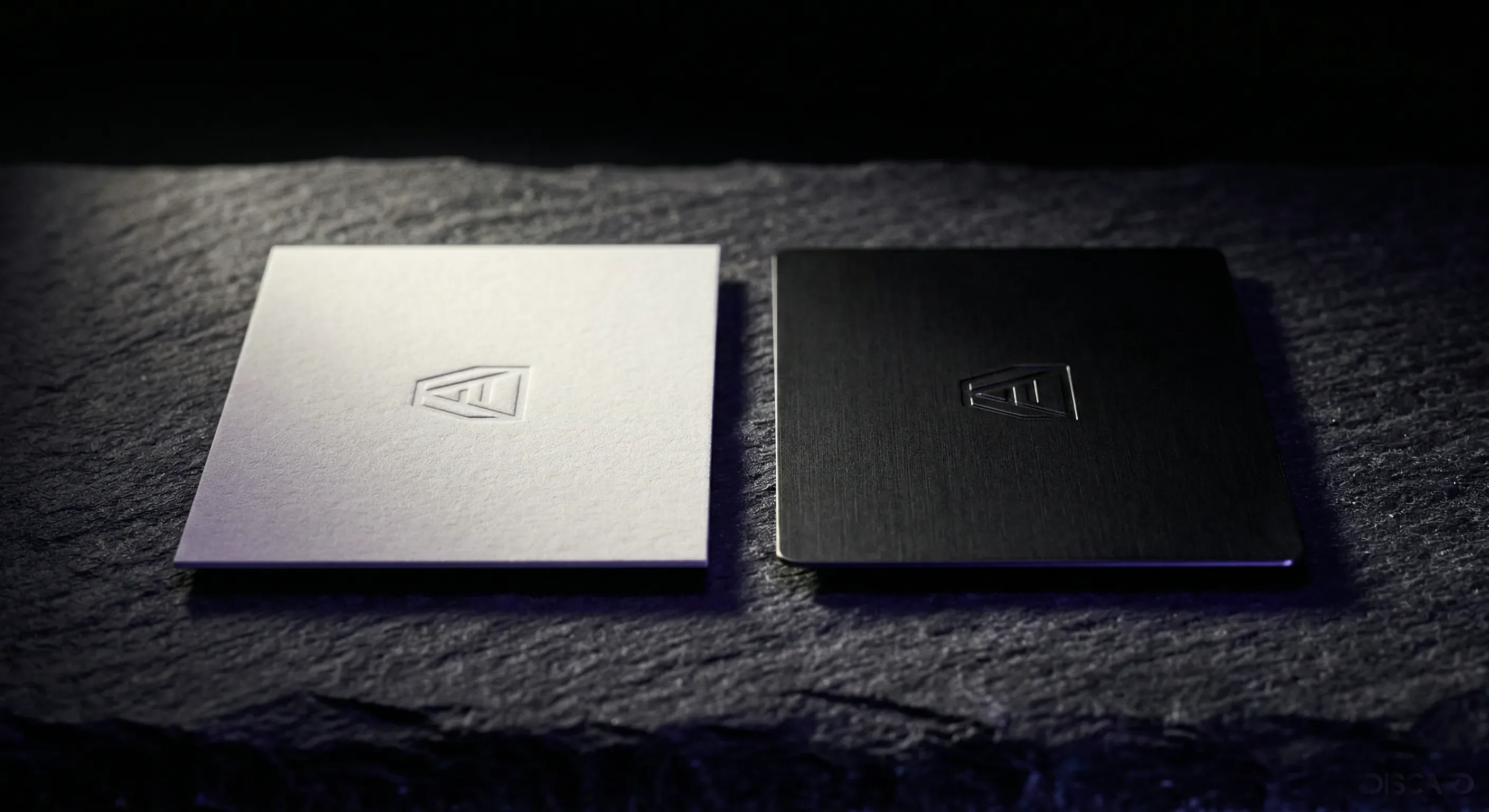
Paper invites this. It is light, easy to lose, and easy to throw away without a second thought, so it gets pocketed and forgotten or tossed out with the receipts. The card that survives is the one the recipient has a reason to keep, and a flimsy rectangle of printed stock rarely gives them one. We put the two formats side by side in paper vs metal NFC business cards.
The environmental cost paper hides
Each binned card has a footprint behind it. Paper and paperboard made up 23.1% of all municipal solid waste generated in the US in 2018, and 17.2 million tons of it went to landfill that year, according to the US Environmental Protection Agency. Business cards are a tiny slice of that, but the per-card waste is almost pure: printed, handed over, binned, often within days.
Production is heavier than the finished card suggests. The pulp and paper industry uses more water per ton of product than any other industry and ranks as the fifth-largest industrial energy consumer worldwide, around 4% of global energy use, as Wikipedia's overview of paper's environmental impact documents. Multiply a low-value, short-lived object by billions of prints a year and the waste stops being a rounding error.
Recycling does not rescue most of them either. A business card is small and often coated or laminated to feel premium, and coated stock is routinely rejected by paper recycling, so the card that feels nicest in the hand is the one most likely to go straight to landfill. Once there it breaks down slowly and releases methane, a stronger greenhouse gas than carbon dioxide. A metal card sidesteps the whole cycle by not being a consumable: you make one object and keep it for years instead of feeding a print-and-bin loop.
Paper vs metal NFC: the three-year cost compared
Put the two formats side by side over three years and the gap is not subtle. Paper repeats its cost every time something changes, while a metal card charges you once and then gets out of the way.
| Factor | Paper cards (3 years) | Metal NFC card |
|---|---|---|
| Upfront price | €30–€60 per box | From ~€40, once |
| Reprints | 2–4 times a year | None, edit online |
| Cost when details change | New box, old box binned | €0, edit the profile |
| Cards actually kept | ~12 in 100 | The one card, kept |
| Lifespan | Weeks per card | Years |
| Environmental load | Repeats every reprint | One object, no reprints |
The single-purchase column is the whole argument. A metal NFC card is bought once, and when your number or title changes you edit a digital profile in seconds while the card in someone's drawer keeps working. You can compare finishes on our materials page, where the cost stops at the first order instead of repeating every quarter.
Put a real person in the table and it lands harder. A sales rep who does 200 first meetings a year is reprinting several times, spending a few hundred euros, and sending a steady stream of cards into other people's bins. The same rep with one metal card hands over the same object 200 times, edits a profile when the quota or title changes, and never reorders. The expense that used to recur every quarter collapses into one purchase that sits in a pocket and keeps working.
The table also assumes one person. Scale it to a team and the paper column compounds. Every new hire, every leaver, and every rebrand means another print run for everyone at once, plus the boxes left on the desks of people who have already moved on. A metal card per person is a fixed cost paid once at onboarding, with a profile an admin can update centrally when the company details change, so a rebrand stops meaning a company-wide reprint.
The cost you cannot print: the first impression
There is a cost to paper that no reprint fixes. A flimsy card handed over after a sharp meeting quietly contradicts everything you just said about your standards. The recipient feels the weight, or the lack of it, before they read a word, and a thin printed rectangle reads as the thing everyone defaults to.
The research here is real. People judge competence and seriousness from small physical cues in the first seconds of meeting, and heavier objects get rated as more important. We covered the studies in the psychology of a premium first impression. A paper card spends nothing on that moment, which is its own kind of cost.
The contradiction is sharpest right after you have done good work. You present well, you answer the hard question, you leave the room having clearly earned attention, and then you hand over a thin card that feels like nothing in the hand. The object undercuts the moment it was supposed to extend. A heavier engraved card does the reverse, carrying the same care you just showed into the one thing the other person walks away physically holding.
How a metal NFC card removes every one of these costs
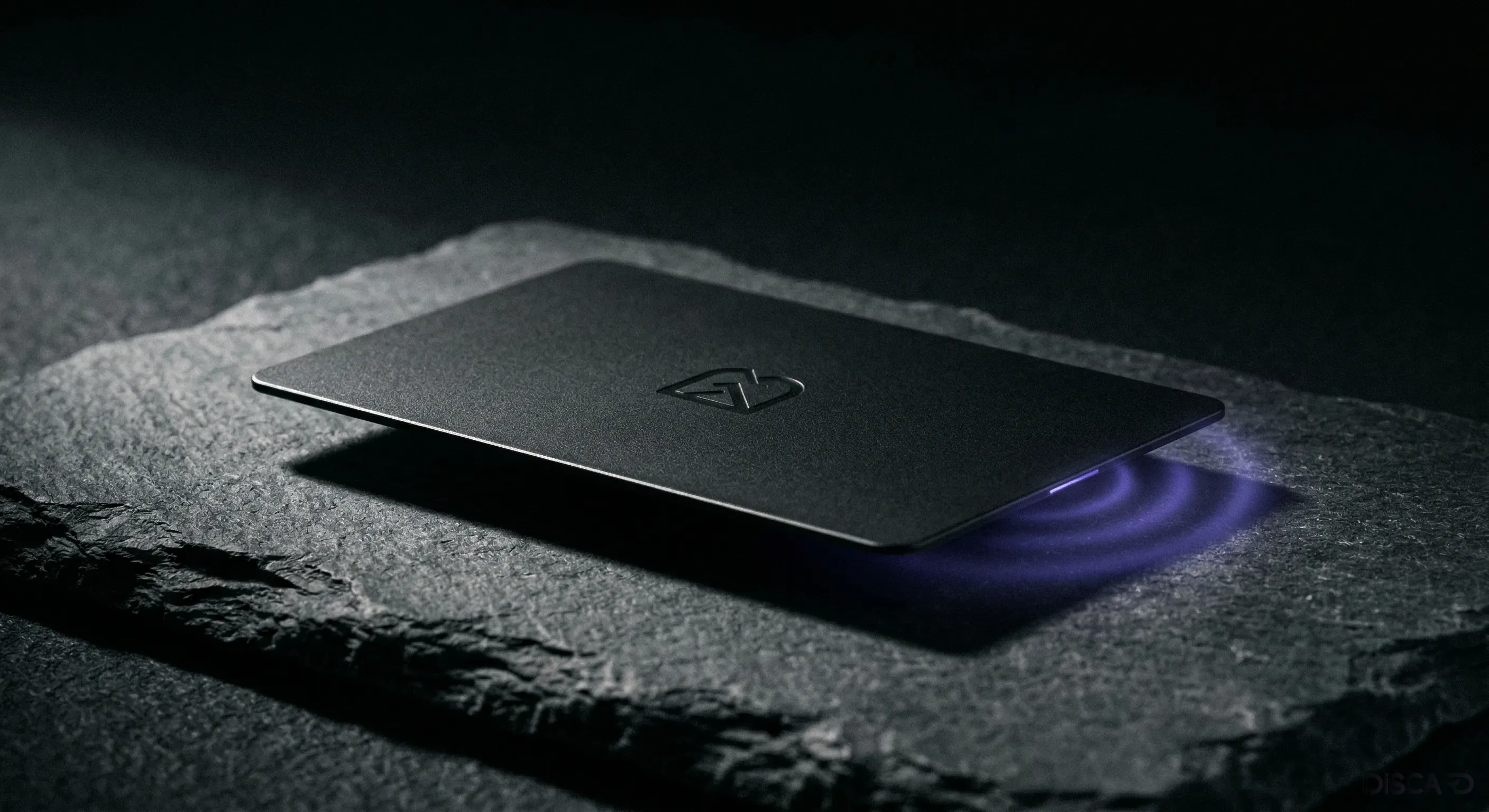
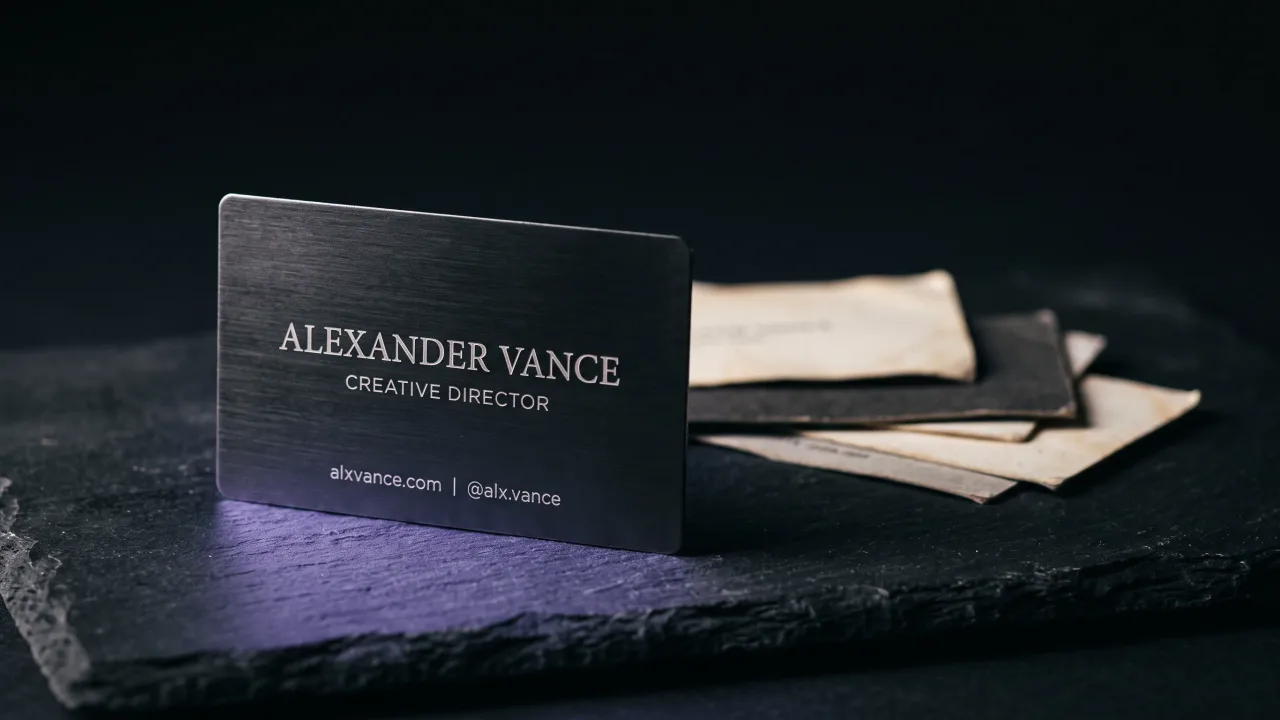
A metal NFC card collapses the whole list into one purchase. You buy it once, you never reprint it, and the details that used to force a reprint now live on a profile you edit yourself. A tap opens that profile on the other person's phone, so the card carries your current number, links, and booking page without ever being out of date. The benefits of an NFC business card follow from that single shift.
The waste math inverts too. Instead of printing hundreds of cards so that twelve survive, you hand over one card the recipient keeps because it is worth keeping. The running cost after the first order is whatever you choose to put on the profile, not another box every quarter. When you are ready, the card configurator lets you engrave your name and details before you order.
None of this asks anything of the person you hand it to. They install no app, make no account, and learn nothing new. They tap, your profile opens, and they keep a card that looks worth keeping. The cost that used to return every time a detail changed simply stops, and the only ongoing decision left is what you choose to put on the profile.
The verdict: is paper actually the cheap option?
Paper is only cheap on the first invoice. Once you count the reprints, the storage, the seven-in-eight cards that get binned, and the footprint behind each one, the box that cost thirty euros has quietly cost you several times that across three years, and it still goes soft in a pocket. A metal NFC card costs more to buy once and less to own after, because nothing about it expires when your details do. If you reprint cards more than once a year, the switch pays for itself on the reprints alone.
Design one metal NFC card you buy once and update forever, and stop paying to reprint a box that most people bin within a week.
Design your cardFrequently asked questions
How much do paper business cards really cost?
More than the print bill. A box of 250 runs €30 to €60, but most professionals reprint two to four times a year when details change, which is €240 to €480 over three years before design time and storage. The discard rate piles on top.
How many business cards get thrown away?
By the most-cited estimate, around 88% of paper business cards are discarded within a week of being handed over. That means roughly seven of every eight cards you print and pay for are never used.
Are paper business cards bad for the environment?
They carry a real footprint. Paper and paperboard made up 23.1% of US municipal waste in 2018 per the EPA, and papermaking is water- and energy-intensive. A short-lived, quickly binned card is close to pure waste per unit.
Are metal NFC cards cheaper than paper over time?
Usually, if you reprint. A metal NFC card is bought once and edited online instead of reprinted, so it skips the recurring cost that makes paper expensive. If you only ever print one box and never update it, paper is cheaper upfront.
How often do people reprint business cards?
An active networker reprints two to four times a year, triggered by a new number, title, office, rebrand, or simply running out. Each reprint also bins whatever was left in the previous box.
Can I update a metal NFC card without reordering?
Yes. The card points at a profile you control, so you change your number, title, or links in seconds and the same physical card keeps working. That is what removes the reprint cost.