Business card printing fell by around 70% during the pandemic, then came back in mid-2021. A format that was genuinely finished does not rebound the moment people start meeting in rooms again, and that one detail settles more of this argument than any think piece about the death of paper.
So are business cards still relevant? Yes, though not in the shape most people picture when they ask. The exchange survived because the problem underneath it survived: two people meet, the conversation goes somewhere, and one of them has to be reachable on Thursday. What changed is the object that gets handed over.
The short answer, and the part most articles skip
Being remembered and being reachable is the whole job. Cardboard was just the cheapest way to do both at once.
Paper held that job for more than a century. It started losing it when contacts moved into phones. A card in a jacket pocket is not in anybody's address book, and the distance between those two places is where most networking quietly dies.
By the most-cited estimate, 88% of paper cards are in a bin within a week. We worked the maths through in the hidden cost of paper business cards, and the short version is that you pay for eight cards to keep one.
Do people still use business cards?
Millions of them, every day, and in some places refusing one would end the meeting. Japanese meishi etiquette still expects the card to be offered with both hands by the top two corners, read properly, and never pushed into a back pocket. Nobody there is waiting for it to fade.
Germany, the Gulf states, Korea and most of the trade-show circuit run on the same expectation. Bulgarian business culture is softer about it, though at any industry event in Sofia you will still watch cards move across a table inside the first two minutes.
Where the habit has thinned is the ordinary professional meeting in Western Europe and the US. People swap phone numbers, scan a code, or find each other on LinkedIn before they part. The ritual moved. It did not stop.
What died was the cardboard, not the handshake
Wikipedia's entry on the business card notes that contact data is increasingly exchanged electronically, and that none of those methods have completely replaced the physical card. That is a fair description of 2026. Two systems run side by side, and the physical one keeps winning the first ten seconds.
The reason is boring and human. A phone is a private object, and asking someone to unlock theirs and type your name into it puts the work on them. Handing over something is faster, and it gives both people something to do with their hands.
Which leaves two decisions worth making: what the card is made of, and what happens once it reaches the other person.
Where paper business cards still earn their place
Paper wins where the card itself is the message, or where no phone is coming out of anyone's pocket. The last item below is the one most people are actually doing.
- The card is a product sample. Letterpress studios, bookbinders, print shops and paper mills are demonstrating what they sell, so the card is the portfolio.
- Places where phones are impractical. Factory floors, construction sites, hospital wards, anywhere with gloves or a no-phone policy.
- High-volume, low-value handouts. Leafleting a market stall, filling 400 conference bags, leaving a stack on a counter. Nobody wants a metal card in a tote bag.
- Out of habit, because you always have. This is the one to drop. Reprinting 250 cards every time a number changes is a subscription you never agreed to.
Outside those cases, paper is doing a job that a better object now does for less money over three years. We put the two side by side in paper vs digital business cards.
Is it unprofessional to arrive without a business card?
In Japan, Korea or the Gulf, yes. Turning up empty-handed reads as unprepared, and no amount of explaining that your details are on LinkedIn will repair it.
In most of Europe it is closer to neutral. What does read badly is fumbling. Digging through a bag, apologising, then offering to text your number later is worse than having nothing at all, because it turns the end of a good conversation into an admin problem.
Have an answer ready for the moment somebody asks how to reach you. Whether that answer is paper, metal or a tap matters far less than giving it in two seconds without apologising.
What replaced paper at the moment of the introduction
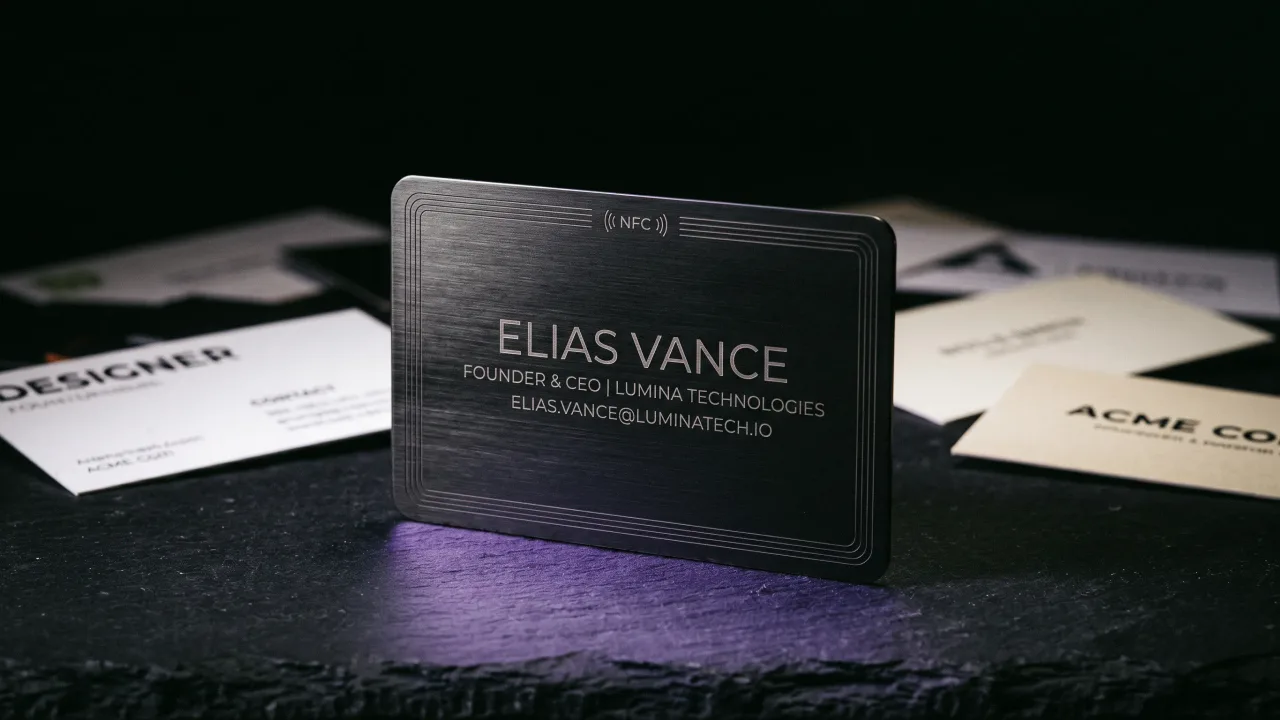
An NFC card carries a chip holding one web address. Touch it to a phone and the page opens. The NFC Forum puts the working range at roughly five centimetres and confirms that reading a tag uses functionality already built into the handset, so nothing gets installed on either side.
The page that opens is the actual product. It carries your name, role, numbers, links and a save-to-contacts button, and you rewrite it whenever your job changes. A digital profile updates. A printed card is fixed at the print shop forever.
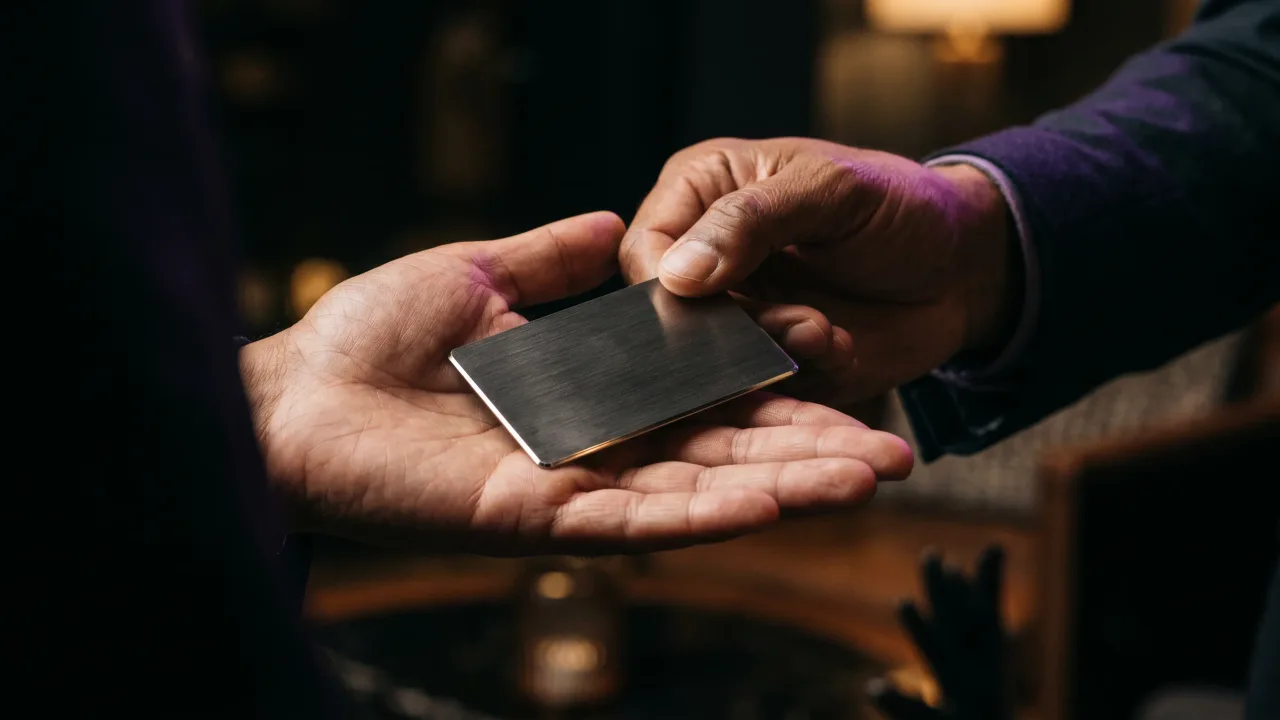
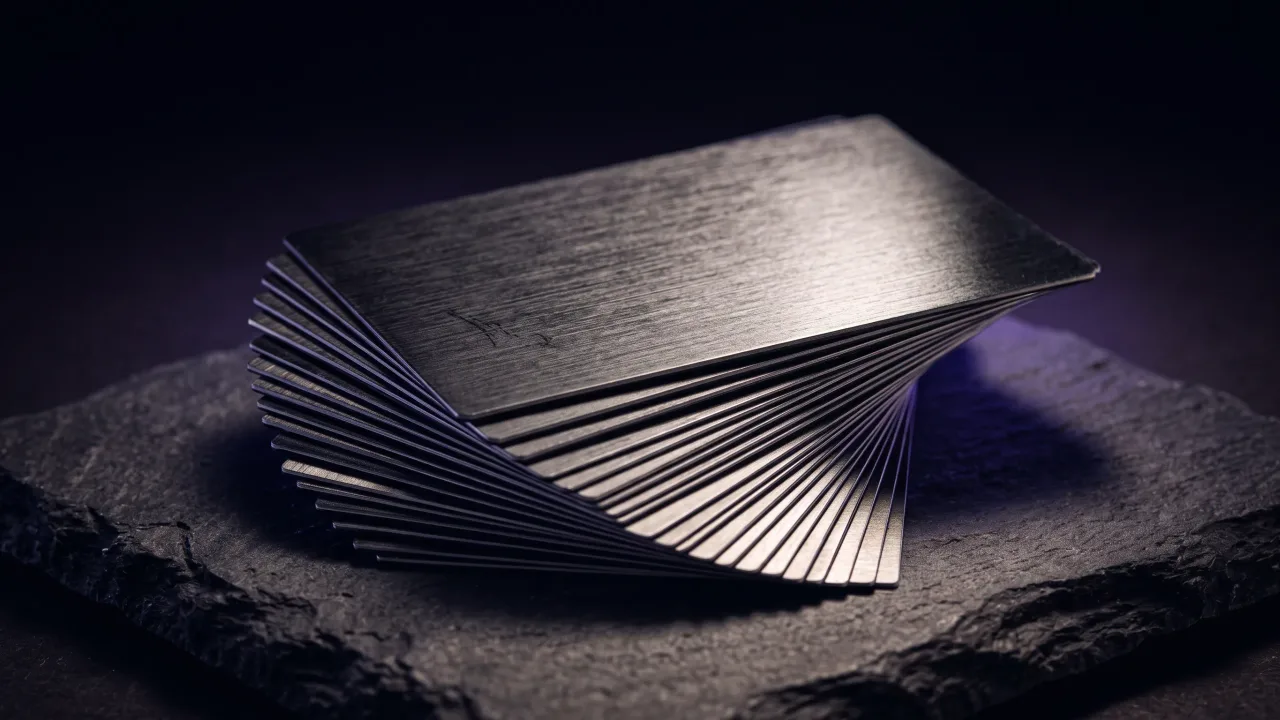
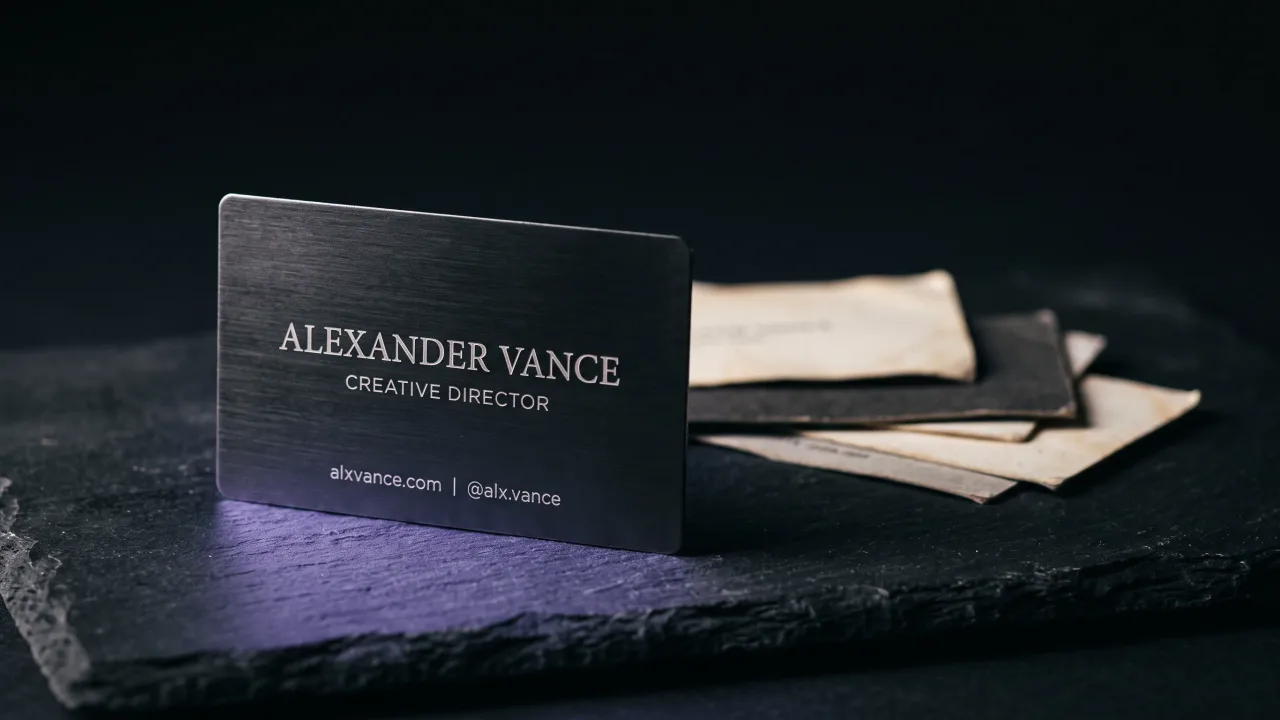
The physical object still does the social work. A metal card has weight, and people turn it over before they put it away. For the mechanics rather than the pitch, what are NFC business cards covers the chip, the link and the failure modes.
| At the moment you meet someone | Paper card | NFC card |
|---|---|---|
| Time to hand over | Two seconds | Two seconds |
| Lands in their phone | Only if they type it in later | One tap, saved on the spot |
| Wrong number after a job change | Reprint the whole box | Edit the profile, cards stay valid |
| What they remember | The design, for about a day | The object, and that it worked |
| Cost across three years | Repeat print runs | Paid once |
How to make the card you carry actually work in 2026
Carrying a card is easy. Making it lead somewhere is the part people skip.
Put one clear action on the page it opens: a booking link, a portfolio, a WhatsApp thread. A profile listing nine links hands the reader a decision, and decisions made at the end of a conversation get postponed and then forgotten.
Then use the card on more than the people above you. Andy Lopata argues in Harvard Business Review that leaning only on connections with senior people limits you, and the same holds for who gets your card. The peer nobody was courting is often the one who calls back.
Design it so somebody looks twice. Engraved metal, one colour, and fewer words on it than you think you need. The psychology of a premium first impression explains why, and it comes down to weight in the hand doing work that ink cannot.
Business cards are still relevant, and anyone claiming otherwise is arguing with a habit that outlived the telegram, the fax and the Rolodex. What has actually happened is narrower: paper stopped being the best carrier for the job. The ritual is fine, the timing is fine, and handing something over is still the fastest way two people become reachable to each other. It is the cardboard that has been quietly failing, at a rate of roughly seven bins for every eight cards. Carry something, always. Just make it something that ends up in their phone before they leave the room, and something you can correct without a print run when your title changes in March.
Design a metal card that opens a profile you can edit any time, printed once and never reprinted.
Design your cardDo people still use business cards in 2026?
Yes, daily, and in Japan, Korea and the Gulf the exchange is still expected at the start of a meeting. What has changed in Western Europe and the US is the format, with NFC cards and QR codes taking over from print. The habit of handing something over at the end of a good conversation has not gone anywhere.
Are paper business cards dead?
No, but they are no longer the default. Printed cards still make sense for studios selling the paper itself, for sites where phones are impractical, and for high-volume handouts. For everyday professional networking, a card that saves itself into the recipient's phone does the job better.
Which industries still expect a paper business card?
Japanese, Korean and Gulf business culture treat the exchange as protocol rather than preference. Law, private banking, luxury retail and the trade-show circuit also lean traditional. In those settings, arriving without a card reads as unprepared.
Is it unprofessional to not have a business card?
It depends where you are standing. In much of Europe nobody will hold it against you, though fumbling for an alternative at the end of a conversation does leave a mark. Have a fast answer ready, whether that is paper, metal or a tap.
Are digital business cards better than LinkedIn?
They solve different problems. LinkedIn is where the relationship continues, and a card is how the first exchange happens without either person unlocking a phone to search for a name. Most people use both, with the card carrying the link to everything else.
Do you need an app to use an NFC business card?
No. NFC reading is built into modern iPhones and Android phones, so tapping the card opens a normal web page in the browser. Neither person installs anything, and the recipient does not need an account.
Will paper business cards disappear completely?
Unlikely, in the same way vinyl and paper books did not disappear. Print will keep a niche where the card itself is a craft object or a sample of what the business sells. The volume trade, the boxes of 250 reprinted every year, is the part that is going.
What should I carry instead of a paper business card?
A metal NFC card tops most lists of business card alternatives, because it keeps the physical exchange and adds the part paper never had: the details land in the phone immediately. A QR code printed on a card is the cheaper middle ground. Both point to a profile you can edit after the cards are made.