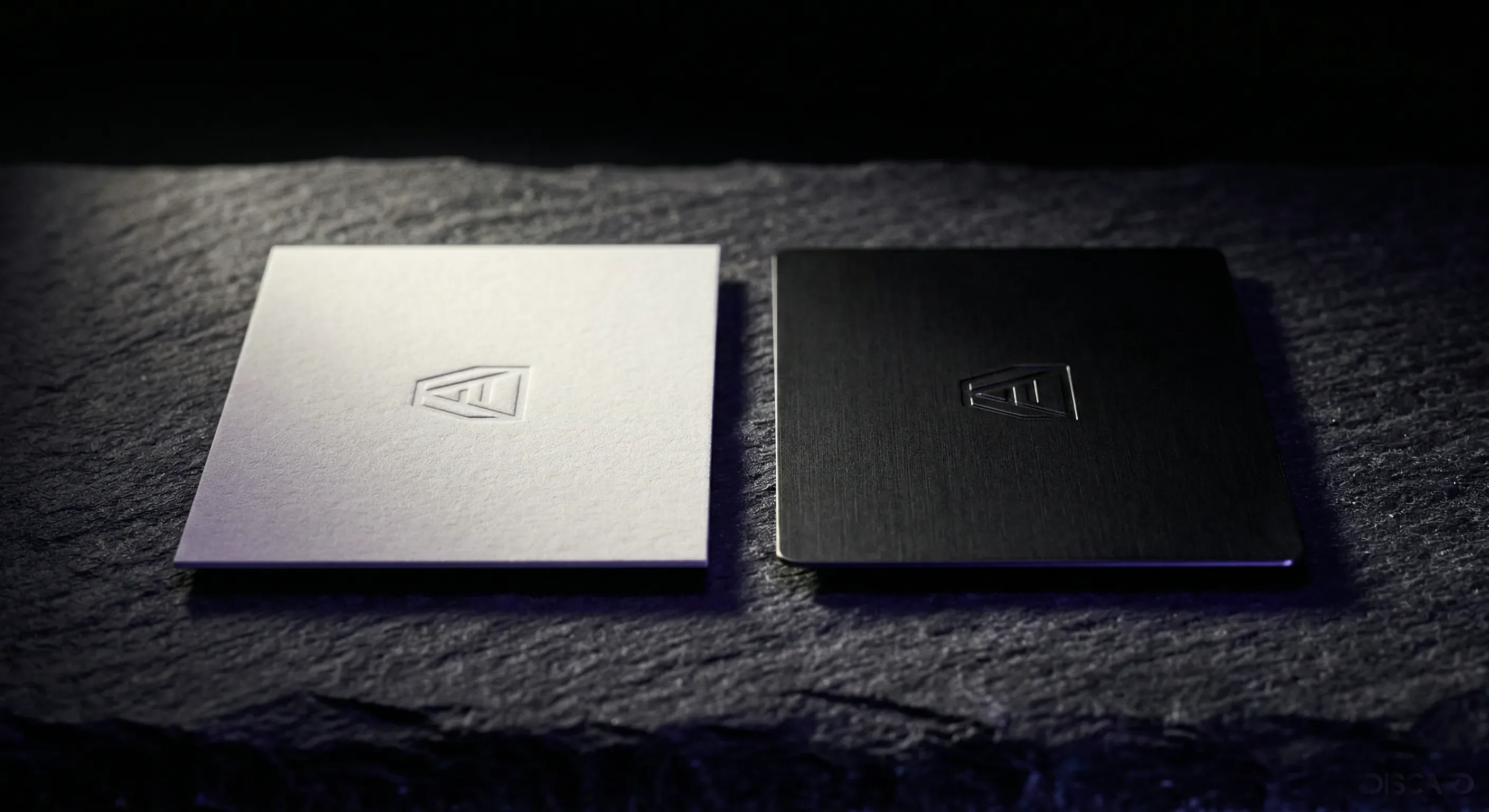
The business card hasn't fundamentally changed in decades — until now. Digital business cards have moved from novelty to mainstream, with tools ranging from app-based contact sharing to NFC-enabled physical cards that carry a live digital profile. Meanwhile, paper cards still dominate most networking events, trade shows, and professional exchanges worldwide.
Which format actually serves modern professionals better? The answer depends on how you network, who you network with, and what kind of first impression you want to make. This guide covers it all.
Defining the terms
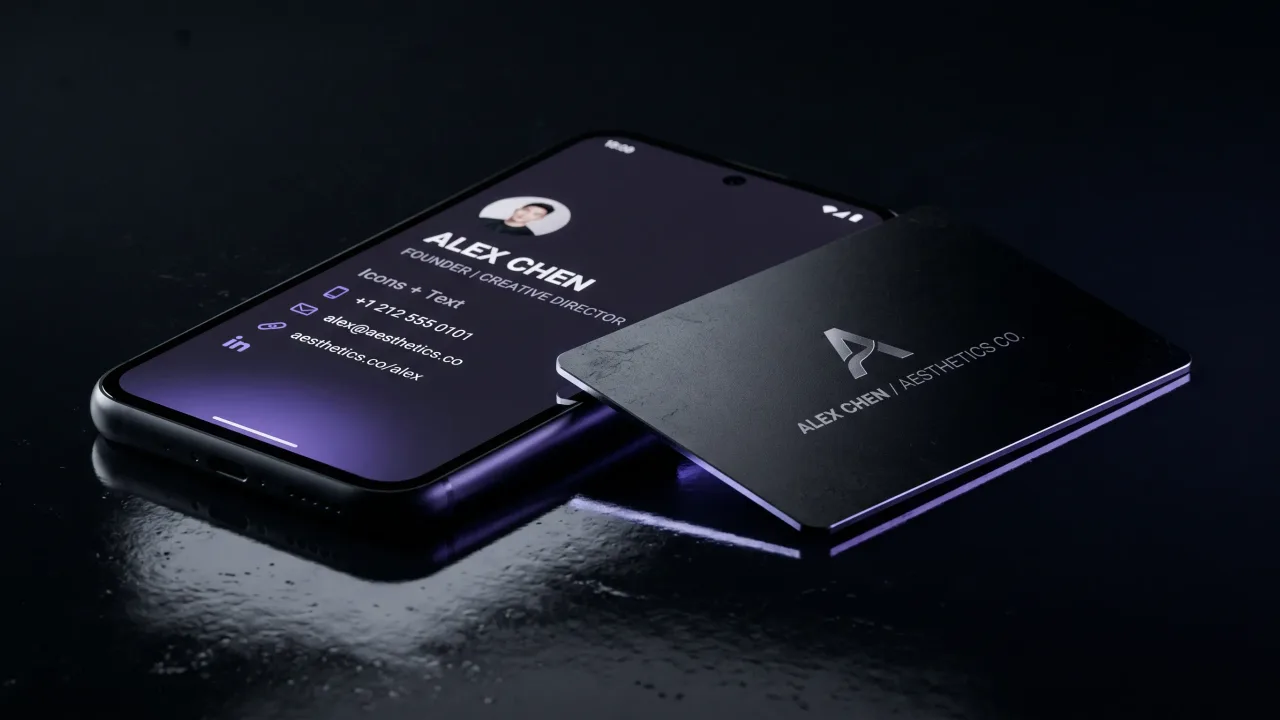
"Digital business card" covers a wide range of formats: a PDF or image saved on your phone, a contact-sharing app like HiHello or Blinq, a profile link you text or email, or — at the premium end — an NFC-enabled physical card that bridges the physical and digital worlds. Not all digital cards are equal.
For this comparison, we'll look at two main scenarios: purely digital (app or link-based) versus traditional paper, and then address where physical NFC cards fit — since they occupy a category of their own.
Paper cards vs digital cards: the core comparison
| Factor | Paper Cards | Digital Cards |
|---|---|---|
| Sharing method | Hand to hand | App, link, QR, or NFC tap |
| Information stays current | No — reprint required | Yes — edit instantly |
| Works without internet | Yes | App: yes; link/NFC: no |
| Leaves a physical object | Yes | No (unless NFC card) |
| Compatible with all recipients | Yes | Depends on method |
| Design flexibility | High (print) | Very high (dynamic) |
| Analytics | None | View / tap tracking available |
| Cost over time | Ongoing reprints | Subscription or one-time |
| Environmental impact | High | Low |
Paper business cards — pros and cons
Pros
- Universally accepted — no technology required on either end
- Leaves a physical presence in someone's hand and space
- Works perfectly in low-connectivity environments
- Fully customisable with premium print finishes (foil, letterpress, emboss)
- No ongoing subscription or maintenance cost
- Widely available from countless printers at every price point
Cons
- Static — any change in your details requires a full reprint
- Disposal rate is high — most paper cards are lost within a week
- Accumulates cost through repeated reprints over a career
- No way to know if someone actually engaged with your card
- Cannot carry video, portfolio, or interactive content
- Wasteful — billions of paper business cards are discarded annually
Digital business cards — pros and cons
Pros
- Always current — update your details once and everyone sees the new info
- Can contain rich content: photos, links, video, portfolio, social profiles
- Shareable at any distance via link, email, or text
- Some platforms offer profile view analytics
- Eco-friendly — no physical waste
- No reprinting costs when your details change
Cons
- Requires the recipient to have a smartphone and internet access
- App-based cards require the other person to download the same app
- No physical object left behind — easier to forget
- Link-based sharing lacks the intentionality of a physical exchange
- Subscription costs can add up on some platforms
- Less memorable than a physical object in the hand
The missing physical dimension
Pure digital cards solve the static-information problem but introduce a new one: they have no physical presence. The act of handing someone a card — the weight of it, the moment of exchange — carries social meaning that a text message link simply doesn't replicate.
Research on memory and physical objects consistently shows that tactile experiences create stronger memories than digital ones. A card that someone holds is more likely to be remembered than a link they receive. This is why the physical card format has persisted even as digital alternatives have proliferated.
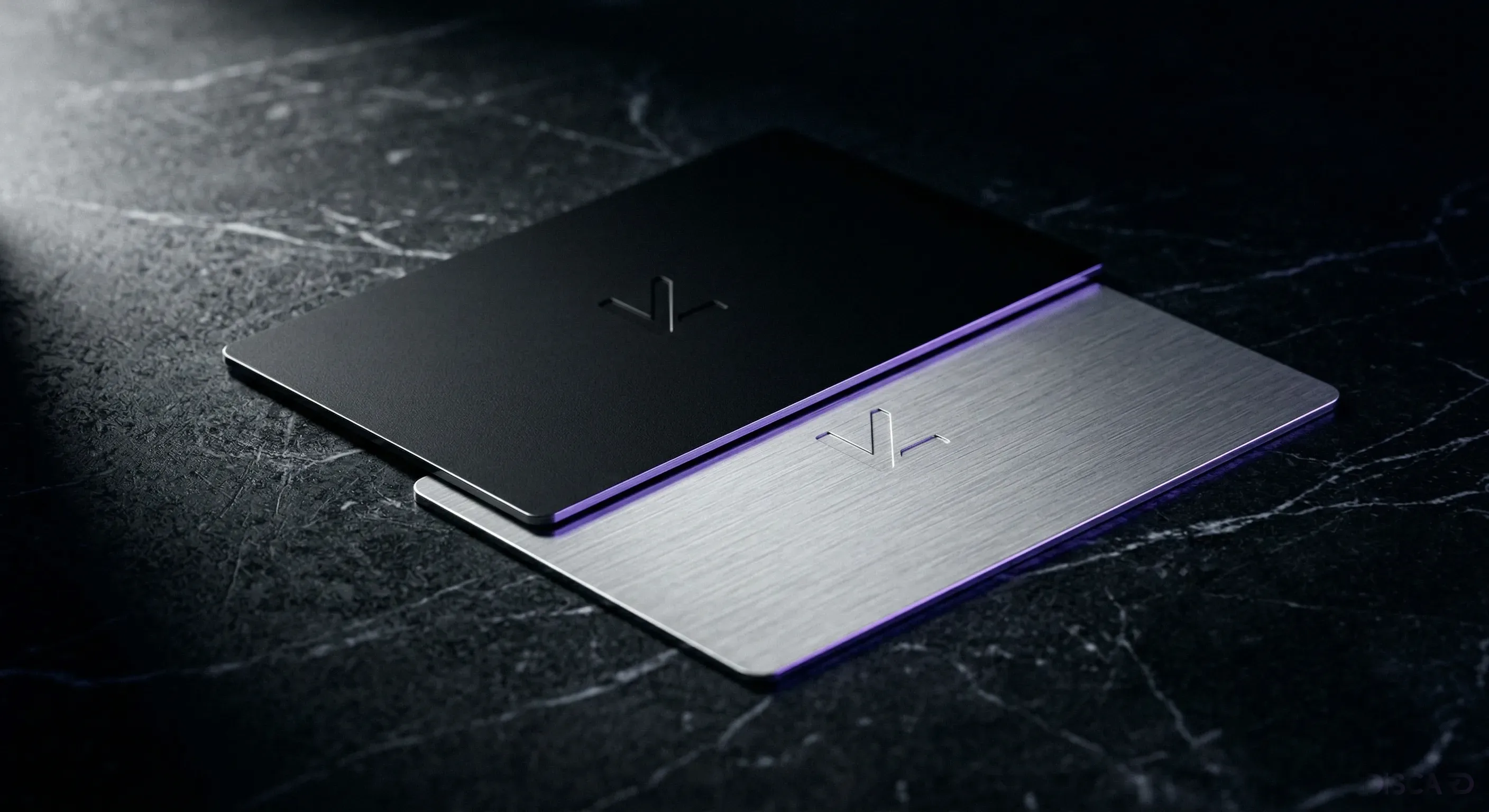
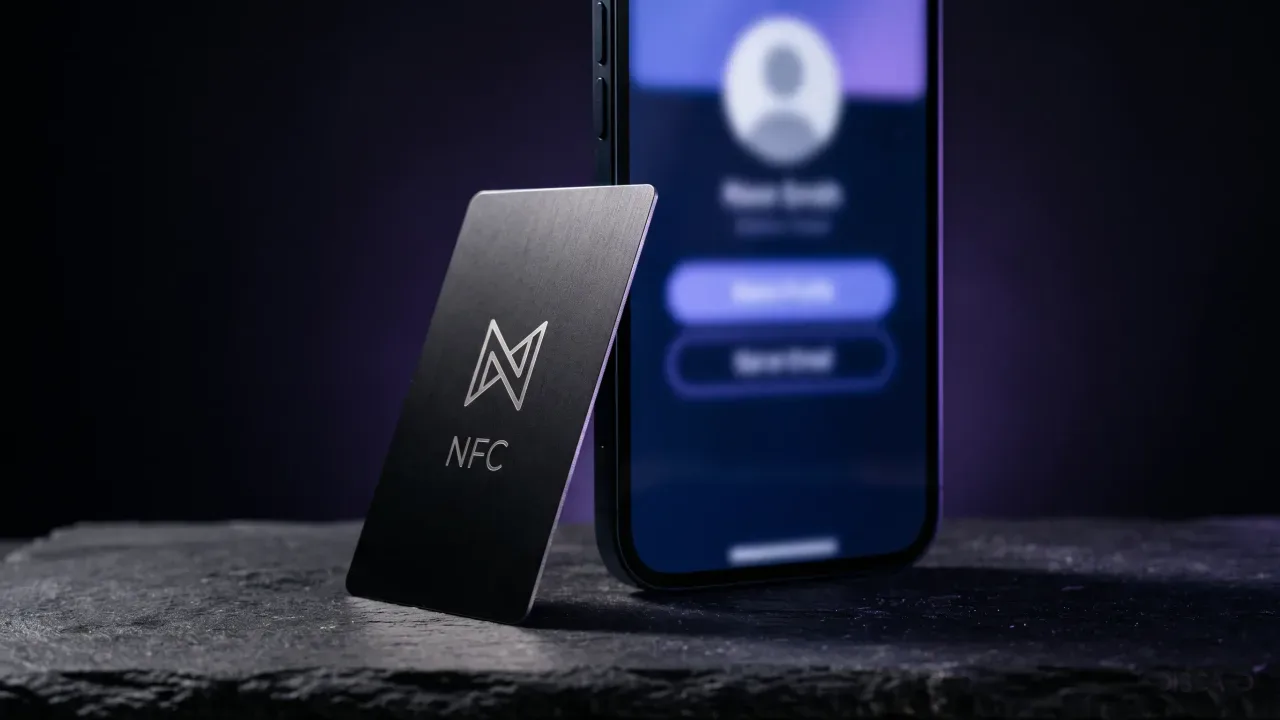
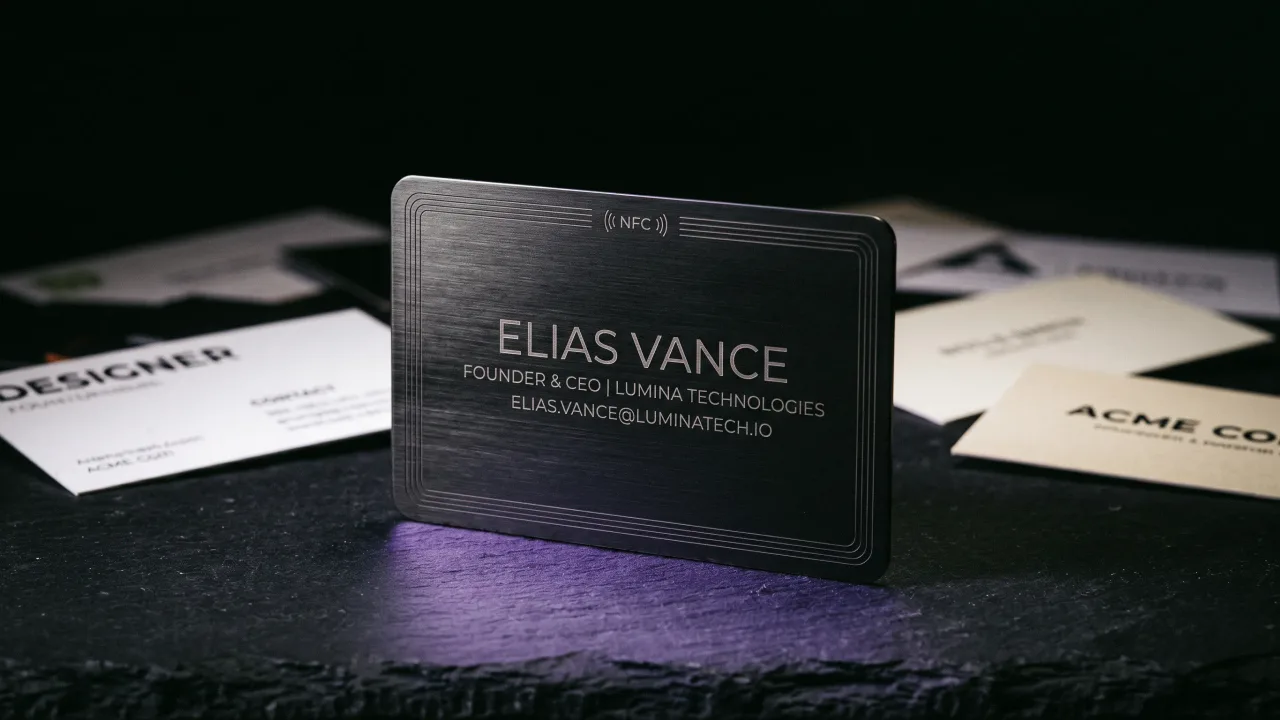
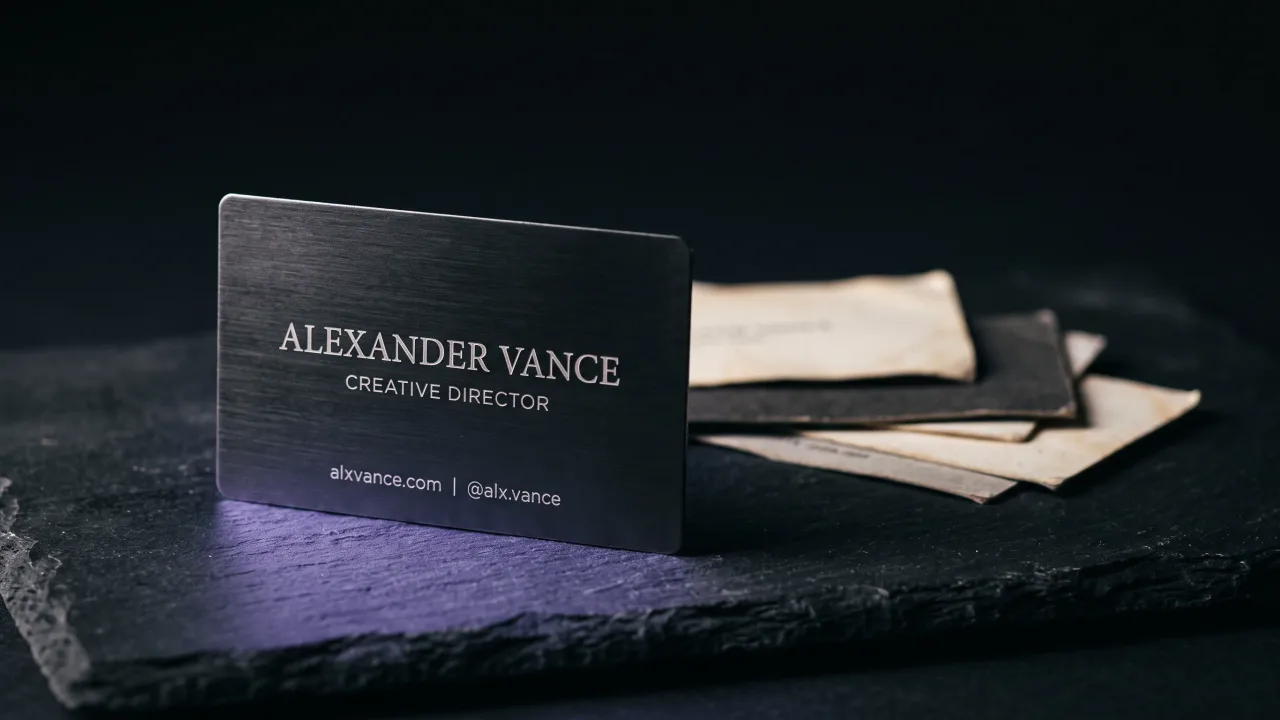
Metal NFC cards resolve this tension. They're a physical object — one that's genuinely striking in the hand — and they carry a live digital profile that never goes out of date. You get the physicality of a card exchange combined with the dynamism of a digital profile.
Who should use paper cards?
Paper cards still make sense for high-volume distribution: trade show booths where you're leaving stacks for people to take, door-to-door sales, or industries where a physical card is culturally expected and the recipient may not be tech-forward (some construction, agriculture, or local services markets).
They're also a reasonable choice for people at the very start of their career who haven't yet settled on stable contact details and expect to reprint within six months anyway.
Who should use digital business cards?
Digital-only cards work best for people who primarily network online — LinkedIn connections, virtual conferences, email introductions. If you rarely hand a card to someone face-to-face, a link-based digital profile (your website, a Linktree, or a dedicated profile) may be all you need.
Professionals in tech, creative industries, and startups who frequently attend in-person events but want a modern, eco-conscious approach benefit most from a physical NFC card with a linked digital profile — the format that combines the best properties of both.
The cost breakdown over three years
Paper cards: if you reprint quarterly (realistic for anyone whose details change), you're spending €30–€60 per batch. Over three years: €360–€720 in print costs alone, excluding design fees for each revision.
App-based digital cards: most quality platforms charge €8–€20 per month. Over three years: €288–€720. You're also dependent on the platform staying operational and keeping your data.
A metal NFC card from Discard: €35–€80 one-time, plus €19.90/year for the digital profile that keeps the page live and editable. Over three years that's roughly €95–€140 total — well under the cost of three years on a generic card platform, and you keep a real metal object on top.
The verdict
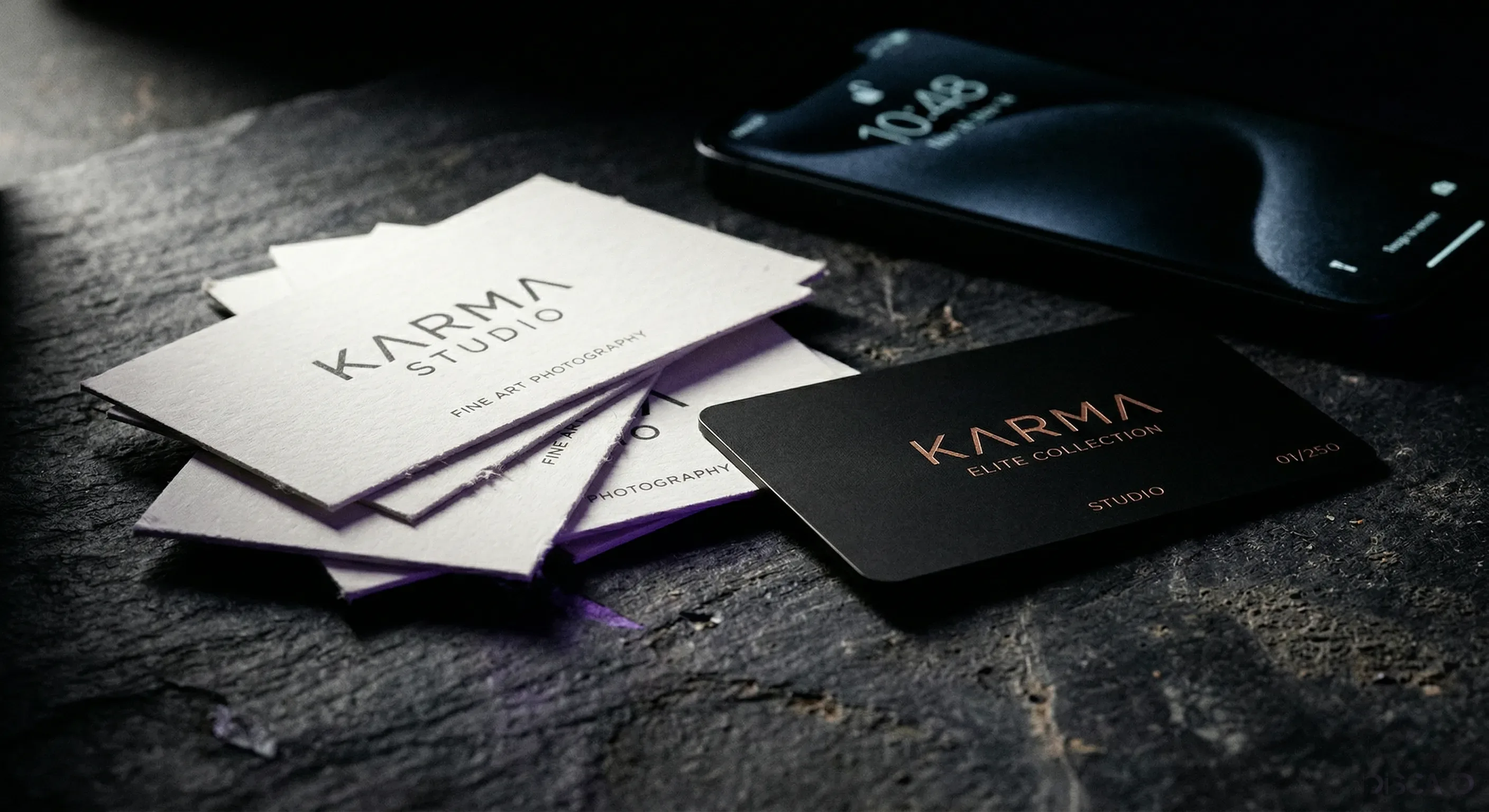
Paper cards are universal but outdated. App-based digital cards are convenient but lack physicality. Metal NFC cards hit the intersection — a physical object with the permanence of premium materials, carrying a digital profile that's always current. For any professional who takes in-person networking seriously, the NFC card format is the most complete answer on the market today.
One card. Every link. Always up to date. Design your Discard metal NFC card.
Start DesigningFrequently Asked Questions
Can I share my digital business card profile without a physical card?
Yes. Your Discard digital profile has a public URL that you can share by text, email, or QR code. The physical NFC card is the premium activation method, but the profile itself is accessible from any device.
What happens to my digital profile if the company shuts down?
This is a valid concern with any SaaS-dependent card. Discard profiles are hosted on persistent infrastructure and your data is exportable. It's worth reading the terms of any digital card provider before committing.
Are digital business cards accepted in all countries and industries?
Smartphone penetration is high in most professional contexts globally, but certain traditional industries still operate primarily on paper. In Japan, the cultural practice of meishi (formal card exchange with two hands) has significant weight — digital cards would be inappropriate in that ritual context regardless of technology.
Can I have both a paper card and a digital card?
Yes. Many professionals use both. A stack of paper cards for high-volume events and a metal NFC card for important one-on-one introductions. The NFC card is for moments that matter; the paper card handles volume.
How do I update my digital profile after getting an NFC card?
Log into your Discard dashboard, edit your profile fields — name, title, company, links, photo — and save. Changes appear immediately the next time someone taps or opens your profile link. No physical card change required.