By the time you have shaken someone's hand and pulled a card from your pocket, the decision about who you are is mostly already made. A premium first impression is not a vanity project. It is the small set of physical signals you actually control in the seconds before you start talking, and decades of social psychology say those signals do more work than the words that follow them.
Your watch was an inheritance, your phone was a default, your suit is whatever was clean this morning. The business card is the only object in the exchange you designed on purpose. Which means the card is doing the heaviest psychological lifting in the room, whether you intended that or not.
The seven-second decision before you open your mouth
In 1992 Nalini Ambady and Robert Rosenthal published a study showing that students could accurately predict end-of-semester ratings of a professor from a six-second silent video clip. They called the phenomenon thin-slicing: the brain extracts reliable judgments about strangers from absurdly short exposures.
A 2006 Princeton study by Janine Willis and Alexander Todorov dropped the exposure window to 100 milliseconds and got similar results. People rated trustworthiness, competence, and likeability about the same after a tenth of a second as they did after a full minute. Longer looks added confidence in the judgment, not a different judgment.
You do not get a seven-second decision because the recipient is being lazy. You get it because the brain is built to read social information very fast. The card lands somewhere inside that window, often in the first second of contact.
Why heavier objects are judged more seriously
In 2010 a team led by Joshua Ackerman published a paper in Science titled Incidental Haptic Sensations Influence Social Judgments and Decisions. One of the studies handed reviewers identical resumes attached to either a light clipboard or a heavy one. Reviewers holding the heavy clipboards rated the same candidates as more serious and more capable.
The mechanism is straightforward. The brain reuses concrete physical metaphors when it makes abstract judgments. Weighty decisions are made by people holding weighty objects, and that mapping happens beneath conscious attention. It is replicated experimental psychology, not a marketing claim.
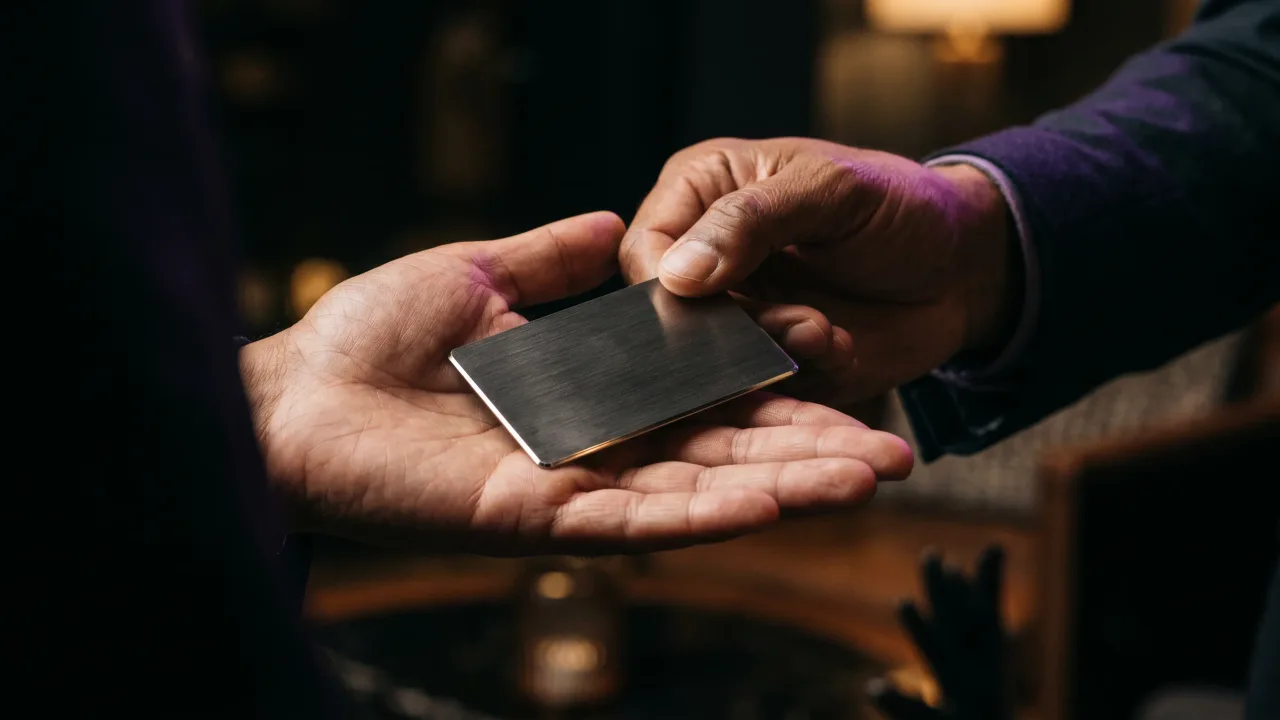
Your business card is one of the only objects that physically moves between you and the recipient in a first meeting. If it weighs the same as a folded receipt, the haptic channel is signalling one thing. If it lands in the palm with the weight of an instrument, it is signalling something else.
What a paper card actually says about you
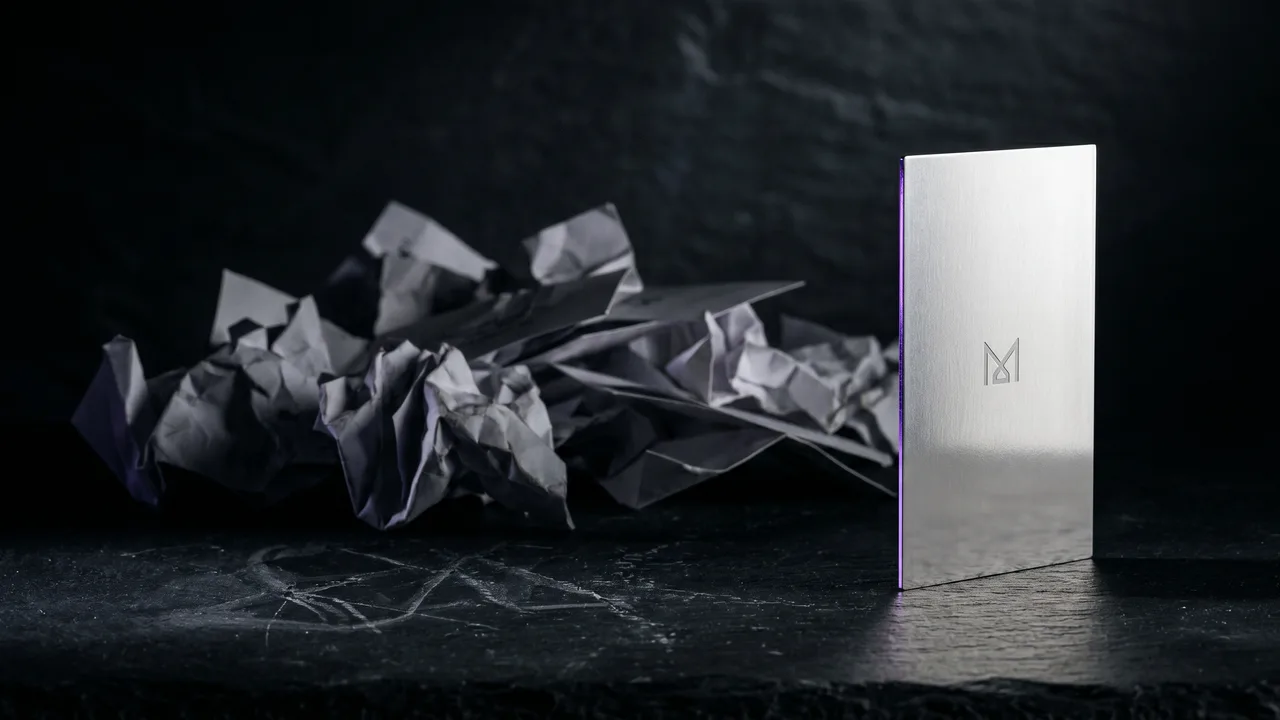
Paper does not say nothing. It says something, and the something is usually the part you did not intend. A flexible cardstock with a CMYK gradient and a faintly off-cut corner tells the recipient that the budget was small and the choice was default. None of that is a moral failing. It is information they extract whether you wanted them to or not.
There is a reason luxury brands print on cotton stock at 600gsm and have the edges painted by hand. They are paying for the haptic signal even when the visual one is already finished. Most professional cards do not bother because paper has a low ceiling. Past a certain price point the format itself stops returning value, and any further investment goes into something heavier and more durable instead.
What a metal card says before you say a word
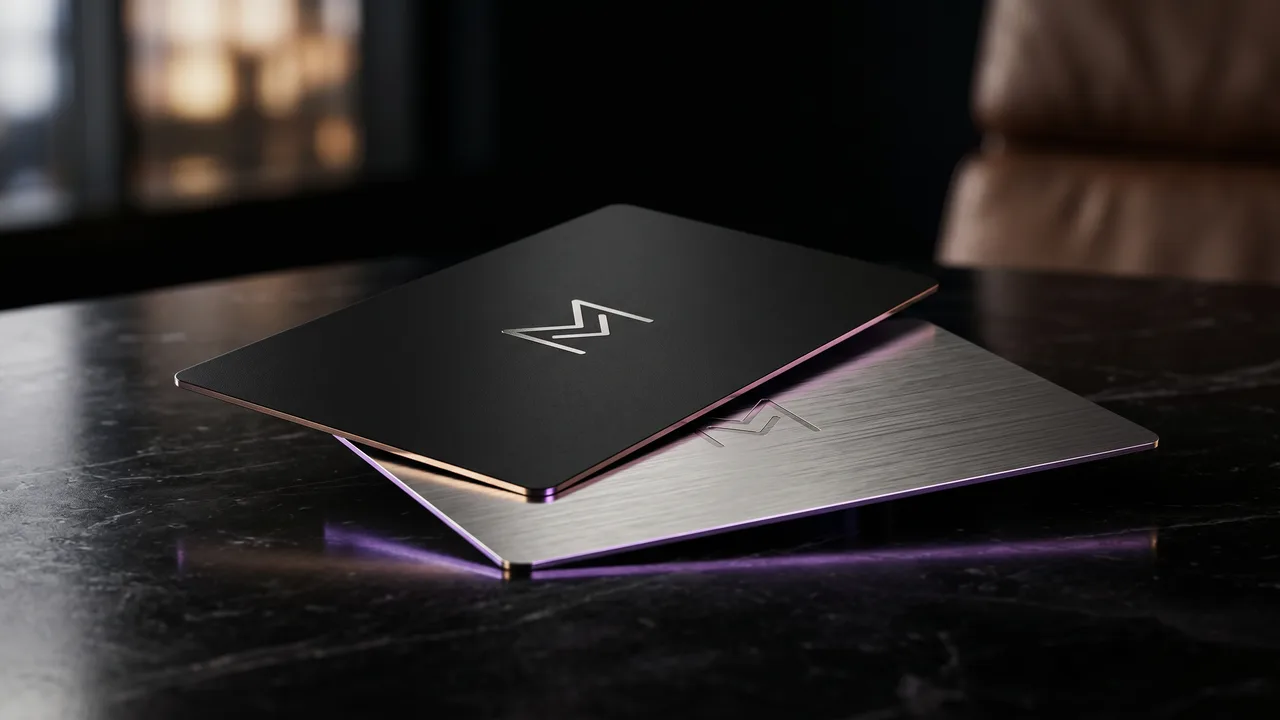
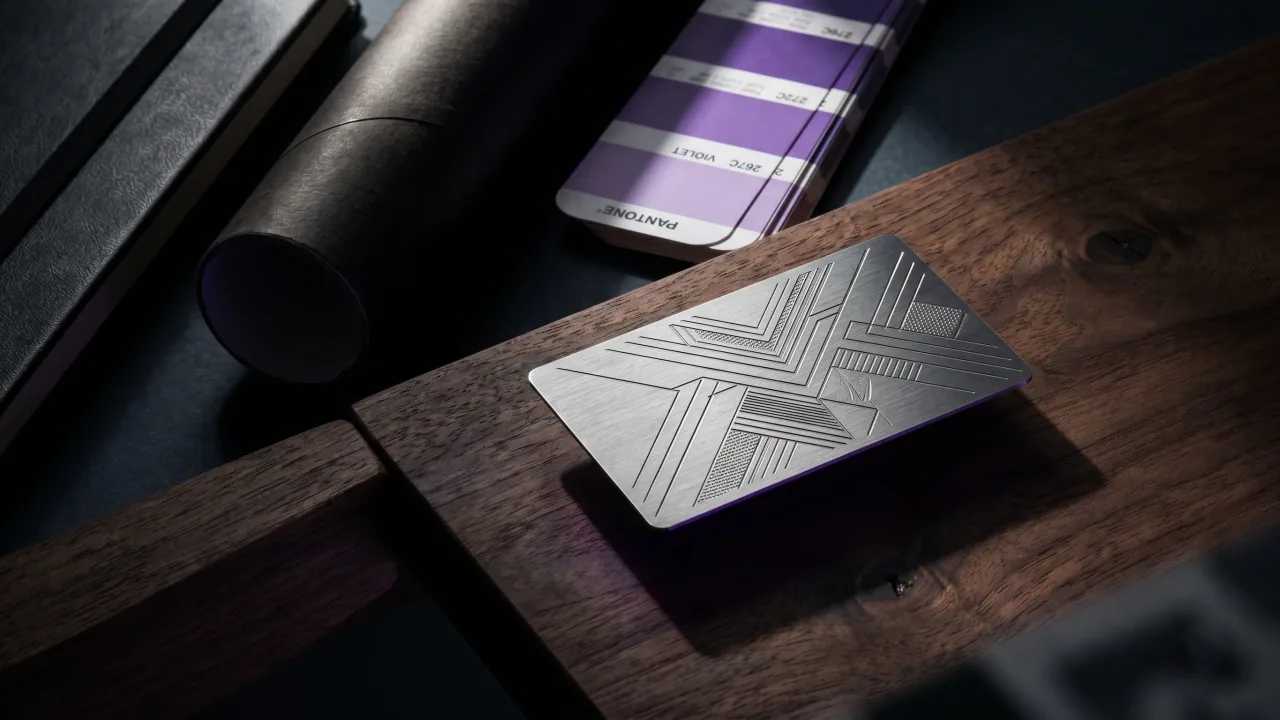
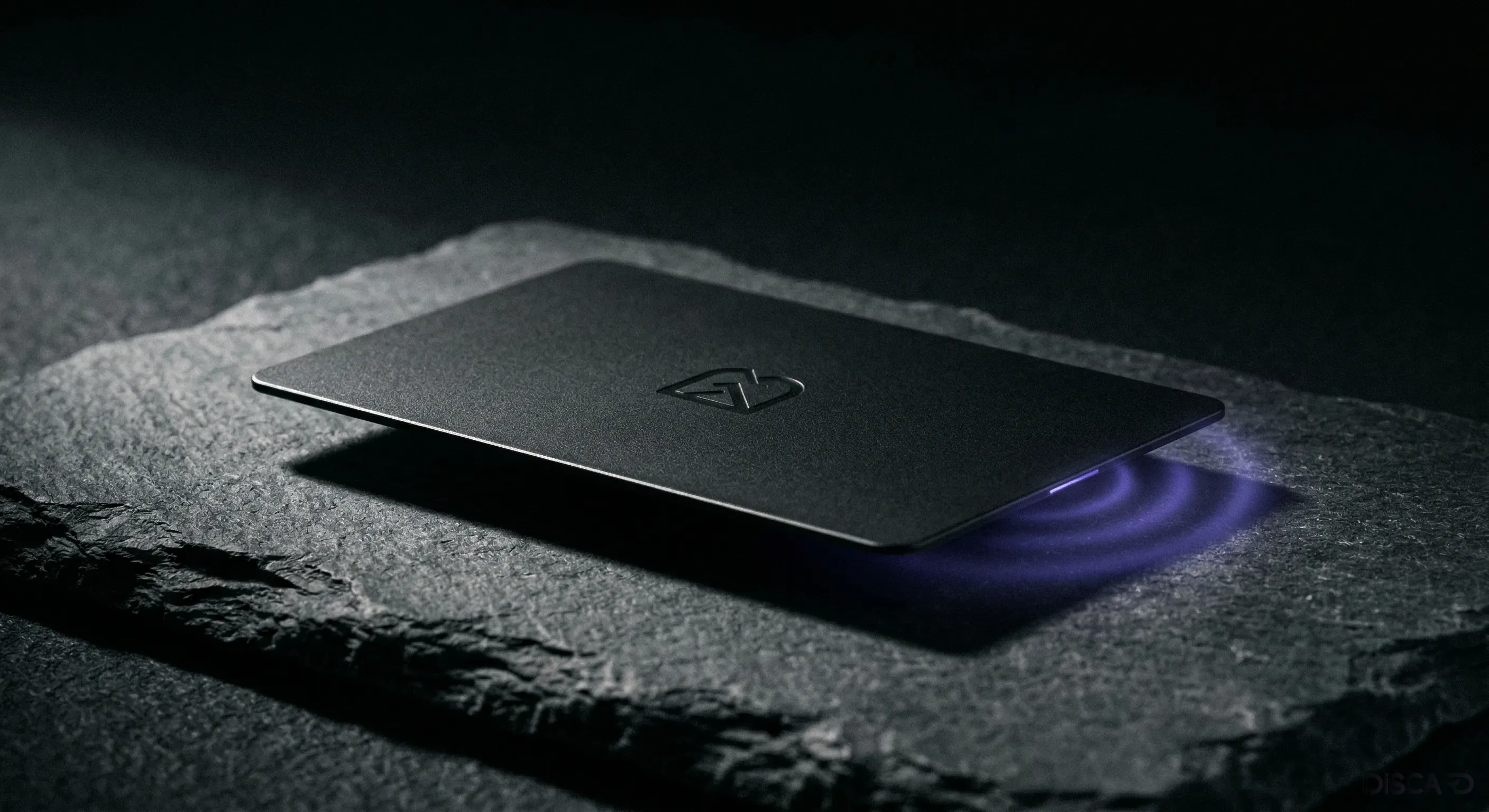
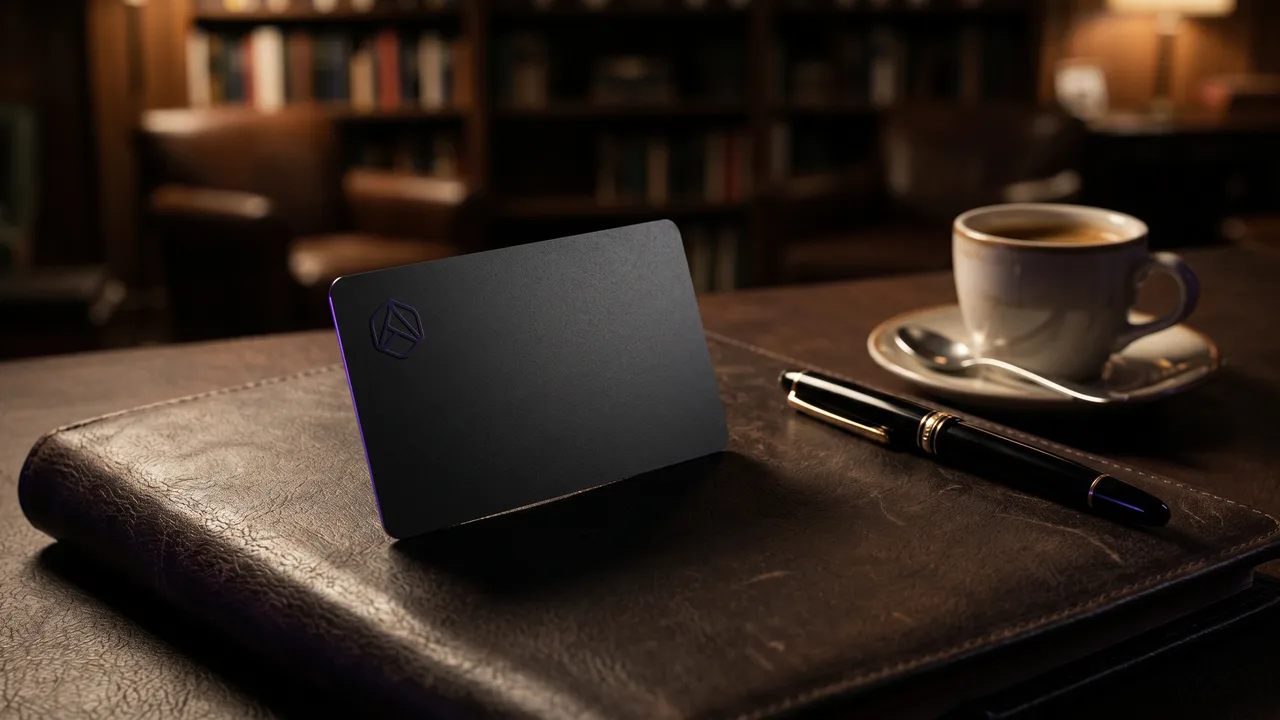
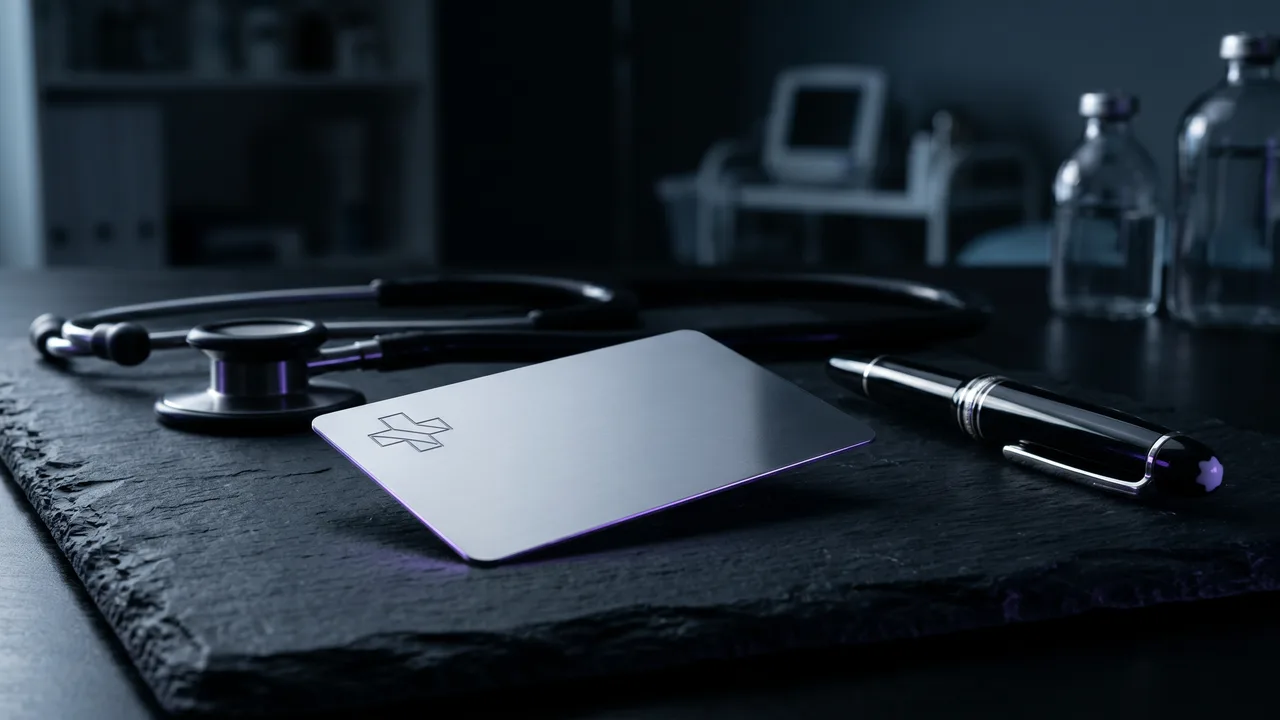
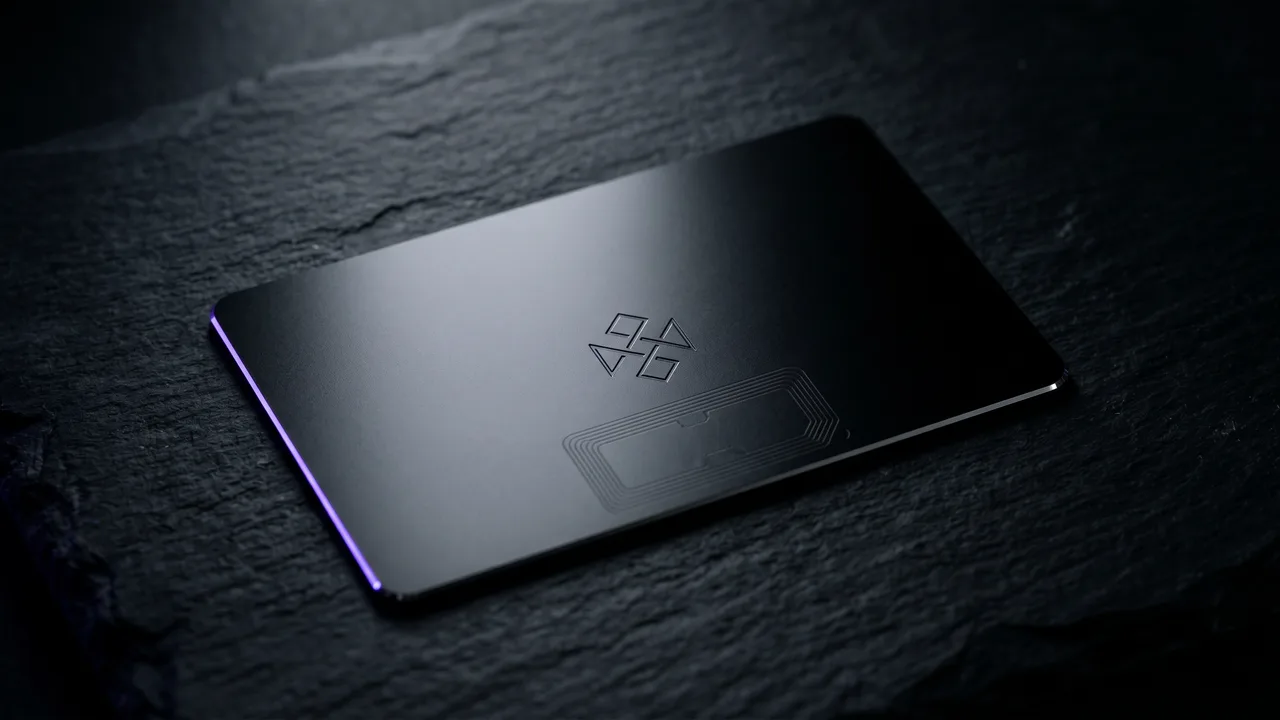
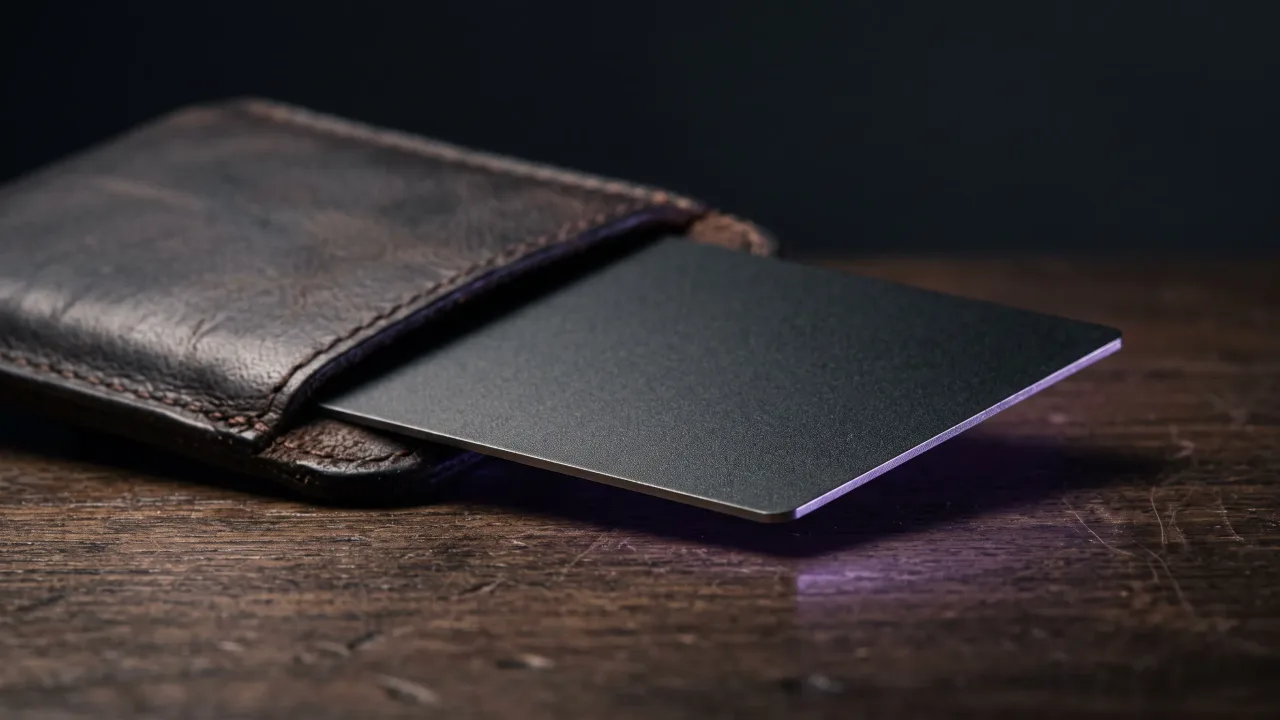
A metal NFC card is heavier than every other object in the exchange. It catches light differently because the design is engraved into the surface rather than printed on top. The first half-second of contact registers as object rather than promotional material, and the brain quietly reclassifies the person handing it over to match the object they just produced.
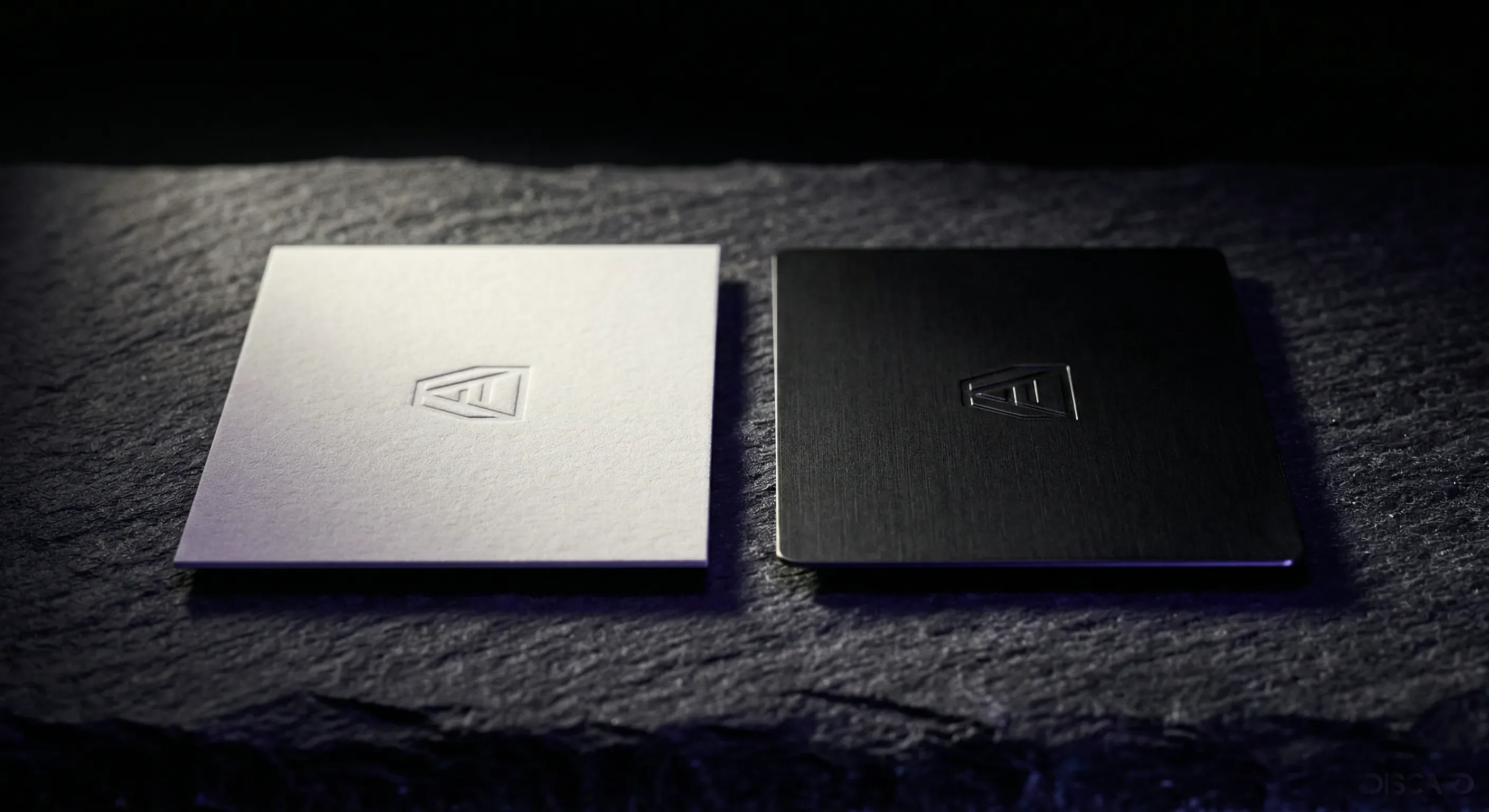
The signal is not snobbery. It is what evolutionary biology calls a costly signal: a gesture whose meaning depends on the fact that it was expensive or difficult to produce. A heavy, engraved card is easy to read and hard to fake. The recipient knows, without being told, that you chose this object on purpose and paid for the choice. Compare the two side by side in the paper vs metal breakdown and the experiential difference is exactly what the research above predicts.
Why a QR code sticker fails the haptic test
A whole category of digital business card product solves the digital problem and ignores the physical one entirely. App-only profiles, QR codes printed on paper, NFC stickers stuck to the back of a phone — they all answer the same question: how do we move contact information faster? They miss the actual job.
The job of the exchange was never the contact information. The job was the moment. A QR code printed on a sticker has no weight, no edge, no temperature, no permanence. It produces a contact record without producing a memory, and the recipient walks away with your details and almost no impression of having met you.
This is why an exclusively digital card under-performs against a printed equivalent in the moment of handoff, even when the digital design is beautiful. There is nothing for the brain to thin-slice on. The haptic channel is empty, and that channel is doing most of the work in the first seven seconds.
Designing for the moment, not the medium
If the first seven seconds are doing the heavy lifting, the brief writes itself. Design for the moment of handoff. The card should be heavy enough to register as an instrument. The finish should be considered enough to reward a second look. The face should be uncluttered enough that the eye lands on one mark and stays there.
Specifically: weight at or above six grams, a single material rather than a sandwich of layers, one strong typographic anchor instead of three, engraving rather than print where budget allows. None of this is decorative. Each item is a haptic or visual variable the recipient is weighing in those first hundred milliseconds, then again in the seven seconds, then again every time they pull the card out of a drawer.
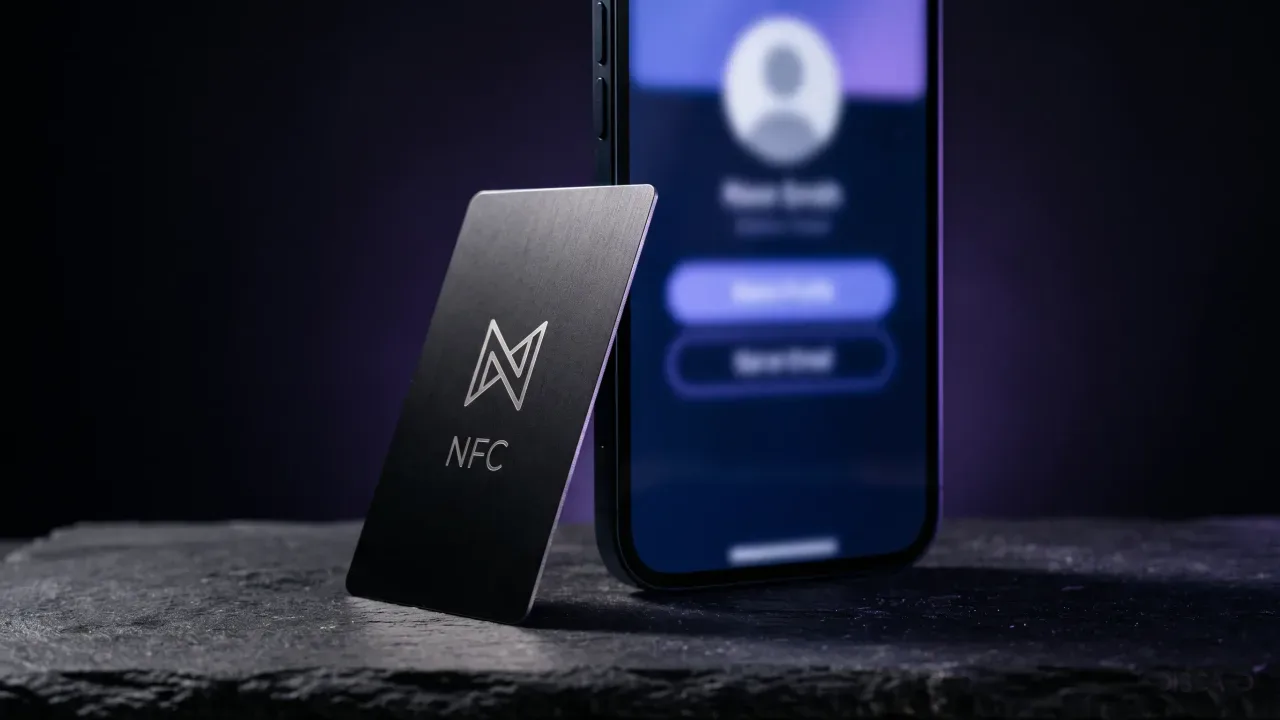
Then attach a profile worth using later. The tap is the bridge from the moment to the relationship, and a beautiful card pointing at a half-finished page wastes the signal it just earned. Build the card in the configurator and the digital profile at the same time. Two posts go deeper on the practical side: how to design for creative professionals and how to build a profile that actually gets saved.
The verdict
A premium first impression is not a flourish on top of a transaction. It is the substrate the rest of the conversation rests on, and social psychology has named every part of it: thin-slicing, costly signalling, the weight effect, haptic priming. The recipient is running all of these computations in the background whether you designed for the result or not. A heavy, engraved metal card with a working tap and a finished profile feeds the brain the inputs that produce the answer you want. A folded paper card asks the brain to fill in the gaps, and it will, but rarely in your favour. Cards are not for sending contact information. Phones already do that. Cards are for the seconds before anyone has said a word.
Build a card and profile that earn the seven seconds before you have spoken a word.
Open the ConfiguratorFrequently asked questions
What is thin-slicing in social psychology?
Thin-slicing is the brain's habit of forming durable judgments about strangers from very short exposures, often under a second. The research by Ambady and Rosenthal in 1992 and Willis and Todorov at Princeton in 2006 showed those snap judgments are stable and often accurate. A business card is one of the first physical inputs into a thin-slice judgment in a face-to-face meeting.
Does the weight of a business card really change how the recipient sees you?
Yes, within limits. A 2010 study in Science by Ackerman, Nocera and Bargh showed that people holding heavier clipboards rated the same resumes as more serious and more capable than those holding light clipboards. The brain uses physical weight as a metaphor for importance, so a heavier card quietly shifts perception even when the recipient cannot articulate why.
Why do digital-only business cards underperform metal ones in person?
Because the digital channel only carries half the signal. A QR code on a sticker, an app profile, or an NFC tag with no card body has no weight, no edge, and nothing for the brain to thin-slice on. The contact information arrives but the memory of the exchange does not, which is the opposite of what a card is for.
What makes a card feel premium without looking gimmicky?
Three variables: weight at or above six grams, a single material rather than a sandwich of layers, and an unfussy layout with one strong typographic anchor. Engraving rather than print reinforces the same signal. Anything beyond that is decoration and tends to read as overcompensation.
How long does the first impression of a business card actually last?
The initial impression forms in the first second of contact and is durable. Subsequent information mostly fits into the frame the first impression already set, rather than replacing it. This is why design for the moment of handoff matters more than any slogan printed on the card.
Does any of this matter in remote-first work?
Yes, because most professional relationships still pass through a small number of physical meetings, even in remote work. The card from a conference, a client lunch, or a hand-off in a co-working lobby still sets the frame for the relationship, and the digital follow-up lives inside that frame for the life of it.