You've just walked a client through a three-month brand identity. The deck is tight. The logo lands. Then you reach into your jacket and hand them a 350gsm card with your name on it, a card that took thirty seconds at a print shop. That gap, between the work you do and the object you leave behind, is where this conversation starts.
NFC business cards for creative professionals close that gap. A laser-engraved metal card, paired with a digital profile that opens on tap, behaves the way the rest of your portfolio behaves: durable, considered, edited. This piece is for the architects, designers, photographers, creative directors, and design-led founders who already pay attention to small objects, and who are starting to wonder whether their card is the last thing in their kit that hasn't caught up.
The contradiction at the centre of every creative meeting
Most creative work runs on a quiet promise: that you care more about details than the average person. Type spacing, paper stock, the kind of lighting on a product shot, the cadence of a deck. You build a career on noticing things, then on making things that show that noticing. A paper business card is the moment that promise gets tested.
The recipient might not register the contradiction consciously. They will register it as a small dip in trust, a slight slip in the story you've just told them. Paper cards bend, smudge, get filed in a holder, get lost. The card is the last thing you give them, and it is also the only thing they take home. It is doing more memory work than the substrate can carry.
The frustrating part is that there's no good reason for this to keep happening. Engraved metal cards exist now, work without an app, and cost less over five years than reprinting paper does. The default is just sticky.
What an engraved metal card says before you say anything
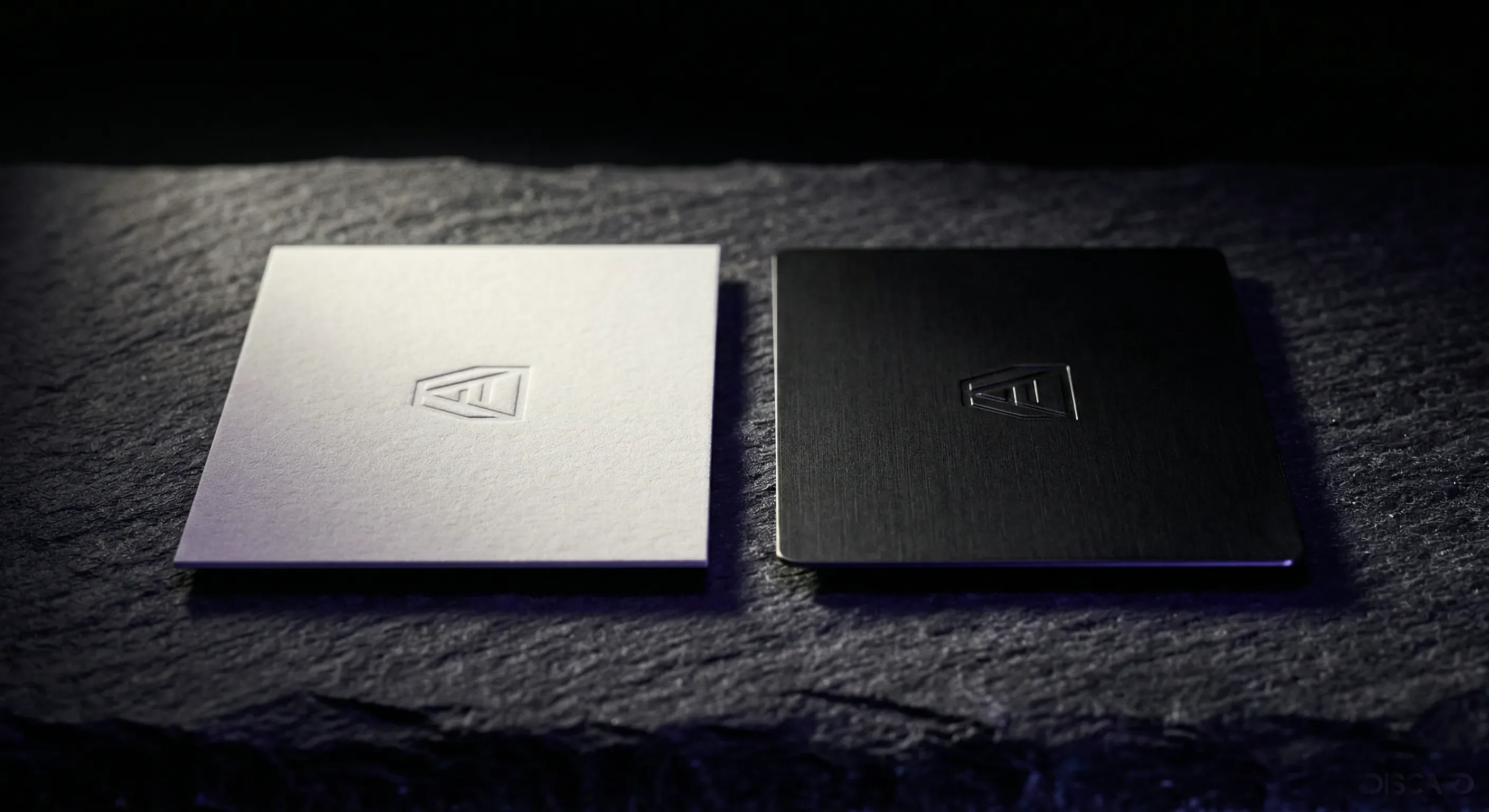
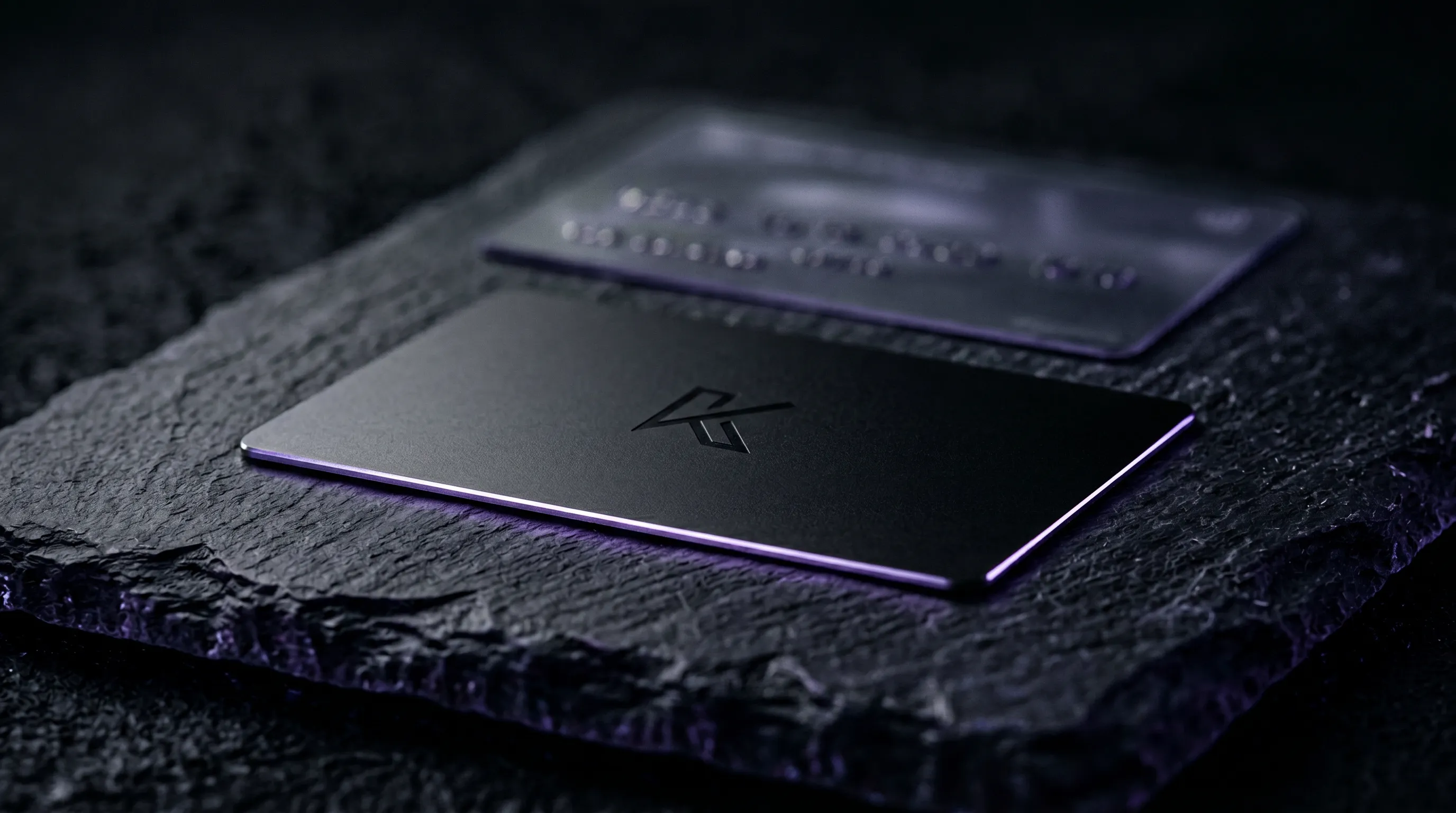
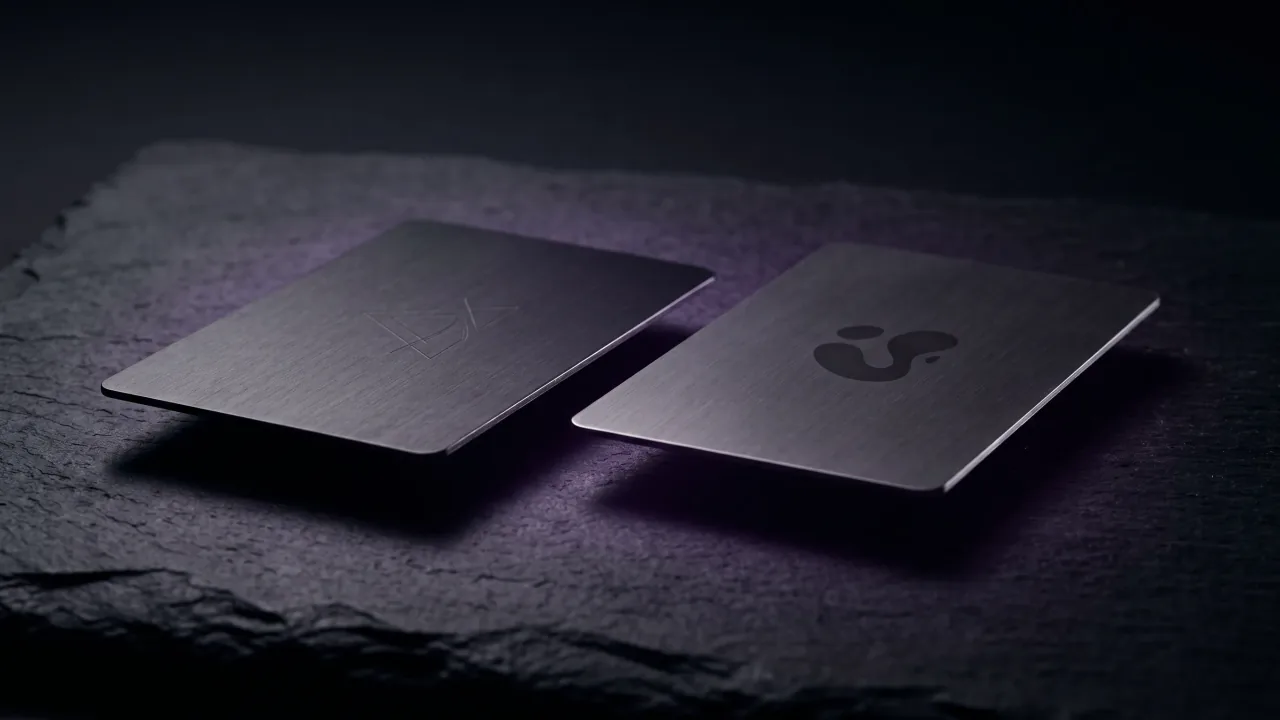
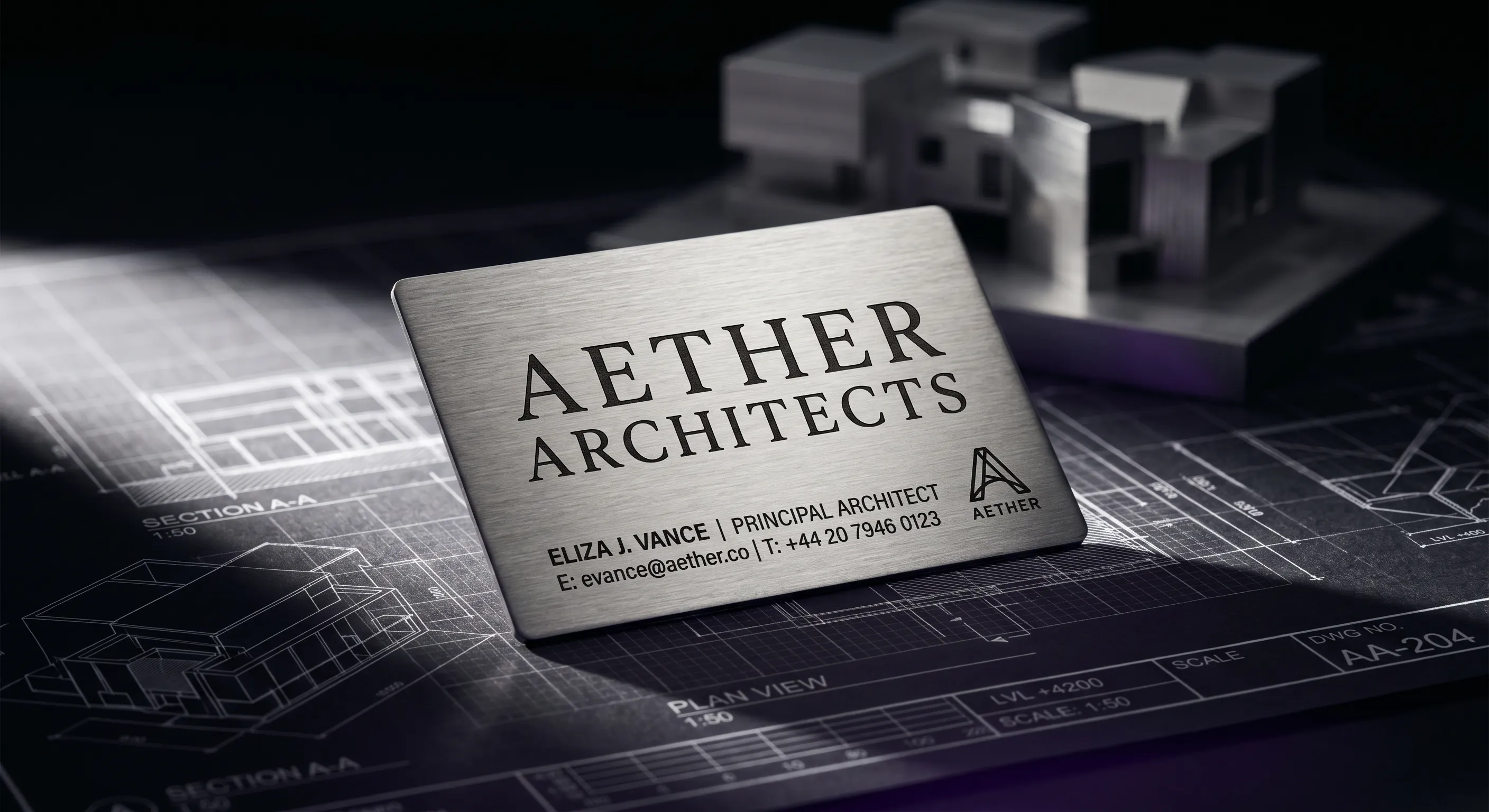
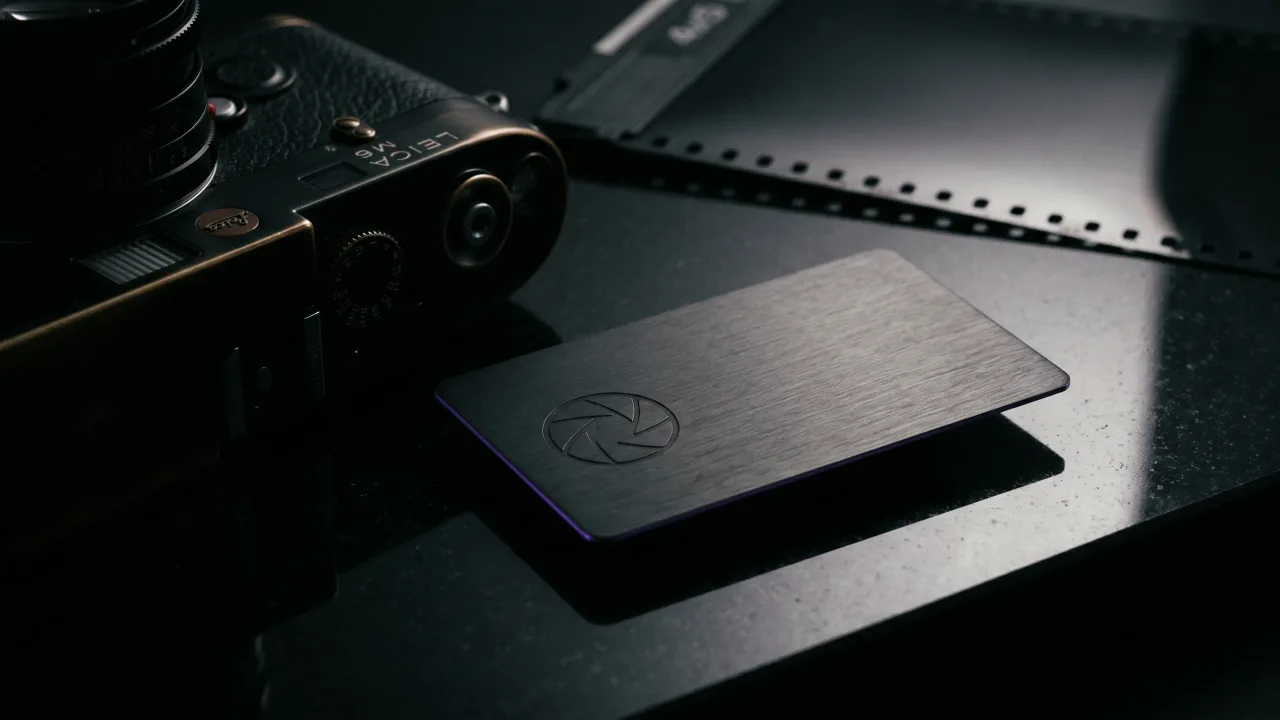
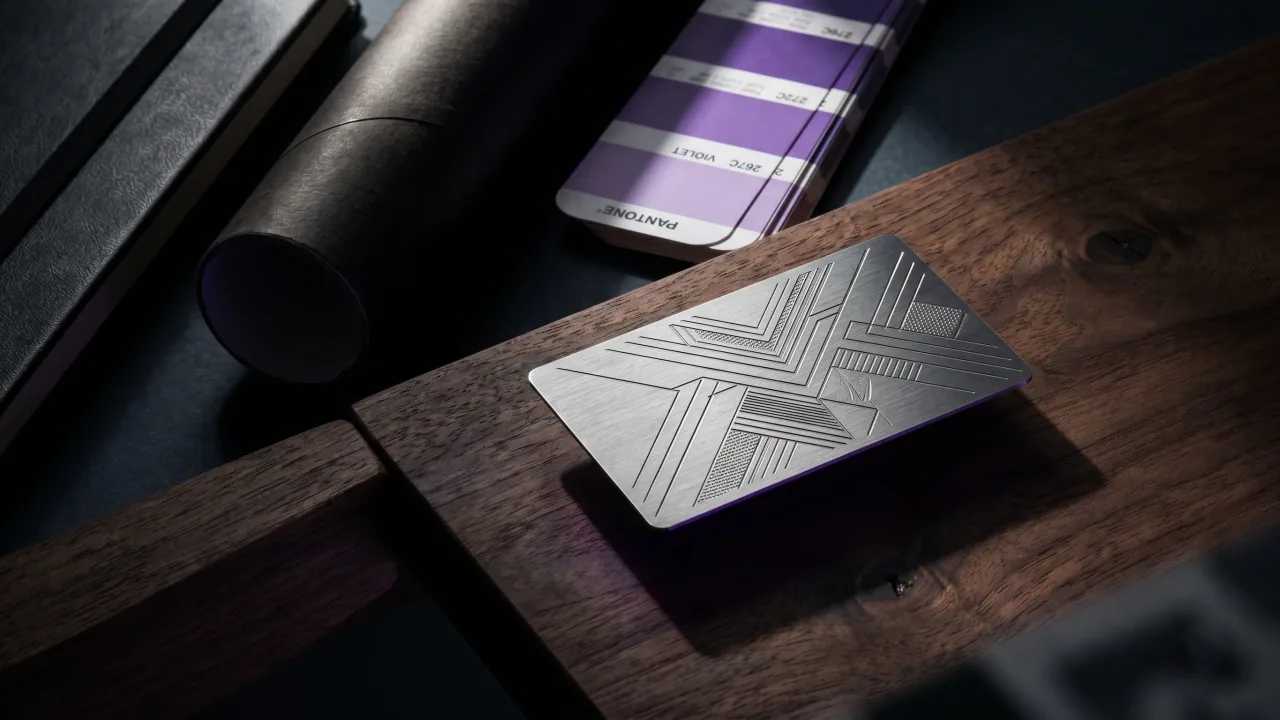
Pick up a Discard card and three things land before any conversation starts. There is the weight, around 25 to 30 grams in the hand. There is the feel of a brushed surface that takes light differently from coated paper. There is a sharp engraved line where your logo or name has been cut into the metal, not printed on top of it. None of this needs a pitch.
For a creative professional, those signals do real work. They tell the recipient that the person standing in front of them has thought through this object the way they would expect them to think through any other deliverable. The card becomes a proof of taste, in advance of any proof of skill.
You can argue, fairly, that a great paper card on Colorplan or Mohawk does some of this too. It does, for a few weeks. Then it lives in a drawer with sixty others, and it gets harder to remember which one was yours.
How the digital profile extends the first impression
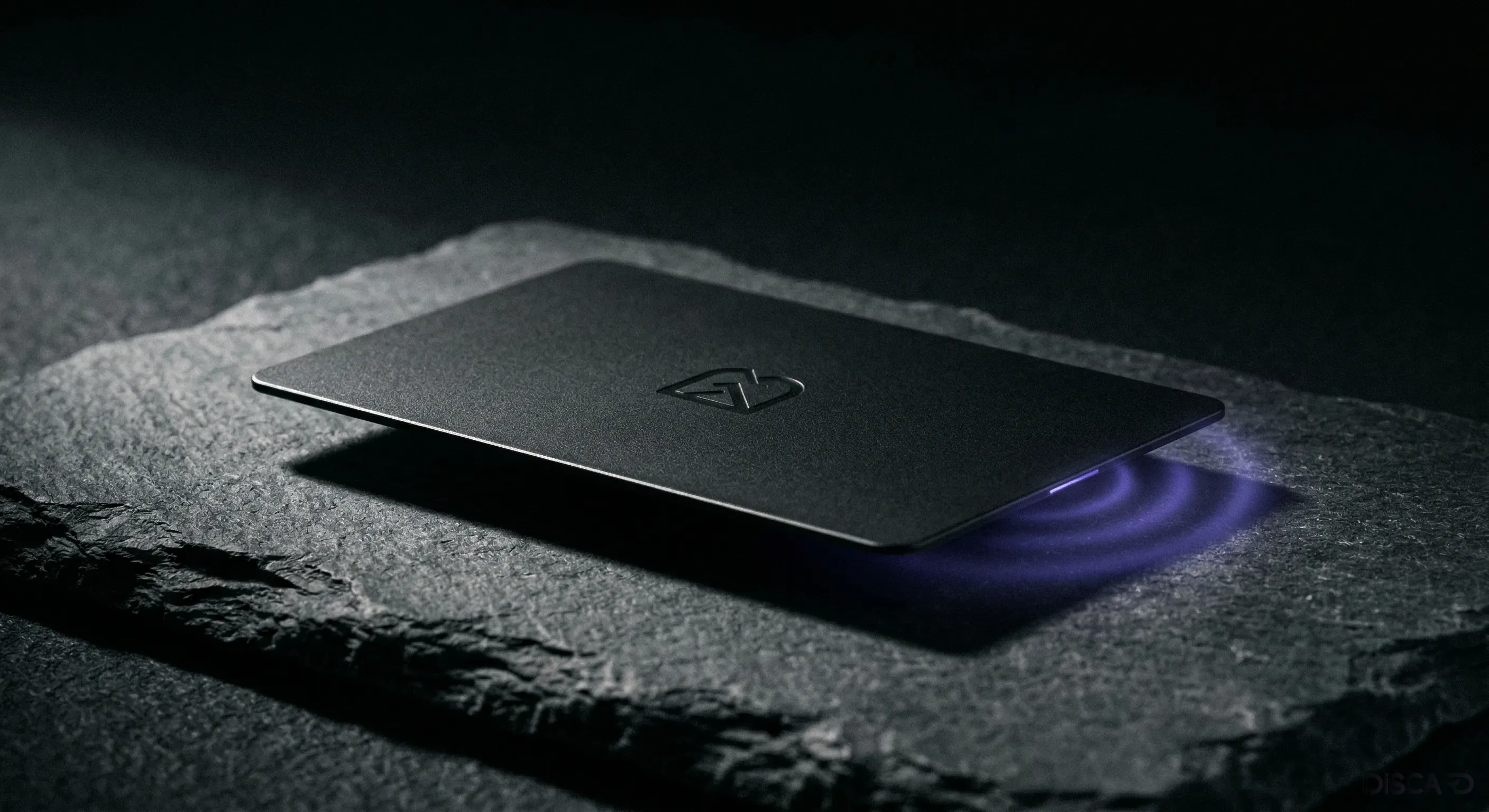
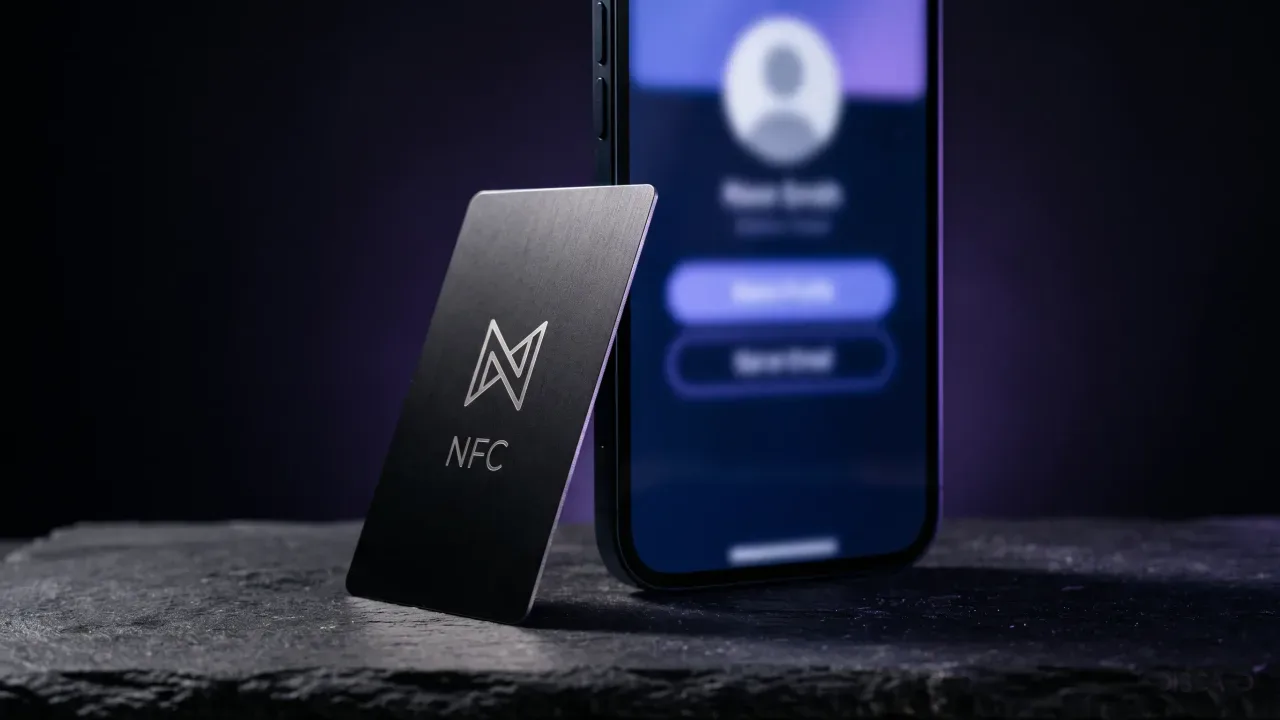
Tap a metal NFC card to a phone and the recipient's browser opens a profile in under a second. No app, no permission prompt, no typing. For a designer, the profile is the second half of the card. The card is the object; the profile is where the work lives.
On a Discard profile you can put a hero image, a short bio, links to your portfolio, your Behance or Are.na, your studio Instagram, your booking calendar, a contact form, and a vCard download. The profile is editable from a dashboard, so the card never goes stale when your roster, rates, or specialisation shifts.
The friction this removes is bigger than it sounds. The classic post-meeting flow is: the prospect remembers your name, googles you, lands on a LinkedIn from 2019 with the wrong job title, gives up. With the card already tapped, they have your current portfolio in a tab before the meeting is over. Most of them save your contact directly from the profile, which is what you actually wanted.
Why printed cards age badly in creative work
Printed paper cards age in two directions, and both of them work against you. They wear out: the corners crease, the ink scuffs, the paper softens. That happens within three to six months of regular handling. They also go out of date. A new role, a new agency, a rebrand, and the card is now a tiny piece of historical fiction in your jacket pocket.
Engraved metal cards do neither. Engraving cuts into the metal, so there is no surface layer to wear off. The same card that ships to you today still looks the same in five years. And the digital profile is editable, so the information on the chip is always live, even if the metal in your hand was made before your last role.
That separation between the physical object and the editable profile matters more for creative careers than for any other kind. Designers move between studios. Photographers shift specialisations. Architects move between practices. The card has to outlast the title.
Who's actually carrying these cards
The pattern that keeps showing up is people whose work depends on a strong first impression in low-frequency, high-stakes meetings.
Architects, who hand a card and expect the recipient to remember a practice that produces buildings, not pamphlets. The engraved card does ten seconds of priming before any portfolio is opened on the profile.
Creative directors, who advise clients on brand identity for a living, and cannot reasonably defend handing over a generic paper card while doing it. The card has to be congruent with the advice.
Photographers, whose work is everything and whose paper card carries none of it. The profile can hold a hero image and a portfolio link, so the metal card does the work of remembering for them.
Founders of design-led companies, who treat their card the way they treat their landing page. It is part of the brand surface, not a piece of admin.
What it costs and how the maths works out
A Discard metal card starts at €40 — a one-time purchase that does not expire. The digital profile it links to is €19.90/year, a single annual fee that keeps the page live and editable. The card is yours; the profile is one transparent recurring line item, not a tiered subscription with locked features.
The reasonable comparison is not against the cheapest paper card. It is against the print spend over the lifetime of the card. A creative who reprints two to four times a year on decent stock spends €240 to €480 over three years. The metal card removes that line item. It also removes the annual ritual of recovering from a printer error you didn't catch in proof.
For freelancers, the calculator is simpler still. One paid project where the card actually helped close it, and the card has paid for itself many times over. Most of the freelancers we've shipped to report exactly that.
The verdict
For creative professionals, the question is no longer whether engraved metal NFC cards beat paper. They do, on durability, taste, the digital profile, and the five-year cost. The question is when you're going to bring the card up to the standard of the rest of your work. Discard ships engraved metal cards from the EU from €40, with a fully editable digital profile at €19.90/year.
Design your engraved metal NFC card and see the live profile preview before you order.
Design Your CardFrequently asked questions
Are NFC business cards better than paper cards for designers?
Yes, on the metrics designers care about: tactile quality, durability, the depth of information you can share, and how the card ages over five years. Paper cards are cheaper per unit and easier to spec, but they are reprinted constantly and forgotten quickly. For a creative whose card represents their work, an engraved metal card pays back its cost in two or three closed projects.
Do clients need an app to read the card?
No. NFC is built into every modern iPhone and Android, and the recipient's phone opens your profile in their browser the moment the card touches the back of the device. There is no app to install, no permission to grant, and no account to create. That is also why these cards work at the kind of meetings where you cannot ask the other person to set anything up.
Can I put my full portfolio on the digital profile?
You can put a hero image, a short bio, and any number of links, including direct links to a Behance, Are.na, Vimeo, or a self-hosted portfolio. The profile is meant to be a launch page, not a replacement for your portfolio site. Most designers point the profile at their best three or four case studies and let those carry the work.
Will a metal business card fit in a normal wallet?
Yes. Discard cards match standard credit-card dimensions and slim cardholders take them without trouble. They sit at around 25 to 30 grams, heavier than paper but not bulky. Owners typically keep two or three on hand: one in the wallet, one in a laptop sleeve, one in a meeting bag.
How do I update the profile after a rebrand or job change?
You log into your Discard dashboard and edit. The change is live the next time anyone taps the card, with the same chip and the same metal pointing to fresh information. There is no reprint, no email update to past contacts, and no risk of an old card pointing at a stale page.
Is the up-front cost worth it for a freelance designer?
For most freelancers, yes. The economics work the moment the card helps close one project, and engraved metal does more work in a first meeting than a paper card does. The bigger argument is that the card stops being a recurring print spend and becomes a one-time investment. Most freelancers we ship to keep using the same card for years.
Does the metal scratch with everyday use?
Brushed stainless steel develops a fine surface patina with daily handling, the same way a watch case or a kitchen knife does. The engraving itself is cut into the metal and does not wear off. After two or three years of pocket use, the card looks lived-in rather than damaged.