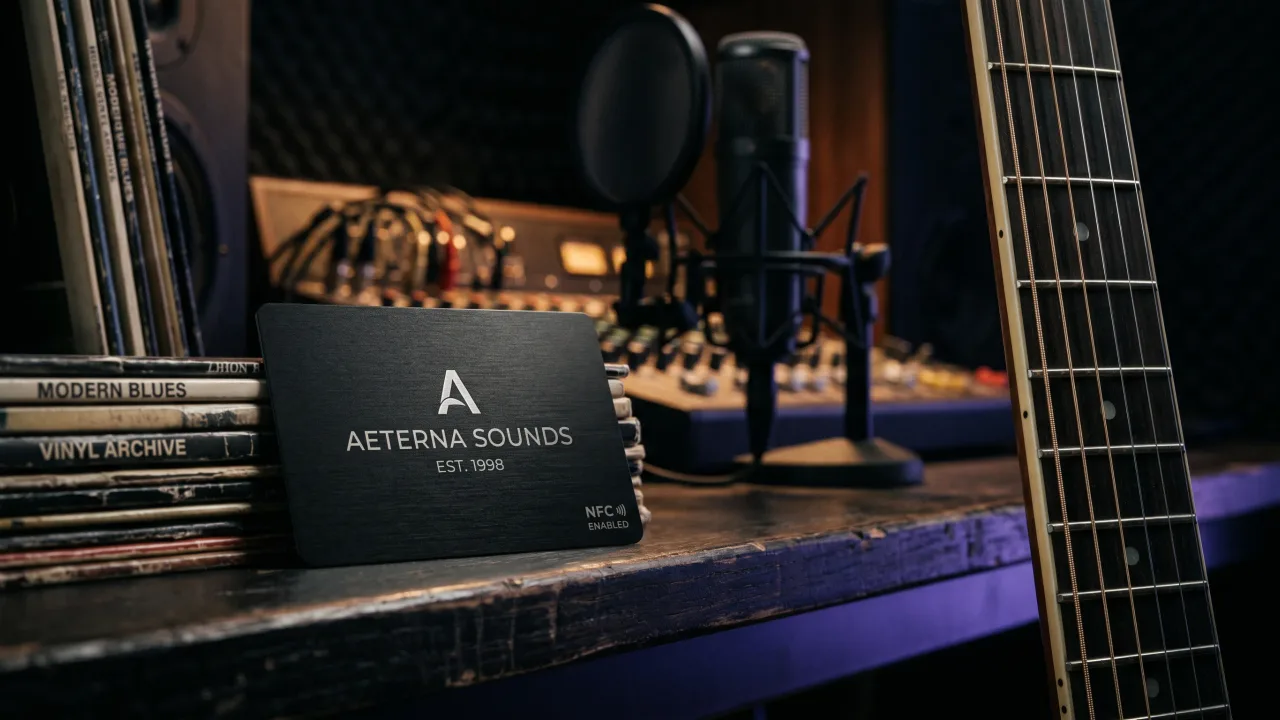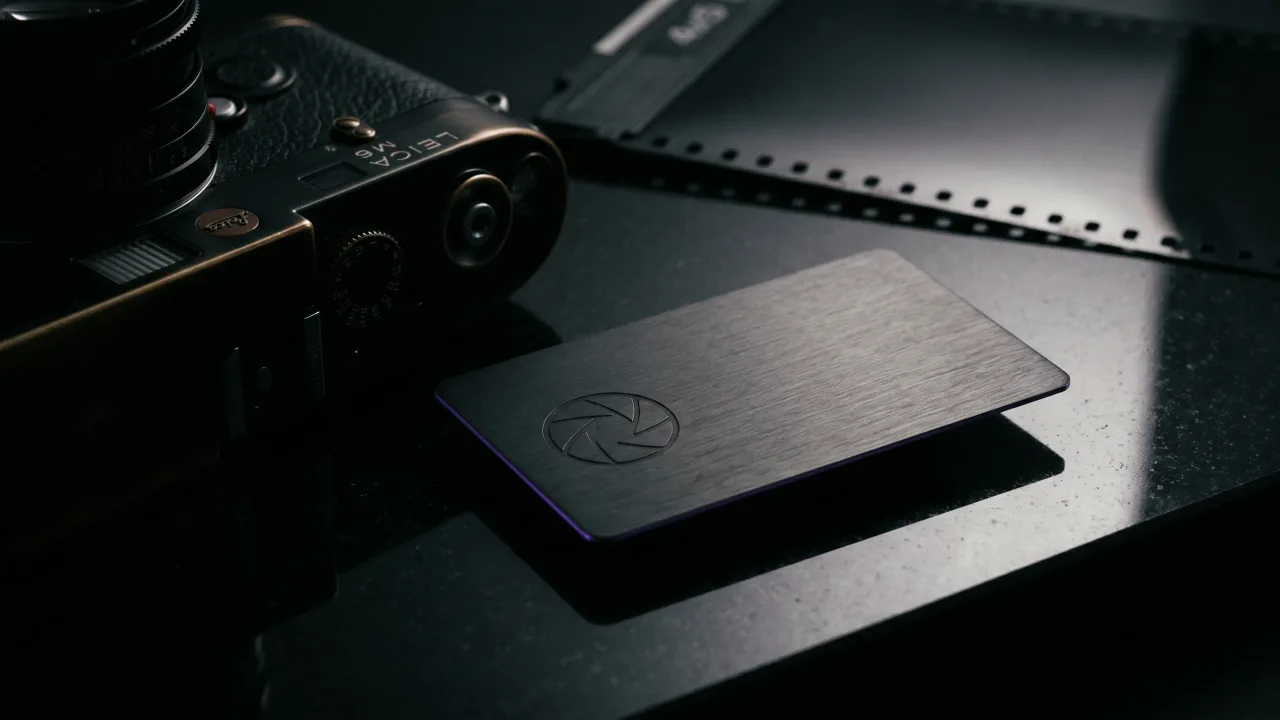
You spend €3,000 on a lens, €1,200 on a body, and a few hundred a year on light modifiers, then hand over a paper card at the end of a shoot consultation. That card cost fifteen euros for a stack of two hundred. It is the only object in the meeting that does not behave like the rest of your gear, and it is the one the client takes home.
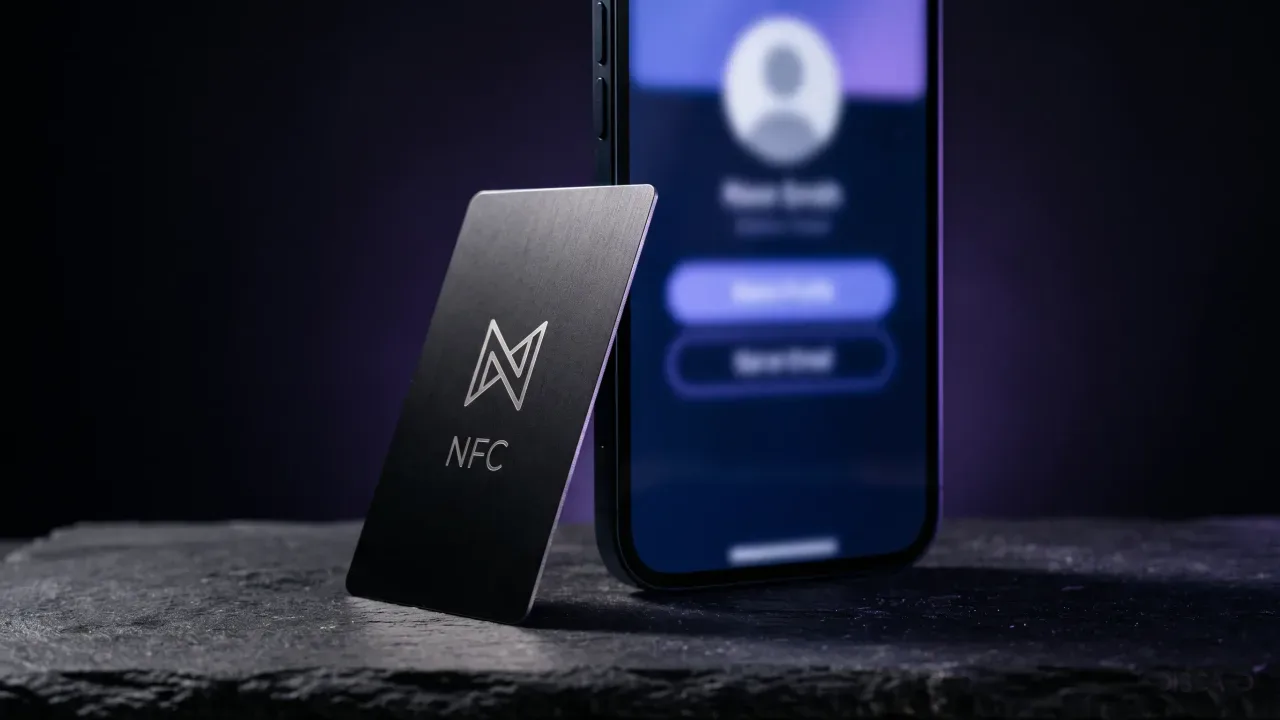
An NFC business card for photographers fixes the asymmetry. One tap from the back of an iPhone or Android opens your portfolio in the recipient's browser in under a second, with no app. The card itself is engraved metal rather than printed cardstock, so it ages on the same timeline as the work it is introducing.
The photographer's contradiction
Photography is the most visual profession in any first meeting, and the paper business card is the least visual surface in the kit. A 300dpi rectangle of contact details, printed on the same stock the accountant down the hall uses, gets handed across a table at the end of a client call. The work that earned the meeting is invisible on the object that ends it.
Most photographers know this and treat the card as an afterthought, because the format itself feels like an afterthought. A creative who spent fifteen years building a portfolio can defend handing over a paper card only if the card is also the work, which it never is. The card is a stand-in, a placeholder where the work should be.
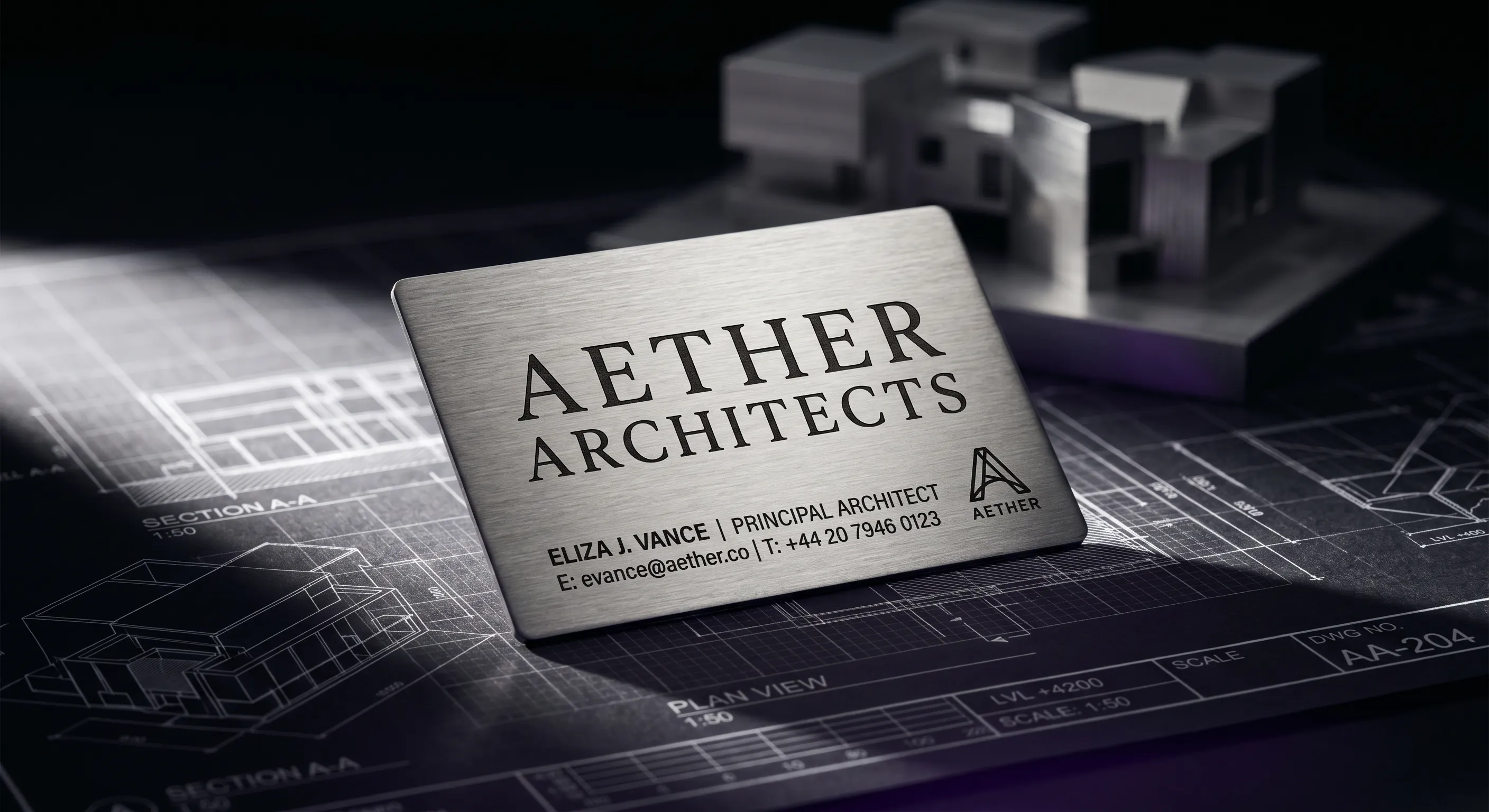
An engraved metal card with a working tap removes the placeholder. The object in the recipient's hand becomes a real surface, with weight, a finish, and an engraved logo, and the tap becomes the bridge to the work the meeting was actually about. The same recipient who would have put a paper card in a coat pocket is now scrolling your last three series on the train home. The broader case for the format is in the post on NFC business cards for creative professionals; this piece is about what changes when the creative is specifically a photographer.
What the card has to do in the first five seconds
A first meeting with a photographer is a tactile decision wrapped inside a visual one. The client is deciding whether your eye matches their brief and whether the version of you sitting across the table matches the version they imagined when they opened your website. The card is the only object inside that decision window.
It has five seconds to do three things at the same time. Feel like the rest of your work, considered and durable rather than a stock template. Surface the portfolio fast enough that the recipient does not have to remember a URL to find you again. And age well enough to still be on a desk in six months when the client finally has budget for the shoot. The psychology of that window is covered in the post on first impressions; the photographer-specific version is that every input lands on someone whose job is reading images.
Paper cards fail the second and third tasks by default. The first task they sometimes manage on a Colorplan or Mohawk stock with a good print run, for two or three weeks, until the corners crease and the card disappears into a drawer. An engraved metal card with an NFC chip does all three at once and does not stop doing them.
Why engraving is closer to a photographer's signature than ink
Engraving is reductive. The mark is cut into the metal the way a photograph is cut out of a wider scene by the frame. Ink is additive, a layer applied on top of a surface that has nothing to do with the image, and it can scuff off, wear unevenly, or print badly without anyone noticing in proof.
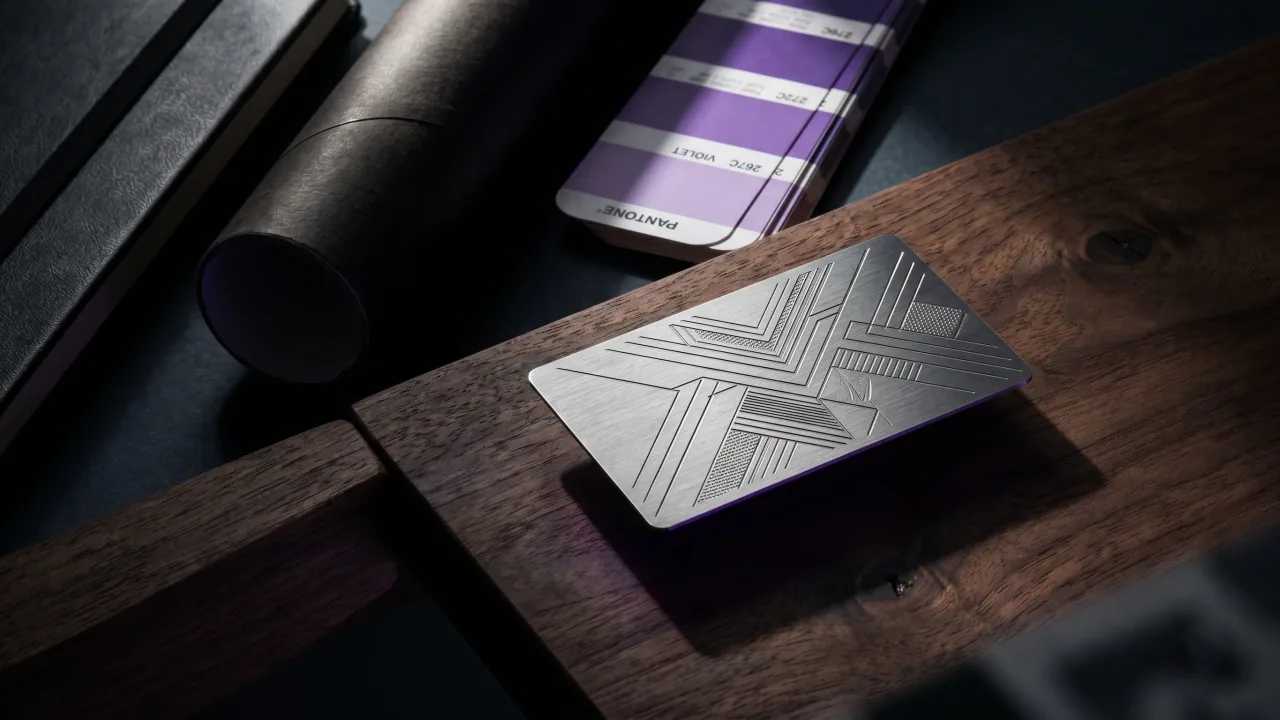
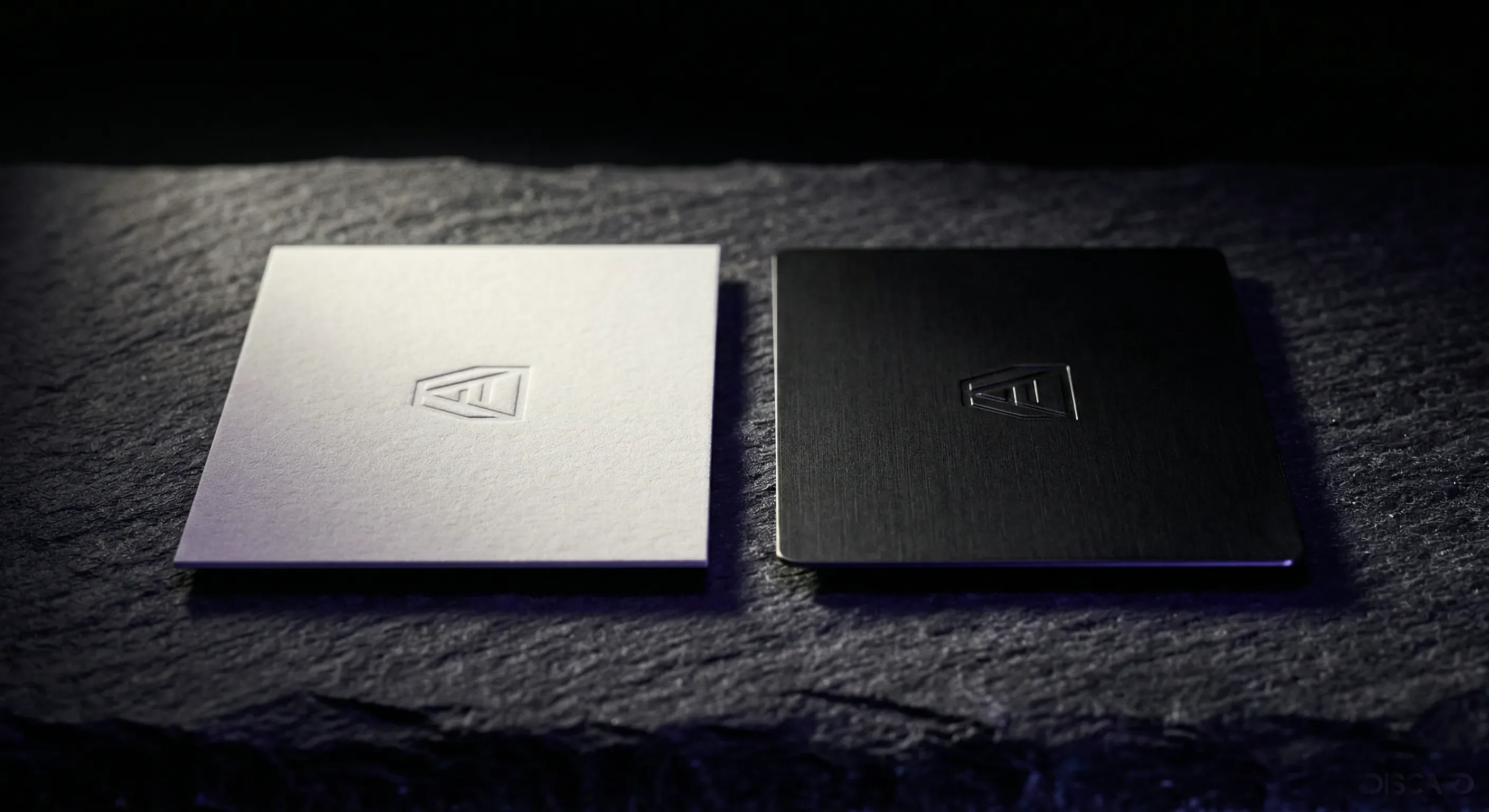
On a brushed stainless or matte black Discard card, the engraved line catches light the way silver gelatine catches it. The surface is the image, not a coating over the surface. For a photographer used to thinking in terms of substrate, that distinction lands without explanation. The medium is the message, in the most literal way. A side-by-side against print sits in the paper vs metal breakdown.
The practical consequence is that the same card looks the same in five years. The work behind the tap can change, with new series, a new agency, a new specialism, but the object stays a clean signature in the recipient's hand.
How to set up a photographer's profile that actually gets used
The card is half the system. The other half is what loads on the tap, and a generic contact-card page is not enough for a photographer. The profile has to behave like a portfolio site, even if it is sitting at one tap from a metal card.
Lead with a hero image. The first thing the recipient sees on the profile is a single still from your strongest series, not a name and a phone number. Photography clients scroll on visual first impressions, and the profile follows the same rule. Below the hero, three or four featured projects with thumbnails and one-line captions.
Then add a direct link out to the full portfolio on your domain, an Instagram embed if your IG is doing the heaviest portfolio work, and a calendar or contact button at the bottom for booking. The digital profile tips guide covers the structure in more detail. The photographer-specific version is just gallery-first, with everything else following the visual hierarchy rather than leading it.
Keep the profile editable. Specialism shifts, agency representation changes, a new series replaces the old hero. The profile is the part that moves, and the card is the part that does not. That is the right split for a creative career.
The five-year cost against printed cards
A photographer's print spend is usually invisible because it is spread out. Two hundred Colorplan cards from a decent press run €120 to €180. Most working photographers reprint at least twice a year between a new email, a new website, new representation, or a typo someone caught after the box arrived. Across five years that is a four-figure recurring line item that produces the same object every time, just freshly out of date.
A Discard engraved metal card starts at €40 as a one-time purchase. The configurator lets you preview the card and the live profile together before you order, so the design conversation happens once and the card does not need to be reprinted to fix typography. The profile sits at €19.90 per year, flat, with no tiers and no feature locks.
By month eighteen the metal card has paid for itself against print alone, and the comparison after that is between an object that keeps working and a print order that has to be placed again. For most working photographers, one project where the card actually contributed to the booking covers the full lifetime cost in a single line.
What an NFC card is not built to do
An NFC card is not a replacement for your portfolio site. It is the fastest entry point to it. The full portfolio still lives on your own domain, where you control the layout, the typography, and the URL structure for search. The profile behind the card is the first impression of the portfolio, not the whole thing.
It also does not handle bulk distribution well. A handful of cards at a high-stakes client meeting, a workshop, or a gallery opening is where the format earns its keep. If your distribution model is leaving stacks at a trade-show table, paper still does the job, until you decide the stacks were never converting in the first place.
The verdict
For a photographer, the question is not whether NFC business cards beat paper. They do, on every metric that matters: tactile signal, portfolio depth, durability, and five-year cost. The question is whether you want the object the client takes home to look like the rest of your work, or like the work of the accountant down the hall. Discard ships engraved metal NFC cards from the EU from €40, with a gallery-first digital profile at €19.90 per year. The card outlasts the title; the profile keeps up with the work.
Design an engraved card and a portfolio-first profile in one place, with a live preview of both before you order.
Open the ConfiguratorFrequently asked questions
Do clients need an app to view a photographer's NFC business card?
No. <a href="https://en.wikipedia.org/wiki/Near-field_communication" target="_blank" rel="noopener noreferrer">NFC</a> is built into every iPhone from the XS onwards and every recent Android, and the recipient's phone opens the linked profile in their browser the moment the card touches the back of the device. No app to install, no account to create, no permission prompt. That is also why the format works at workshops, gallery openings, and client lunches where setup is impossible.
Can I put my full portfolio on the digital profile?
You can put a hero image, three to four featured projects with captions, and any number of links, including a direct link to your full portfolio on your own domain. The profile is meant to be a fast first look, not a replacement for your portfolio site. Most photographers point the profile at their strongest current series and let the long tail live on the domain it has always lived on.
Will the engraving wear off with travel and daily use?
No. Engraving cuts into the metal rather than printing on top of it, so there is no surface layer to scuff or fade. A brushed stainless card develops a fine patina over years the way a watch case or a lens barrel does, but the engraved mark stays sharp. The card is built to be travelled with, not protected.
What should a photographer include on the digital profile?
One hero still from a recent series, a one-line bio, three or four featured projects with thumbnails, an Instagram embed if it is doing real portfolio work, a link to the full portfolio site, and a booking button at the bottom. The photographer-specific version of the profile is gallery-first, with contact details following the visual hierarchy rather than leading it.
How does this compare to a paper card for a wedding or portrait photographer?
Wedding and portrait work runs on referrals, and the card is the object the referring couple hands to friends six months later. A paper card softens, smudges, and gets thrown out before that conversation happens. A metal card sits on a desk or in a wallet for years, and the tap still loads the current portfolio even if the photographer has changed studios since the card was made.
Are NFC business cards worth it for freelance photographers?
For most freelancers, yes. The five-year cost is lower than reprinting paper cards twice a year, and the upgrade in tactile signal does real work in client meetings where the booking is being decided in the first ten minutes. One booking where the card contributed to the close covers the card and several years of profile fees combined.
Can I update the profile after a rebrand or a specialism shift?
Yes, from a dashboard, in minutes. The metal card never changes; the profile behind it does. The same chip can point at a different hero image, new featured projects, an updated bio, and a new booking link without reprinting anything. The card outlasts every rebrand the photographer goes through.