A musician hands out more contacts than almost anyone, and loses most of them. The flyer at the merch table, the number scrawled on a setlist, the handle shouted over a loud PA. A digital business card for musicians fixes the leak: one tap, every link, the contact saved while the set still rings in the room.
A digital business card for musicians is a single web page that holds your music, your links and your booking details, shared by a tap or a scan. Spotify, a booking email, an EPK and your socials, all in one place you update from your phone. No app for the fan to install, and no card that goes out of date the week your tour does.
What a digital business card does for a musician
Paper cards and printed flyers do one job once. They carry a name and a number until they end up at the bottom of a tote bag. A digital card carries your actual work, the thing a promoter or a fan wants to hear before they decide anything, which is the same reason a tap-to-open profile works for other creatives.
It also stays current. You move a tour date, swap the lead single, change the booking contact, and every card you have ever handed out shows the new version. The link stays the same; what sits behind it does not. That alone separates it from a box of cards printed for last year's lineup.
There is a quieter benefit too. A good builder shows you what people actually tap, so you learn whether the crowd at a rock night opens Spotify or your tour dates, then reorder the card around the answer. A flyer tells you nothing once it leaves your hand.
What to put on a musician's digital business card
More space than a paper card is a trap. The cards that get saved are short and lead with the music, not a menu of social icons.
- Name and act, large and first, with a genre line so a stranger knows what they are about to hear.
- One top track or latest release, set to open in a tap. The music is the pitch.
- A booking button straight to email or a form, so a promoter does not have to hunt for how to reach you.
- Your EPK or press photos behind one clear link, for the people who book and review.
- Two or three platform links that matter, ranked, not the full wall of every service you have uploaded to.
- A save-contact button, so the connection lives in a phone and not a browser tab.
Leave the rest off. A festival booker scanning forty cards backstage decides in seconds, and a tidy card that opens on your best song wins that second over one buried in icons.
One thing musicians forget: make the booking path obvious. A promoter checking your card at 1am does not want to dig for how to hire you. Put the booking button where the eye lands first, and a curious tap turns into a real conversation.
How to make a digital business card for free
You can have a working card today for nothing. Most builders have a free tier that covers one page with your details, your links and a QR code, which is the whole job for a card you hand out at a show.
Start free because it teaches you what you actually want on the card before you spend anything. The Discard digital profile is free to build and use, so you can lay out your tracks, links and booking button and see the card a fan would see. Paid lines arrive later, when you want analytics on which links get tapped, a few cards for a band, or your own look without someone else's logo on the page.
The maths is worth doing if you gig often. A working musician reprints flyers and cards for every release and every tour, and a few hundred at a time adds up fast over a year. A digital card you edit once costs nothing to keep current, and a metal card you hand to the people who matter outlives every box of flyers you would have paid for twice.
Sharing it at the gig, the merch table, the green room
A card you cannot share fast in a loud venue is just a web page. The point is to move from a handshake to a saved contact before the next song starts.
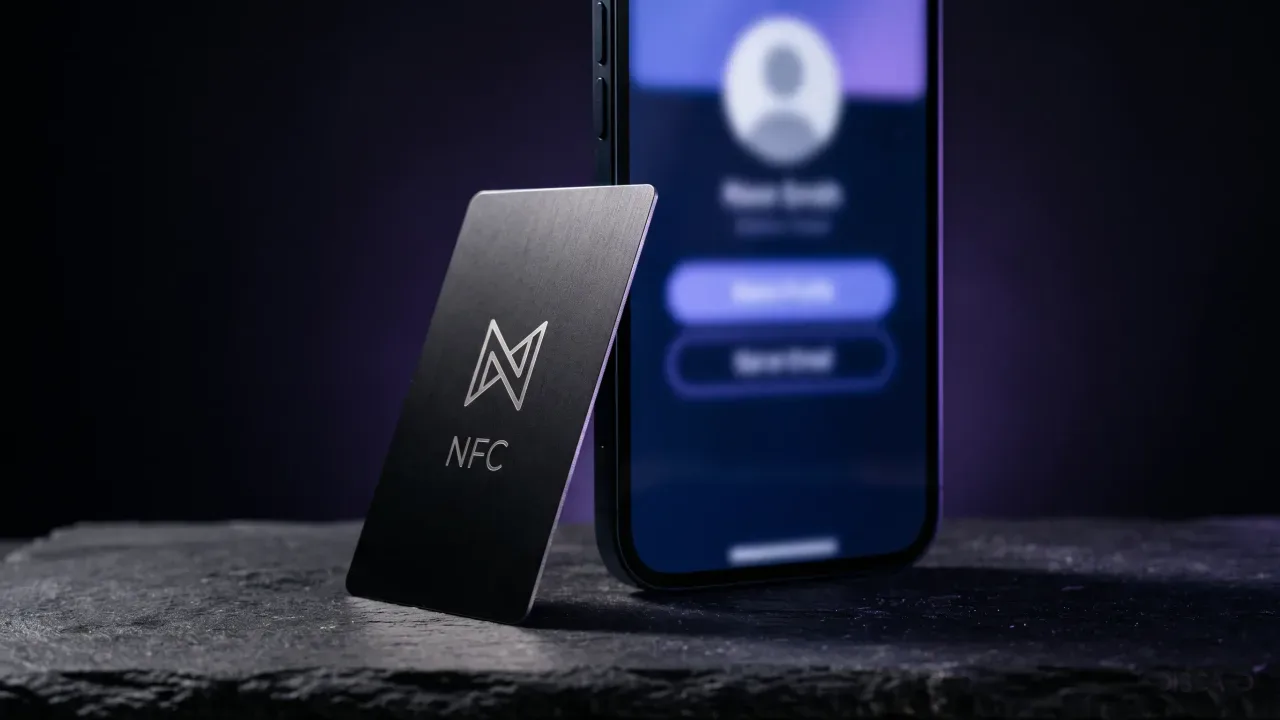
- A tap, if the card sits on an NFC chip, opens your page on the other phone with no app and nothing to scan, which counts for a lot in a dark room.
- A QR code on the merch table, the poster or the screen behind you, read by any phone camera.
- A plain link in your bio, your email footer and the show description, so the card works online too.
The merch table is where this earns its money. A fan who just watched you play is the warmest contact you will get all night, and a tap that saves your number and opens your Spotify beats a flyer they recycle on the way out.
The QR code does double duty. Print it once on the merch banner, the poster and the back of the stage, and it works every night without a reprint. Drop the same link in your stream descriptions and your bio, and the people who find you online land on the exact page you hand out in person.
Cards by role: solo artist, band, DJ, producer
The same card bends to what you do. What changes is the thing it leads with.
| Leads with | Main button | |
|---|---|---|
| Solo artist | Latest single | Follow and book |
| Band | Live video and EPK | Booking email |
| DJ or producer | Mix or SoundCloud link | Bookings and rates |
| Session player | Reel and credits | Hire me |
A solo act pushing a new single leads with the track and a follow button. A band chasing gigs leads with live footage and a booking email a promoter can hit in one tap. A producer leads with a mix and a clear way to talk rates. Same page, reordered for the person in front of you.
If you run more than one project, the card carries that too. A side band, a production alias, a teaching page for students, each behind its own button, so one tap takes the right person to the right corner of what you do.
Why a metal NFC card belongs at the merch table
A software card solves the links. It does not solve the moment, and for a musician the moment is everything. You are not going to ask a fan to scan a QR off your cracked phone screen in the dark while the next act loads in.
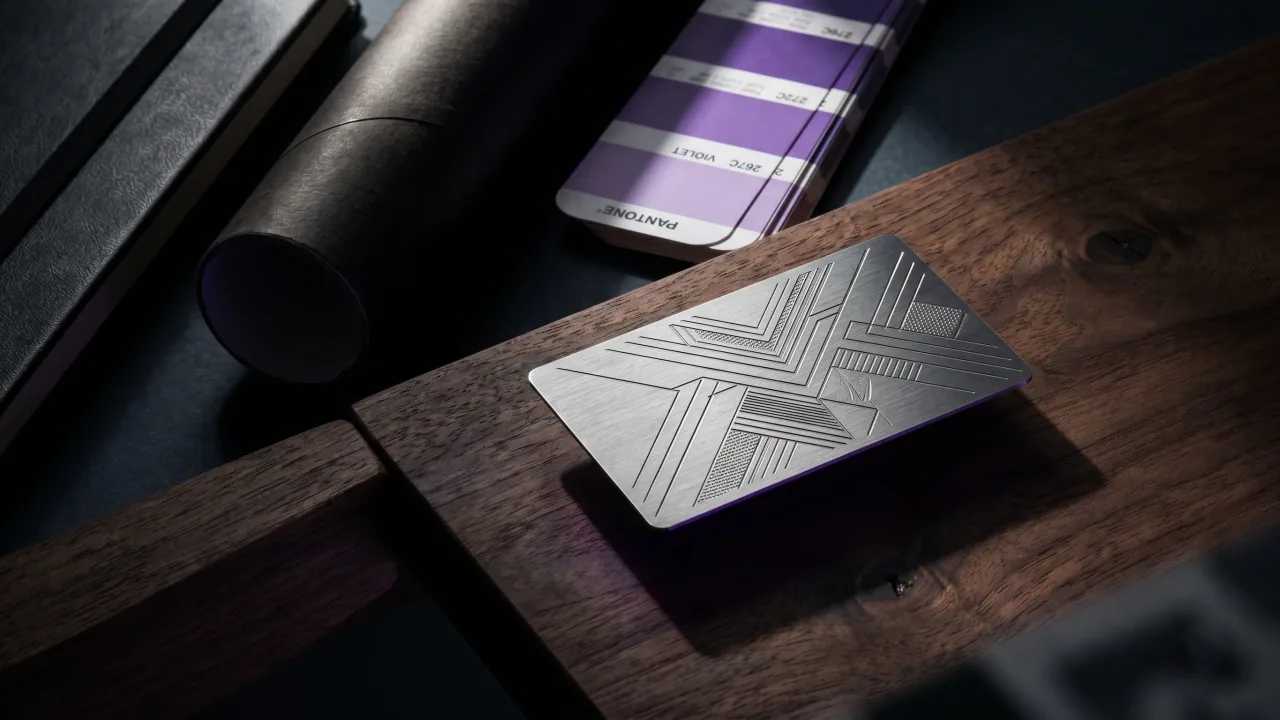
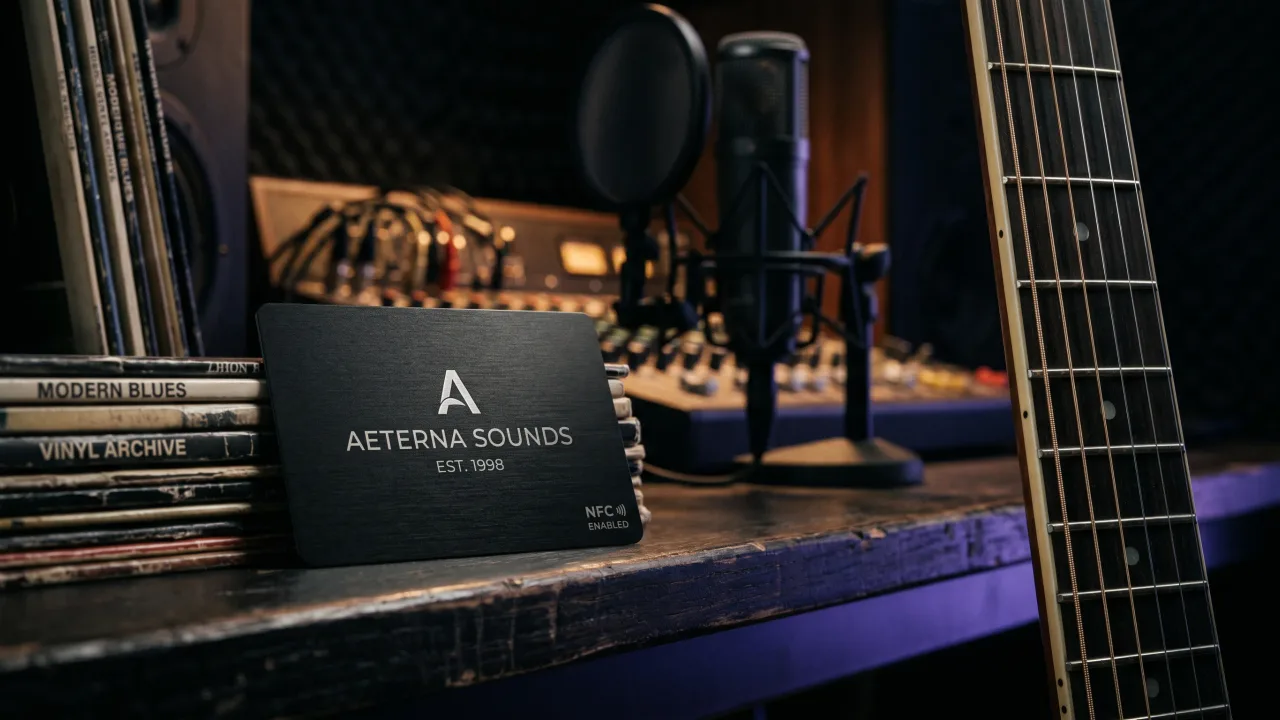
A physical card fixes that. A metal NFC card holds the same profile, but it opens on a tap, with no app and nothing to scan. Any modern phone reads the chip because it follows the standard the NFC Forum maintains. You design it in the configurator, and because the chip points to a page you edit, a new release or a new booking email never means reprinting a box of cards.
There is a status read to it too. Hand a promoter a heavy engraved card and you look like someone who takes the work seriously, the same instinct behind a well-made record sleeve. The fuller version of this for creative work is our guide for creative professionals, and the build basics are the same as for any digital business card.
The verdict: stop leaking fans at the merch table
A musician without a digital card leaks contacts every night, and most of them are fans who would have followed, bought or booked if saving you took one tap instead of squinting at a flyer. Make the free version this week and load it with your best track, your booking button and your links. Hand it out at the next show. When you are ready to look like the act you already are, put it on a metal card that opens your music with a tap. The merch table is no place to be forgotten.
Build your musician profile free, then design a metal NFC card that opens your music on a tap, no app required.
Design your cardFrequently asked questions
What is a digital business card for musicians?
It is a single web page that holds your music, links, EPK and booking details, shared by a tap or a QR scan. A fan or promoter opens it in a browser with no app, hears your latest track and saves your contact in one go.
How do I make a musician's digital business card for free?
Pick a builder with a free tier, add your name, act, top track, booking button and key links, then publish. You get a link and a QR code to share at shows. The Discard digital profile is free to build and use.
What should a musician put on a digital business card?
Lead with your act name, genre and a top track set to open in a tap. Add a booking button, your EPK or press photos, two or three ranked platform links and a save-contact button. Leave the rest off.
How do musicians share a card at a gig?
Tap an NFC card to a fan's phone, or put a QR code on the merch table, poster or screen. Both open your page with no app. The merch table right after your set is the warmest moment to do it.
Do NFC business cards work for bands at festivals?
Yes. Any modern phone reads the chip with a tap, and the same profile can carry live video, an EPK and a booking email. One card per member can point to a shared band page or each player's own profile.
Can a digital business card play my music?
It links straight to your track on the platform that hosts it, set as the first thing a visitor sees. The card is a web page, so it opens your music in a tap rather than storing the audio file itself.