An architect spends three months on a competition pitch and hands the client a paper business card on the way out. The pitch is metal-bound, the boards are mounted, the renderings are gallery-grade. The card is 300gsm cardstock from a discount printer template. Something is off.
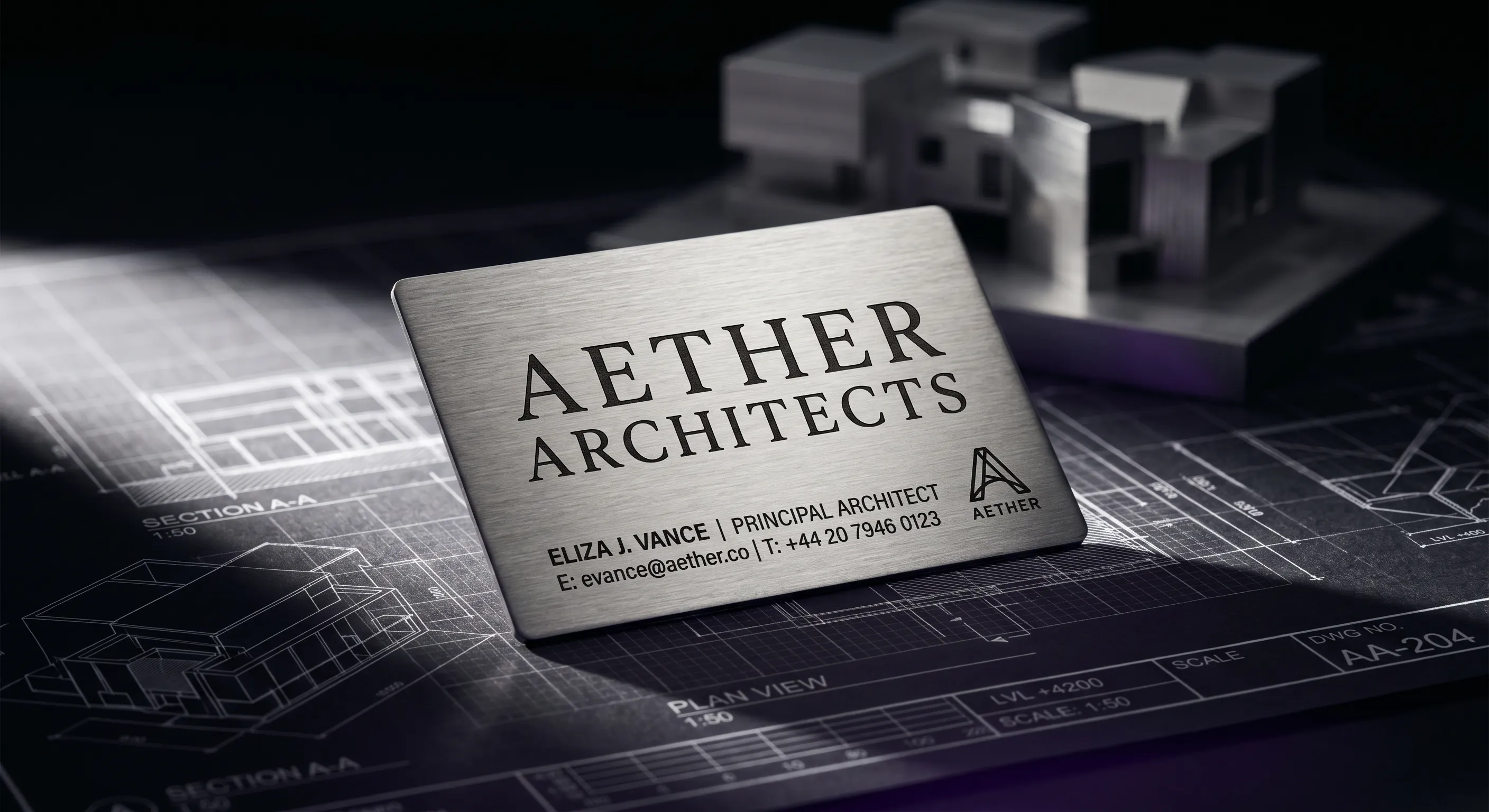
An NFC business card for architects fixes the wrong end of that asymmetry. Tap the card on a client's phone and your full portfolio loads in under two seconds: projects, photographs, awards, contact details. No app, no typing, no business-card-back-of-the-Rolodex purgatory. The handoff becomes part of the work.
The portfolio handoff problem
Architects depend on visual evidence. A pitch ends with a moment where the client needs to remember you, find your work later, and route the next conversation to the right inbox. Paper cards collapse all of that into a phone number on a 5cm × 9cm scrap of paper that is going to live in a coat pocket until laundry day.
The portfolio link printed on a paper card is an instruction, not a destination. The client has to type it correctly, find it again later, and decide it is worth the visit. Most do not. Even when they do, what they see depends on the strength of the firm's website, which for architects often lags the quality of the work itself.
There is a usability literature on this. The Nielsen Norman Group has written extensively on how first impressions form in milliseconds, before the visitor has consciously decided to engage. A printed card asks the client to make four decisions before they ever see your work. A tap removes all four.
What an nfc business card actually does for an architect
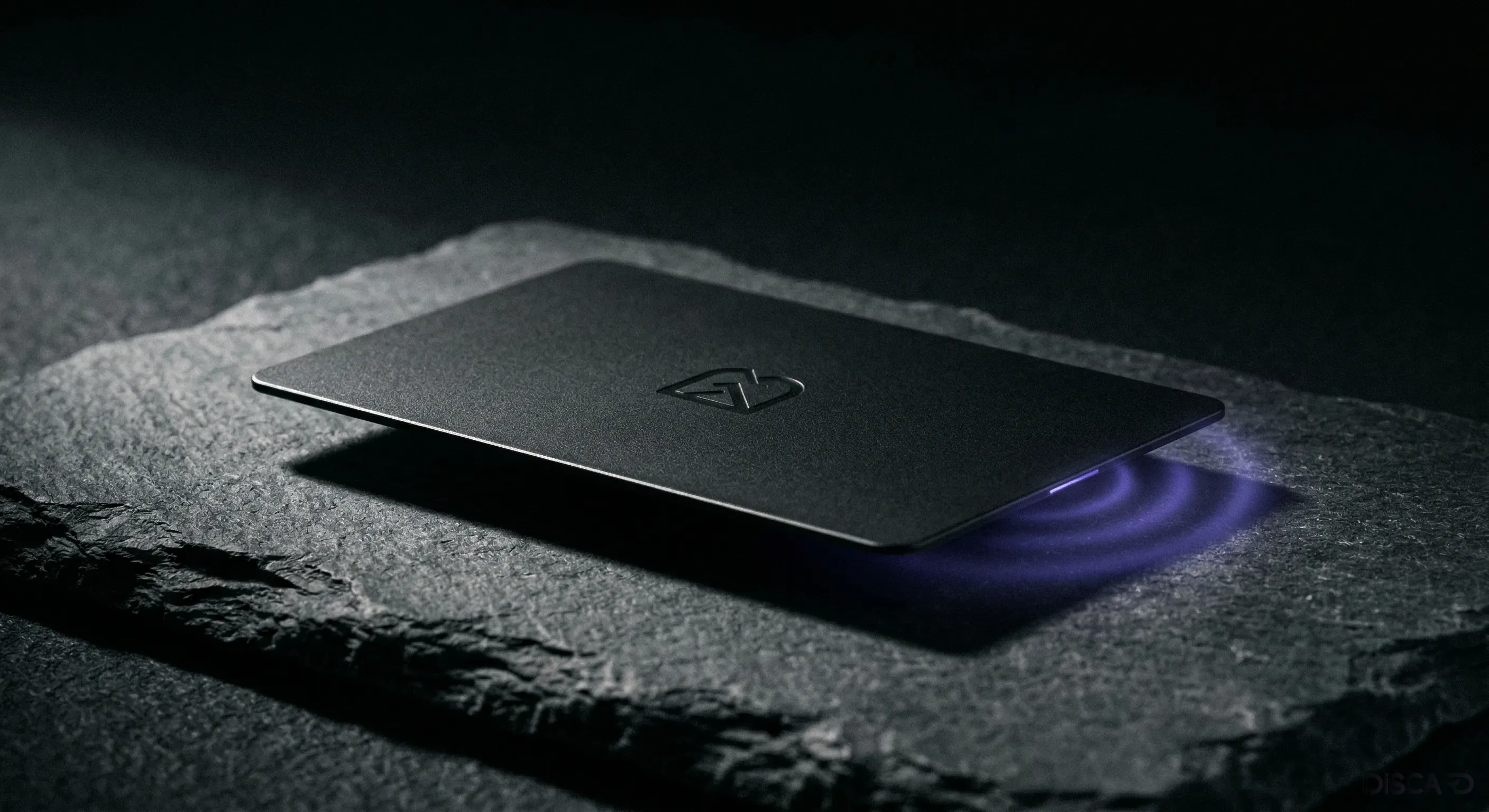
An NFC card carries a small embedded chip that sends a URL to any phone held against it. The phone opens the URL in the browser. Near-field communication has been built into every iPhone since 2016 and every flagship Android since around the same time, so the recipient does not need to install anything for it to work.
What loads on the recipient's phone is your digital profile: a hosted page with a hero image, a short bio, links to your projects, and a one-tap save-to-contacts button. For an architect, that profile is closer to a tight portfolio landing page than a contact card. It is the work, in their hand, with no friction in the way.
Two practical effects follow. First, the recipient sees your work in the same gesture that introduces it. Second, the contact lands in their phone in two taps instead of arriving in a stack of cards they will sort through later. The card stays in the pocket of someone who actually wanted it.
Why metal matters when your work is the brand
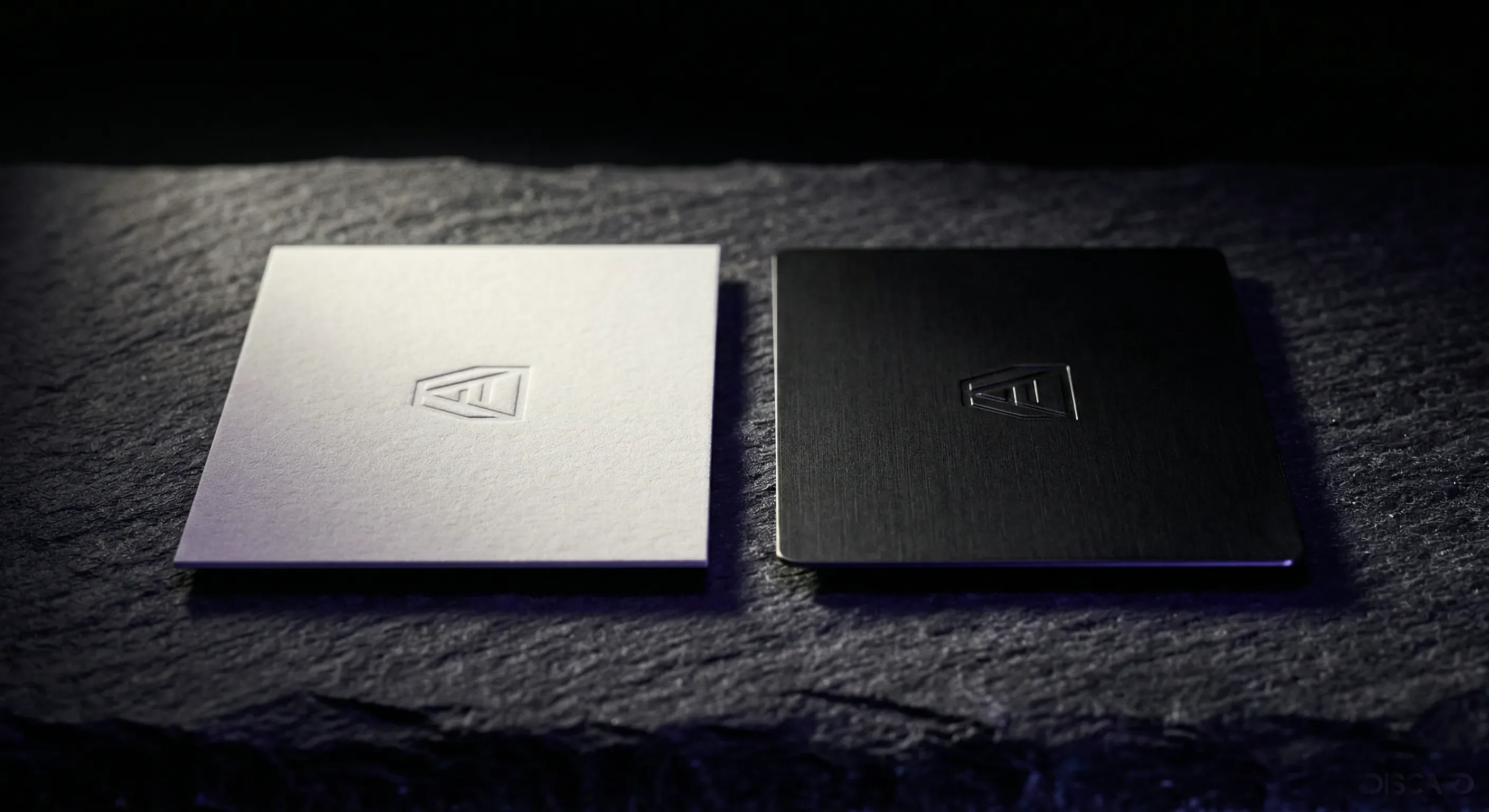
Cardstock degrades. The corner gets soft, the print picks up oils from a wallet, the edge frays where it sat against a phone for six months. For a category that traffics in tactile precision — plan-grade drafting paper, milled aluminium models, brushed-steel handrails — a degraded paper card is a category error every time it leaves the office.
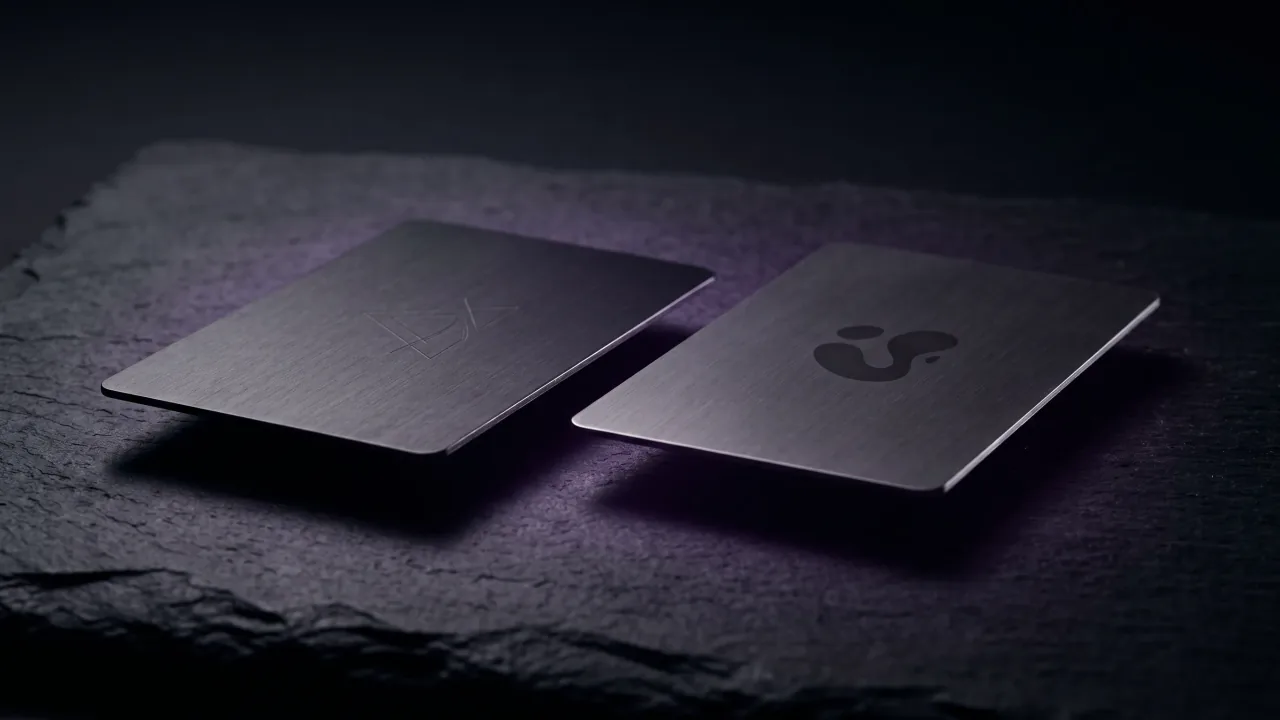
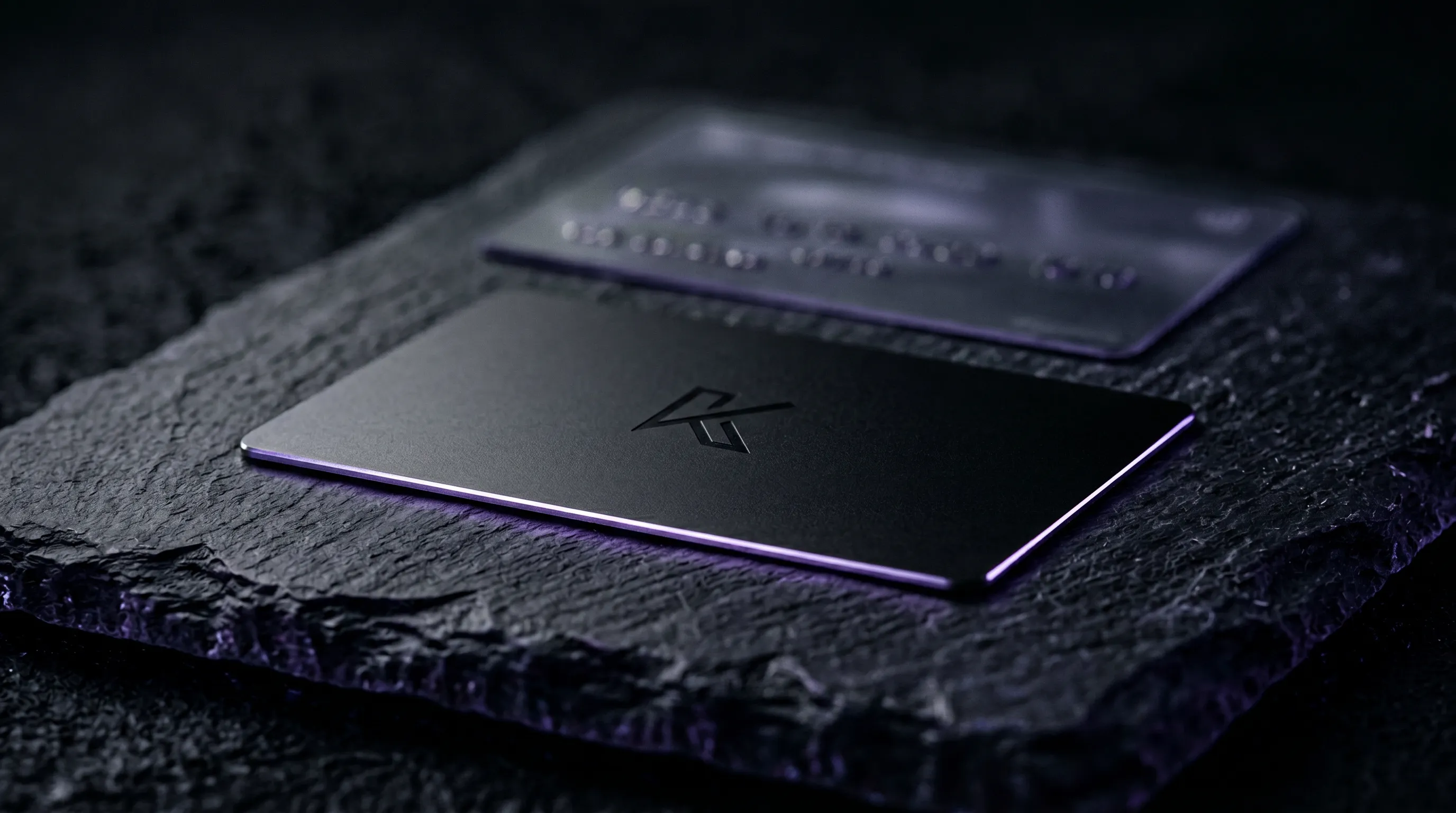
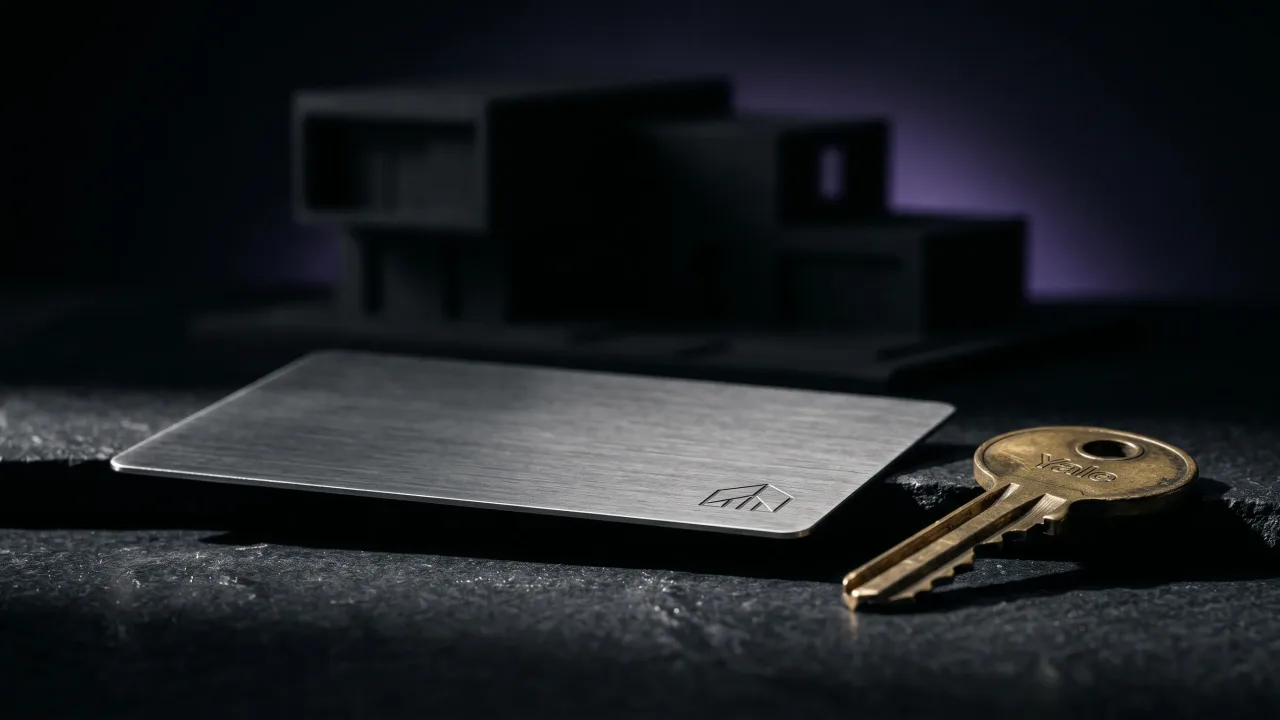
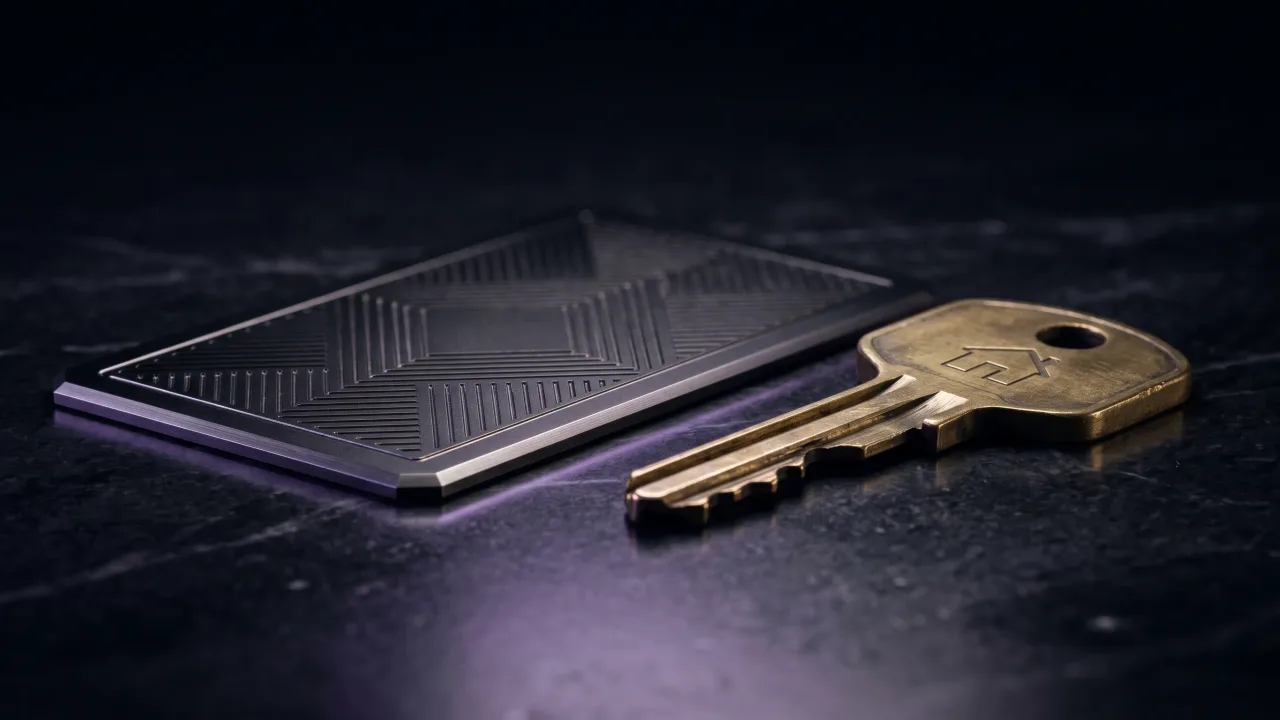
An engraved metal card reads differently in a client's hand. Stainless steel sits with the weight of the renderings on the table. The engraving is cut into the surface, so the design will not fade or rub off after eighteen months in a wallet. The same physics watchmakers rely on for case-back marks: etching outlives printing by an order of magnitude.
There is a softer reason too. A junior partner handing a paper card after presenting a €40m residential development undermines the room. The card is the last object the client touches before leaving. It should not be the cheapest thing they touched all afternoon.
The tap-to-portfolio replacement, step by step
Here is the moment, in slow motion. The meeting wraps. The client pushes back from the table and asks if you have a card. You hand them a brushed-steel rectangle the same colour as the railings on the model behind you.
They tap it on their phone out of curiosity. The profile loads. The hero image is a photograph of your last completed building, the one the local press covered. They scroll the project gallery for thirty seconds while saying goodbye, asking who shot the photographs. They tap save-to-contacts. You walk to the lift with their phone number already in your dashboard.
Compare that to the paper version. You hand a card. They put it in a stack with the engineer's card and the QS's card. Six weeks later, the stack is in a desk drawer. You are not in their LinkedIn, not in their CRM, and not in their inbox unless you chase the follow-up yourself. The first impression you spent three months building decays in a coat pocket.
What to put on the digital profile (not your cv)
The profile is not your CV. It is the visual answer to a single question: do I want to keep talking to this practice? Build it with that filter in mind.
Hero image: one rendering or built-project photograph that summarises your work. Pick the photograph you would put on the cover of a monograph. Mobile screens crop ruthlessly, so a strong central composition outperforms a clever wide shot.
Three to six projects with thumbnails and links. Order matters. Lead with the project that is closest to the work the client wants done, not the most awarded project in the firm. Your strongest house shot leads when meeting a residential client; your strongest civic project leads when meeting a public commission.
Direct contact. Phone, email, calendar booking link. Architects underuse calendar links and overuse generic contact forms. Make it as easy to book a follow-up call as it is to save your number.
Credentials, sparingly. AIA, RIBA, or local registration board membership earns a single line. Awards earn a single line. Anything else is noise; the profile loaded because the work was already in the room.
What to skip. Long bios. Process diagrams. Manifestos. The profile opens at the start of someone else's busy day. Their patience is two screens deep. The AIA's professional resource centre has detailed guidance on portfolio structure for the deeper version that lives on your firm site; the card profile is the trailer.
Where the card actually lives in an architect's week
The competition pitch is the dramatic case, but it is not the most common one. The card earns its keep across a cluster of smaller moments that compound across a year.
Site visits. Project meetings on the ground end with introductions to the structural engineer the contractor has been working with, the new local authority planning officer, the photographer the magazine sent. These are moments when names get exchanged and remembered loosely. A tap is the difference between being remembered and being a sticky note that never gets typed up.
Industry awards and openings. RIBA dinners, Mies van der Rohe announcement evenings, gallery openings of architectural photography. The room is ninety percent practitioners and ten percent commissioning clients, and the ten percent are why you came. A heavy metal card with a profile that opens a project gallery on tap is the right tool for these rooms; it is also more memorable than a paper card lost in a stack.
Conferences and exhibitions. Standing at a stand or speaking on a panel ends with twenty minutes of people approaching with cards out. The metal-on-metal sound of two cards colliding is a small thing, but the contact saved on the spot is the real value. A paper card in that scenario is a follow-up email you will probably not send.
First client meetings. The version of yourself the client meets in the first hour shapes the brief they end up writing. The card you leave on their table is a quiet reinforcement of the work you just spent the hour describing. The object should match the description.
Card and profile choices for studios vs. solo practitioners
Solo practitioner. One card, one profile. Update annually as projects ship and new photography comes in. The lifetime-editable profile means you do not reprint when a project completes; you swap the hero image and add a new tile.
Small studio (two to ten people). Principal cards lead with names and partner credentials. Associate cards use the same layout but route to associate-specific profiles, so a project lead's card opens to the projects they ran rather than the firm overview. Support roles do not need cards unless they meet clients.
Larger studio. Use the Discard team-order workflow to provision cards and profiles in one batch. The brand layout stays consistent across roles; the project links per profile stay role-specific. New hires get a card on day one rather than waiting six weeks for the next print run.
The cost math: paper reprints vs. one engraved card
Architects reprint cards more often than most professions because the metadata changes more often. Title bumps from associate to senior associate. Office address moves. New project credits land. Awards roll up. Two to three reprints per career year is a normal cadence.
Premium paper at a discount printer runs roughly €50–€80 per reprint of 250 cards. Across a five-year stretch, that is €500–€1,200 in reprints, none of which improve the object the client receives. A printed card is the same printed card every cycle.
An engraved metal Discard card with a lifetime editable profile starts at €40. The card is permanent. The profile is editable from your dashboard whenever a project ships, the title changes, or the office moves. The cost crosses over inside the first eighteen months. After that, the metal card is free, and the upgrade in object quality compounds for as long as you carry it.
There is a second-order economic argument that rarely gets quoted. If the engraved card lifts your follow-up rate from twenty percent to fifty percent — and the soft data we hear back from architecture customers points in that direction — a single new commission anywhere in the design fee range pays for the entire firm's card budget for the next decade. The arithmetic stops being about printing costs and starts being about conversion.
The verdict
An NFC business card for architects is the single change that closes the gap between the quality of the work and the quality of the object you leave behind. The card is engraved metal, the profile loads on tap with no app, and the pricing is a one-time €40+ for the card plus a flat €19.90/year for the digital profile. For architects whose pitches are visual and whose follow-up depends on the client remembering more than a name, it is the right tool. The rest is taste.
Design your engraved metal card and see the live profile preview before you order.
Design Your CardFrequently asked questions
Does an NFC business card work without an app on the recipient's phone?
Yes. Every iPhone since iPhone 7 (2016) reads NFC tags natively in the background and opens the linked profile in Safari automatically. Android phones running Android 10 or later behave the same way. Neither side needs to install anything.
Can I include CAD files or large drawing sets on the digital profile?
The profile itself is built for fast mobile loading, so it links out to project pages rather than embedding CAD or PDF drawing sets. The recommended pattern is a profile that links to your firm's project pages, Issuu monograph, or shared cloud folder for clients who need to dig deeper after the meeting.
What happens to the card when I leave a firm or change titles?
The card stays the same. The profile is editable from your Discard dashboard, so a title change, an office move, or a firm change is a five-minute edit rather than a reprint. The chip continues to point at the live profile.
Is a metal card heavy or awkward in a wallet?
Discard's stainless-steel cards are 0.5mm thick, which is roughly the thickness of two credit cards. They sit in a wallet without bowing the leather and do not set off security gates. Most architects carry one or two in a money clip or the back compartment of a wallet.
Can a small studio order matching cards for the whole team?
Yes. The team-order workflow lets you provision cards and profiles for several people in one transaction, with a shared layout and per-person profile links. Roles, project credits, and contact details vary per profile while the card design stays consistent across the firm.
How long does it take to receive an engraved metal card in the EU?
Standard EU shipping from Bulgaria runs three to five working days after the design is approved. There are no customs forms or import duties for buyers inside the EU, and no surprise courier fees on delivery.