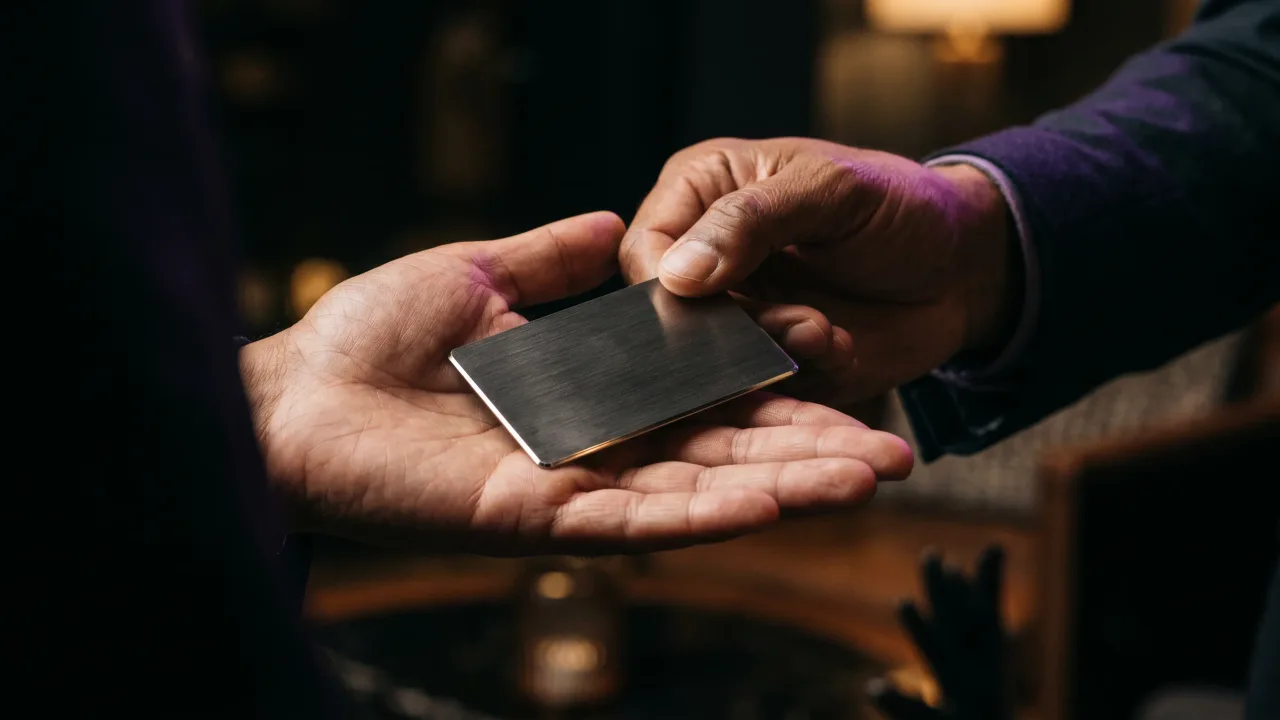
Patients decide whether they trust a doctor in the first few seconds, often before a single symptom is described. So the most underrated tool in private practice is the small thing you hand over at the end of the visit: your card. Make it forgettable and the follow-up appointment leaves with it.
An NFC business card for doctors closes that gap. One tap puts your clinic's booking page, location, contact details, and the languages you practise in straight onto a patient's phone, with no app to download on either side. This guide covers why metal beats paper in a medical setting, the hygiene point most people miss, which doctors gain the most, and how to build a profile a private clinic can actually use.
Why a doctor's first impression is a clinical asset
Trust is the working capital of medicine. A patient who trusts you books the next appointment, follows the treatment plan, and refers a family member. Most of that trust is built in conversation, but the first read happens earlier, in the handshake and the small objects around it.
A flimsy paper card quietly undercuts a careful consultation. A heavy, engraved card does the opposite: it signals that the same attention you give a diagnosis runs through the whole practice. This is the haptic version of bedside manner, and it costs nothing once the card is made. We covered the research behind that weight effect in our piece on the psychology of a premium first impression, and it applies doubly to a profession that sells judgement.
What an NFC business card for doctors does in two seconds
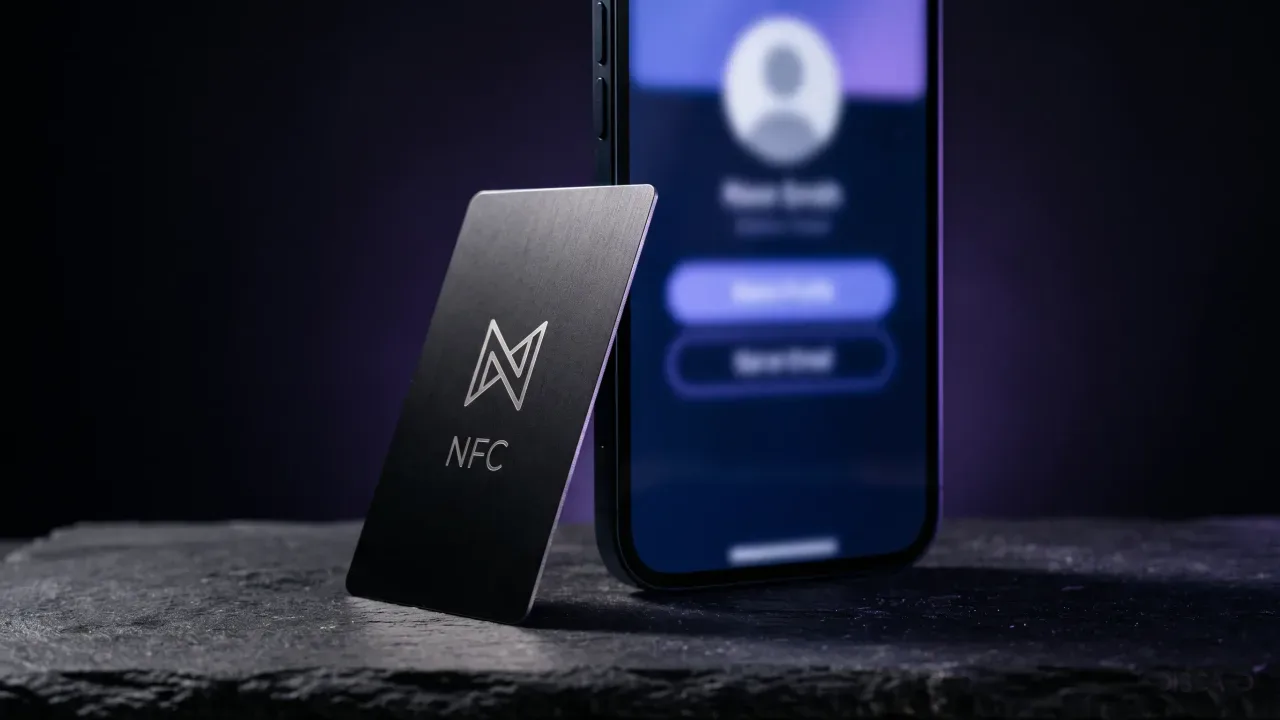
NFC stands for near-field communication, the same short-range wireless standard behind contactless payment. A chip sits inside the card, the patient holds their phone near it, and a link opens. No app, no typing, no QR code to focus a camera on. If you want the technical background, the NFC Forum maintains the open standard, and Wikipedia's overview of NFC explains the basics in plain language.
For a clinic, that two-second tap can open a digital profile built around the next action: an online booking calendar, the clinic address with a map link, a direct phone and email, the insurers or payment methods you accept, and the languages you speak. A tourist with a sprained ankle in Sofia can save your contact and book a slot before they leave the room. Paper cannot do that.
The hygiene argument paper cards quietly lose
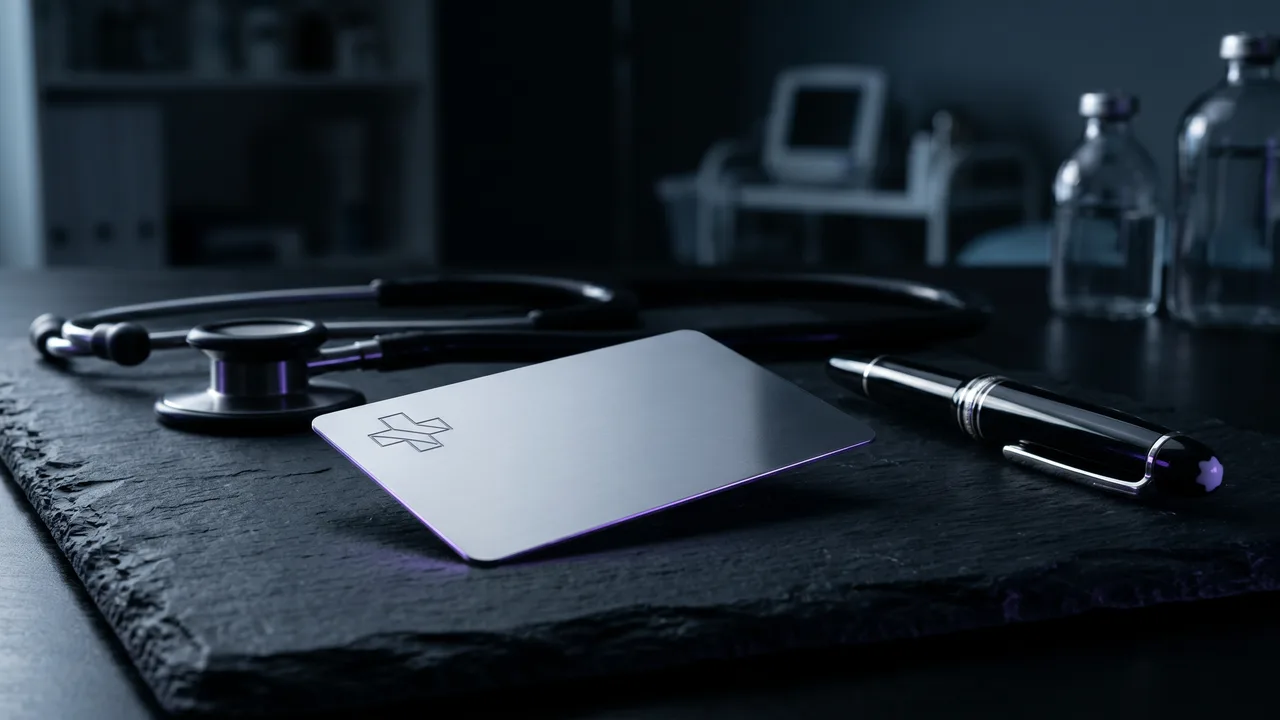
Medical settings care about surfaces, and paper is a porous one. A printed card passes through hands, pockets, and waiting-room counters, and it cannot be cleaned. A metal card can be wiped down with the same disinfectant wipe you already keep at the desk. It is a small thing, but in a clinic small things signal standards.
Durability follows the same logic. A paper card softens, folds, and frays within a month. A metal card stays sharp for years, which matters when one card might introduce you to a patient who returns a decade later. You order once instead of reprinting a box every quarter, and the card in a patient's drawer still works long after the printed one would have gone soft.
Metal vs paper for private clinics: an honest comparison
| Factor | Paper card | Metal NFC card |
|---|---|---|
| First impression | Disposable | Premium, memorable |
| Shares booking link | No | Yes, one tap |
| Hygiene | Porous, cannot clean | Wipes clean |
| Lifespan | Weeks | Years |
| Patient saves contact | Manual typing | Automatic |
| Updating details | Reprint the box | Edit profile, card unchanged |
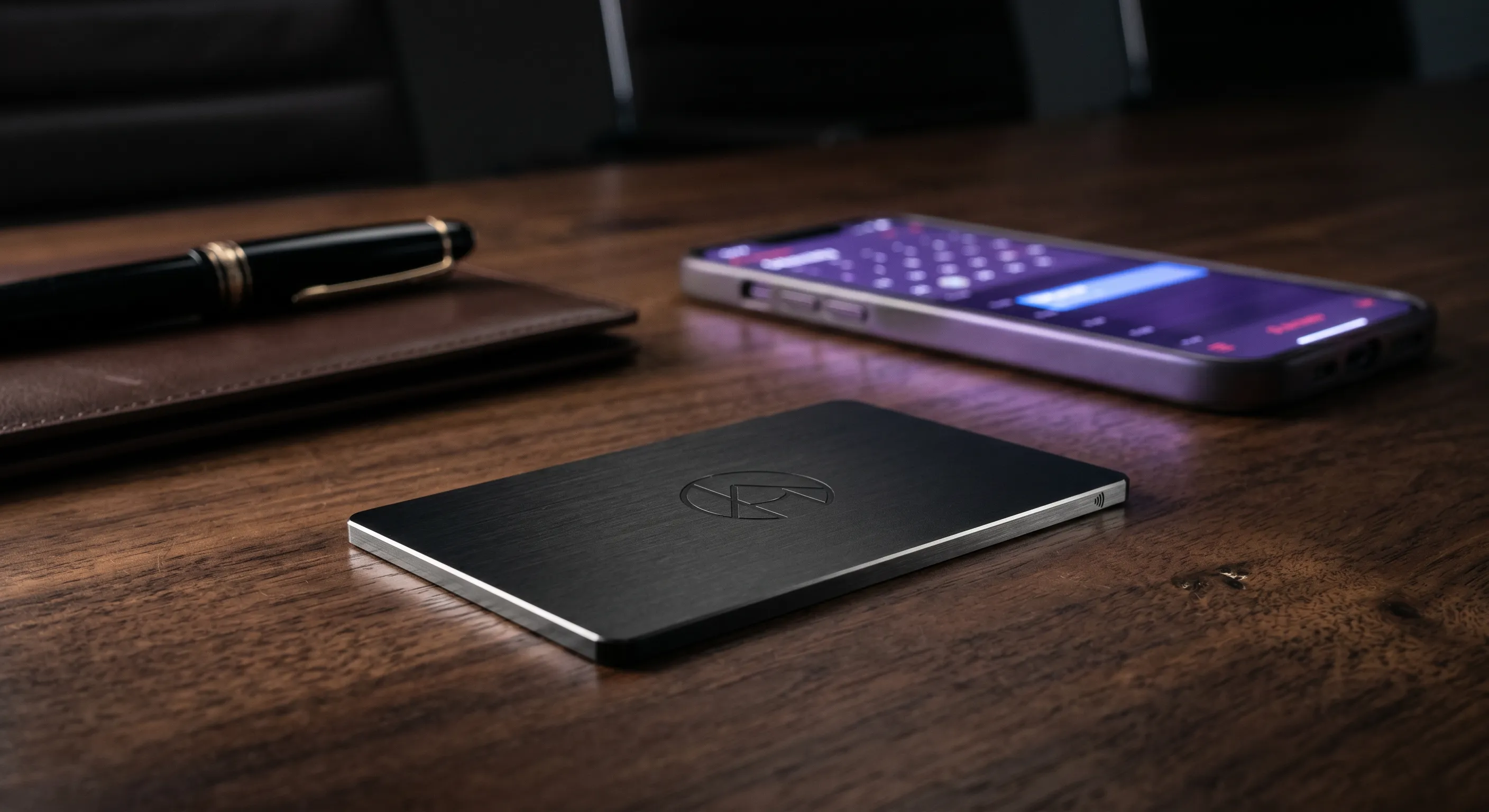
The update point matters more than it looks. Change clinic, add a service, or switch your booking system, and a paper card is suddenly wrong. With an NFC card the chip points at a profile you edit in seconds, so the physical card never goes out of date. You can compare finishes on our materials page to see which suits a clinical brand, where a quiet brushed steel often reads better than a high-gloss finish.
Which doctors benefit most
Any private practitioner who meets patients face to face gains something, but the return is largest where the next step is a booking the patient makes themselves. Dentists and aesthetic clinics live on repeat visits and referrals, so a card that drops a booking link onto a phone pays for itself quickly. Physiotherapists, dermatologists, and private GPs see the same effect, since their patients tend to rebook on their own schedule.
Specialists who take referrals benefit in a different way. When a colleague hands your engraved card to a patient, the card carries a signal the colleague cannot put into words: this is someone established. For doctors who also speak at conferences or run a clinic abroad, a tap that lists languages, location, and a booking page removes the friction that loses an international patient between the hallway and the inbox.
Setting up a clinic-ready digital profile
The card is only as good as what it opens. For a private practice, lead with the booking link, since a saved appointment is the outcome that pays for everything else. Put your clinic name and specialty at the top, one clear photo, and the address with a tap-to-navigate map.
Add the practical filters patients actually ask about: consultation hours, languages spoken, insurers or payment methods accepted, and a direct line for urgent questions. Because the recipient never installs anything, there is no account to manage on their side, which keeps patient data handling simple and in line with the EU's data protection rules. When you are ready, the card configurator lets you engrave your name, specialty, and clinic mark before you order.
The verdict: are NFC cards worth it for doctors?
For a private practitioner, yes, and the reason is narrow rather than broad. You are not buying a gadget. You are buying a cleaner, more credible version of the handoff that already decides whether a patient returns. The hygiene and durability are real bonuses, but the core case is trust: a serious card for a serious profession. If you run a single practice or a small clinic, make one card for yourself and judge it by the first month of bookings.
Design a metal NFC card with your name, specialty, and clinic mark, and turn the last two seconds of every consultation into the first step of the next one.
Design your cardFrequently asked questions
Do NFC business cards work with iPhone?
Yes. Every iPhone from the XS (2018) onward reads NFC cards in the background with no app, on iOS 14 and later. The patient holds the top of the phone near the card and a notification opens your profile.
Do patients need an app to use the card?
No. The tap opens a standard web link in the phone's browser. Nothing is installed on the patient's device, which is part of why it works so well in a clinic.
Is a metal NFC card hygienic for medical use?
Metal is non-porous and can be wiped with a standard disinfectant wipe, unlike paper. That makes it a better fit for a clinical environment where surfaces are cleaned routinely.
Can I update my details without reordering the card?
Yes. The card points at a profile you control. Change your hours, booking link, or clinic address and the same physical card keeps working.
What should a doctor put on the digital profile?
Booking link first, then specialty, clinic address with a map, contact details, languages spoken, and accepted insurers or payment methods. Keep it to what helps a patient act.
Is patient data safe with a digital business card?
The card shares your professional details, not patient records. Because no app is installed and the recipient creates no account, there is nothing extra to manage on their side.