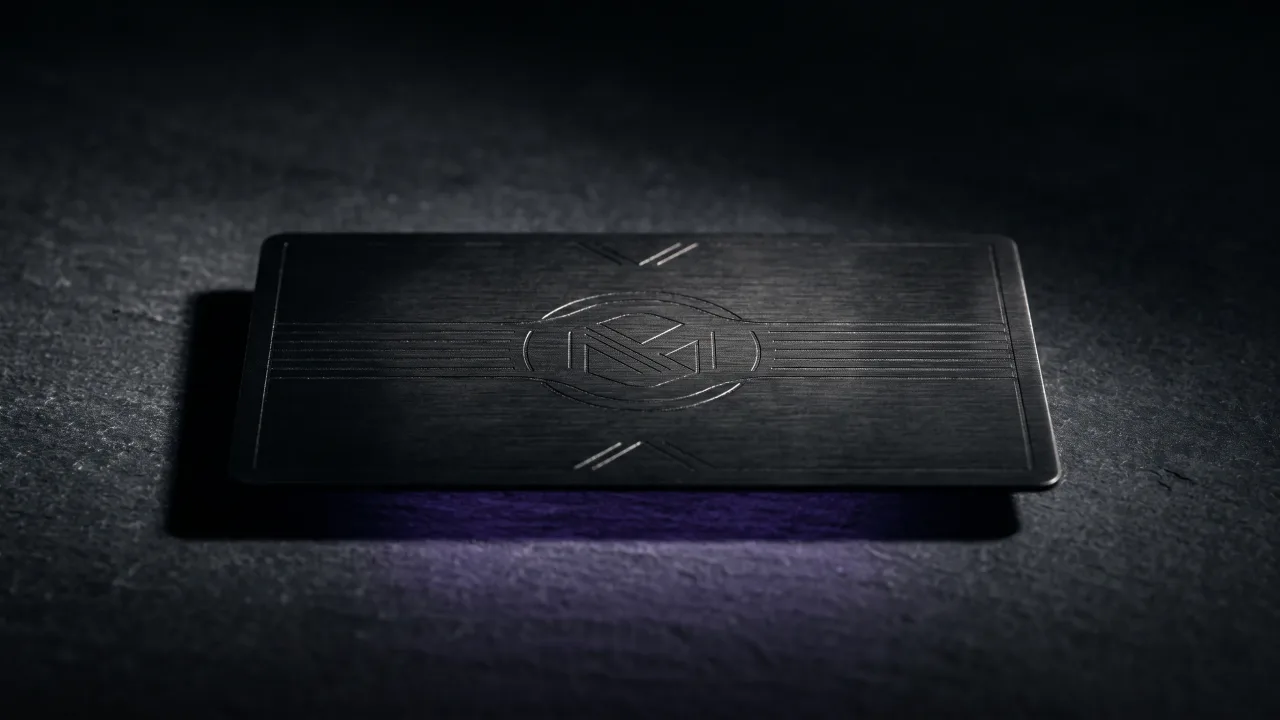
Metal conducts. NFC is radio. Lay a chip flat against a sheet of steel and it goes dead, because the metal swallows the field before your phone ever sees it. Every metal NFC business card sold today is an answer to that one problem, and most of the price difference between them is how honestly it was answered.
A metal NFC business card is a steel card with an NFC chip sealed inside it and your name cut into the surface by a laser. Someone taps it with a phone, your profile opens, they save your contact and carry on with the conversation. No app on either side, and nothing to reprint the week your job title changes.
The object is easy to describe and unusually easy to get wrong. The metal is the hard part, and the difference between a card you carry for a decade and one that reads on the third try comes down to a few details nobody puts in the listing.
What a metal NFC business card actually is
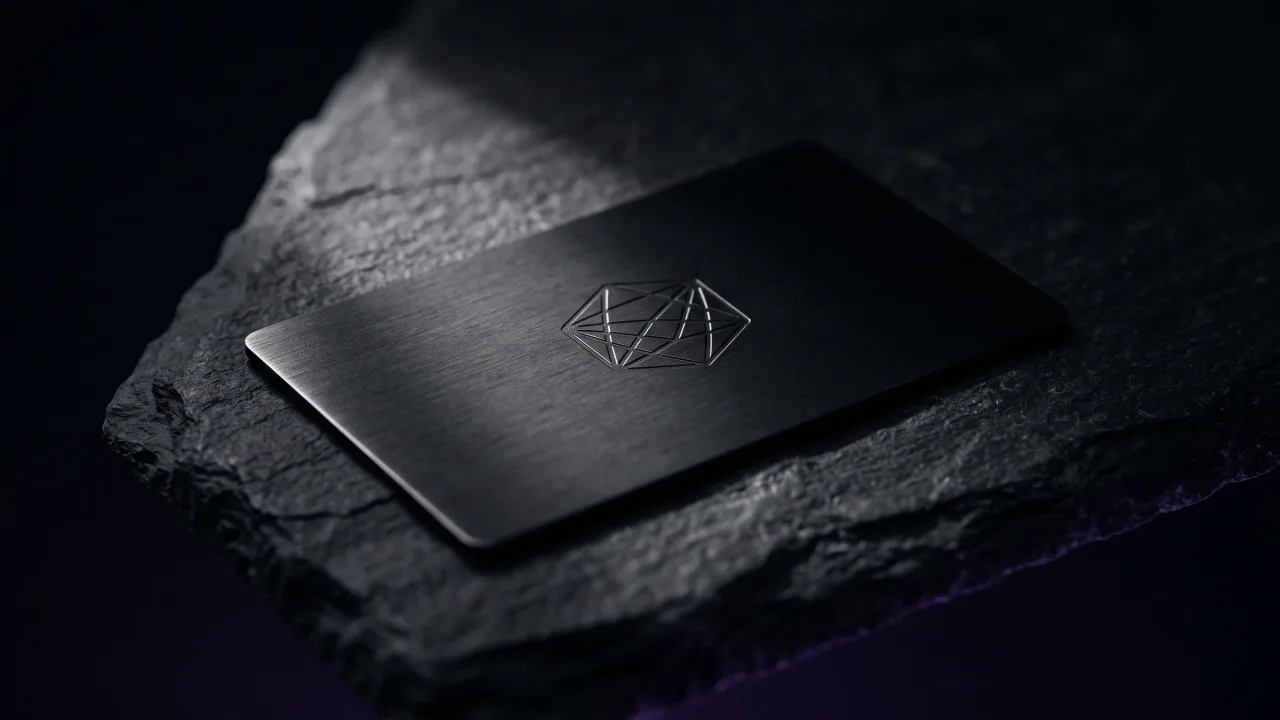
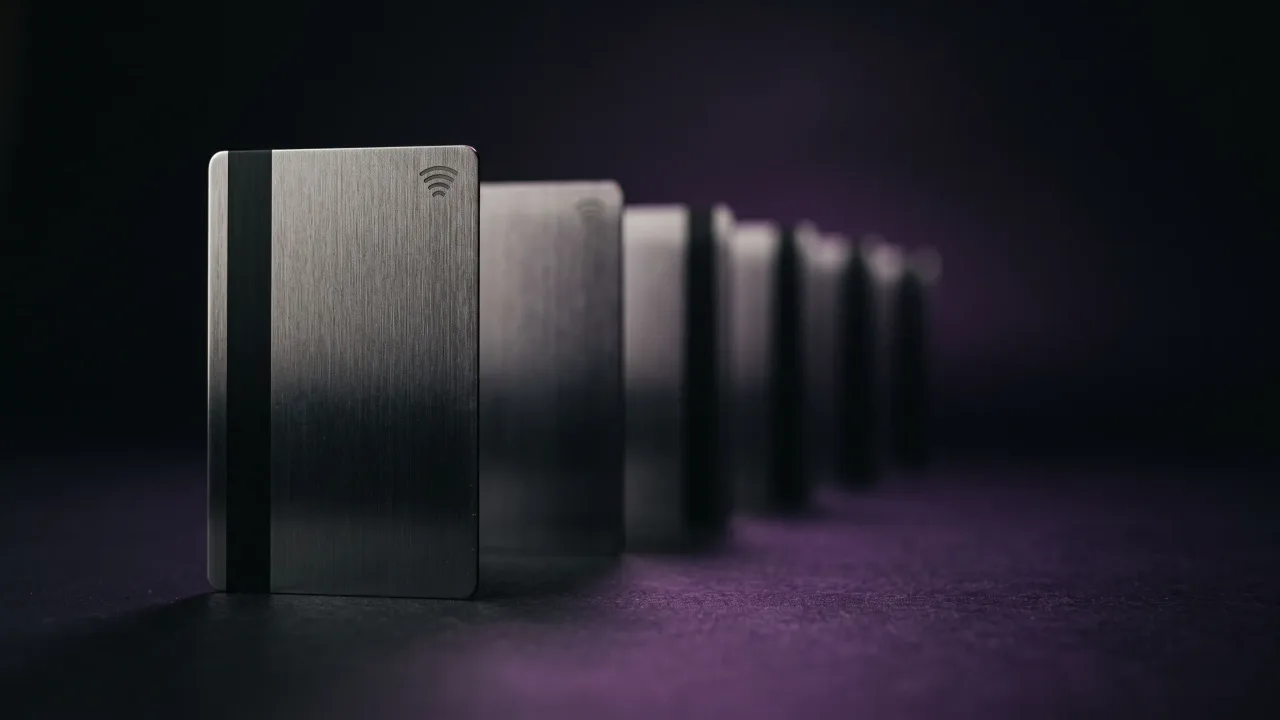
Physically, it is a piece of 304-grade stainless steel cut to 85mm by 54mm, the same ISO/IEC 7810 ID-1 footprint as your bank card, at 0.5mm thick. The thickness is the number that does the work. Go thicker and it reads as a novelty coin; go thinner and it flexes like a shim.
Electronically, it is a single web link. An NFC inlay sits in a pocket machined into the back of the card, encoded with one URL that points at your digital profile. That is the entire payload. Your contact details are not stored on the card and never travel over the tap.
The split matters more than any spec on the page. The steel is permanent and the page behind it is editable for life. You change jobs, add a portfolio link, swap a phone number, and every card you have ever handed out now points at the new version. That is the part paper cannot copy at any price.
Does metal block the NFC signal?
Bare metal absolutely blocks it. This is the question worth asking any seller, and the one most product pages skip past.
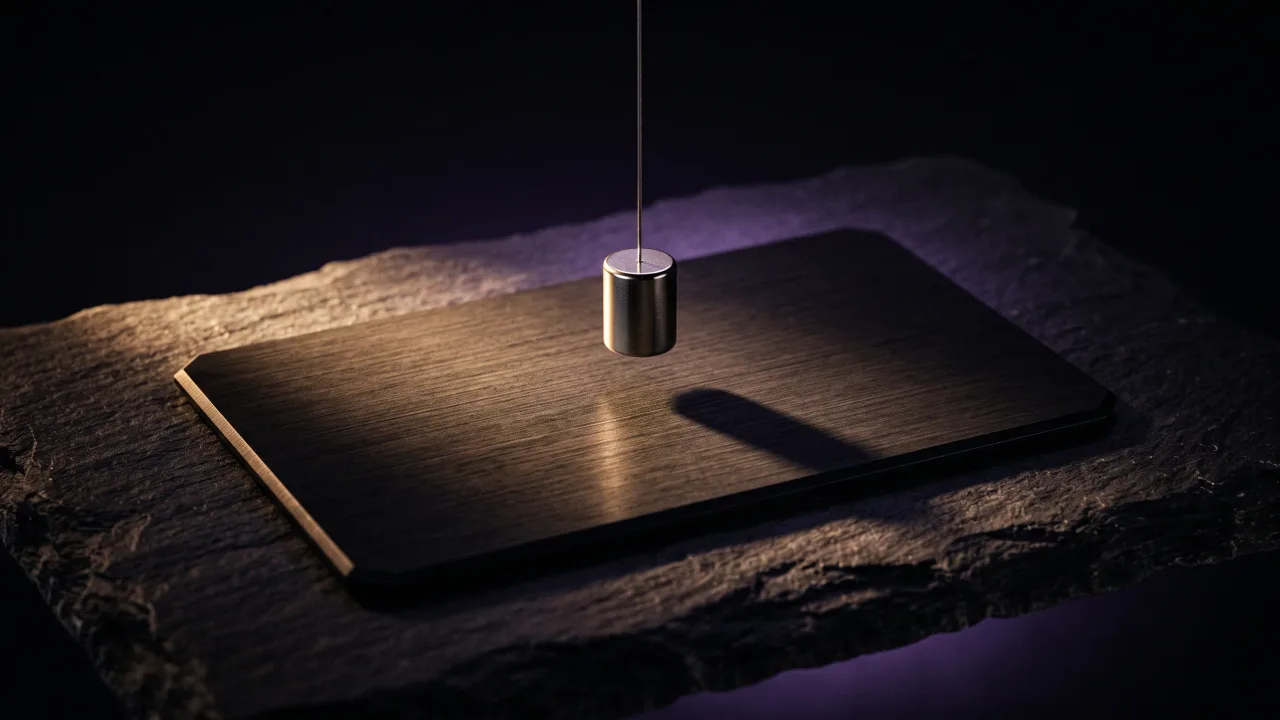
NFC works by magnetic coupling. Your phone radiates a field at 13.56MHz over a range the NFC Forum puts at roughly two centimetres, and the chip's antenna borrows energy from that field to answer. Conductive material sitting behind the antenna wrecks the arrangement. Eddy currents induced in a nearby metal surface quench the antenna, so the tag needs a minimum separation from the metal to respond at all.
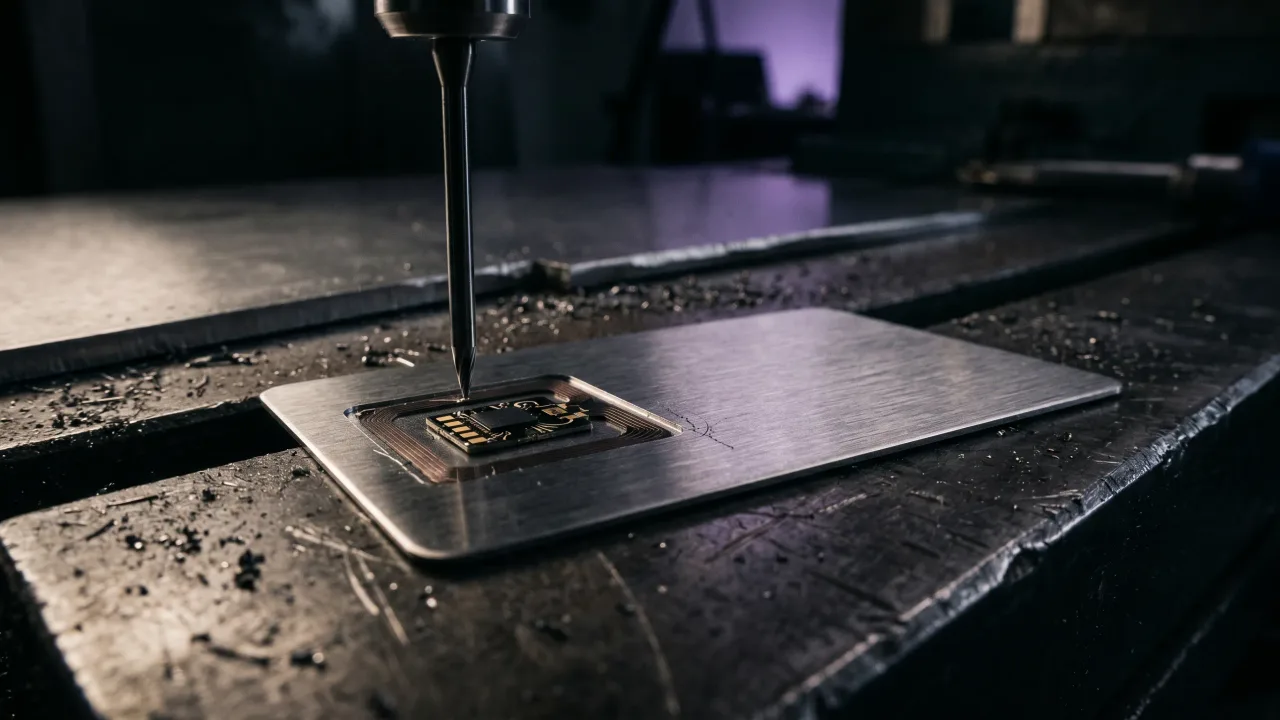
So the chip cannot sit on the steel. It has to sit in it. A shallow cavity is routed into the back, and the inlay that goes in carries a ferrite layer behind its antenna. The ferrite isolates the antenna from the steel and lets the magnetic field form roughly the way it would in open air. Solving that is the actual engineering of the product, and it is why a metal card with a chip costs more to build than a metal card without one.
Done properly you cannot feel where the chip lives. The back is one continuous surface and the read zone is a marked area you tap. If you can feel a lump under your thumb, the cavity work was rushed, and a chip glued to a metal surface rather than seated inside it will not read reliably no matter what the listing claims. The full bench process is in how metal NFC business cards are made.
What happens when someone taps your card
They hold their phone near the read zone for about a second. The chip answers with the URL, the phone shows a notification, they tap it, and your profile opens in the browser. From there, one button writes your details into their contacts.
Neither person installs anything. Tag reading is native to the operating system, which is the whole reason this works on a stranger's phone at a conference. On iPhone, Apple lists the iPhone XS and newer as reading tags automatically in the background. The iPhone 7, 8, and X can read them too, but the reader has to be opened from Control Centre first. Any Android from the last decade with NFC hardware handles it without ceremony.
The awkward case is the phone with no NFC at all, or a colleague who has switched it off. A good card carries a QR code on the reverse that opens the same profile through the camera, which costs nothing to include and quietly removes the only real failure mode. Cards sold without a fallback are betting on hardware they do not control.
How to tell a good metal NFC card from a cheap one
The photos on every listing look the same. Brushed steel photographs identically whether the card underneath was engineered or assembled. These are the questions the photos cannot answer.
- Is the chip write-locked after encoding? An unlocked tag can be overwritten by a stranger with a free phone app. Locking is a production step some sellers skip because it costs them a second per card.
- Is the cavity sealed flush? Run a thumb across the back. A ridge means sweat and wallet grit reach the electronics eventually.
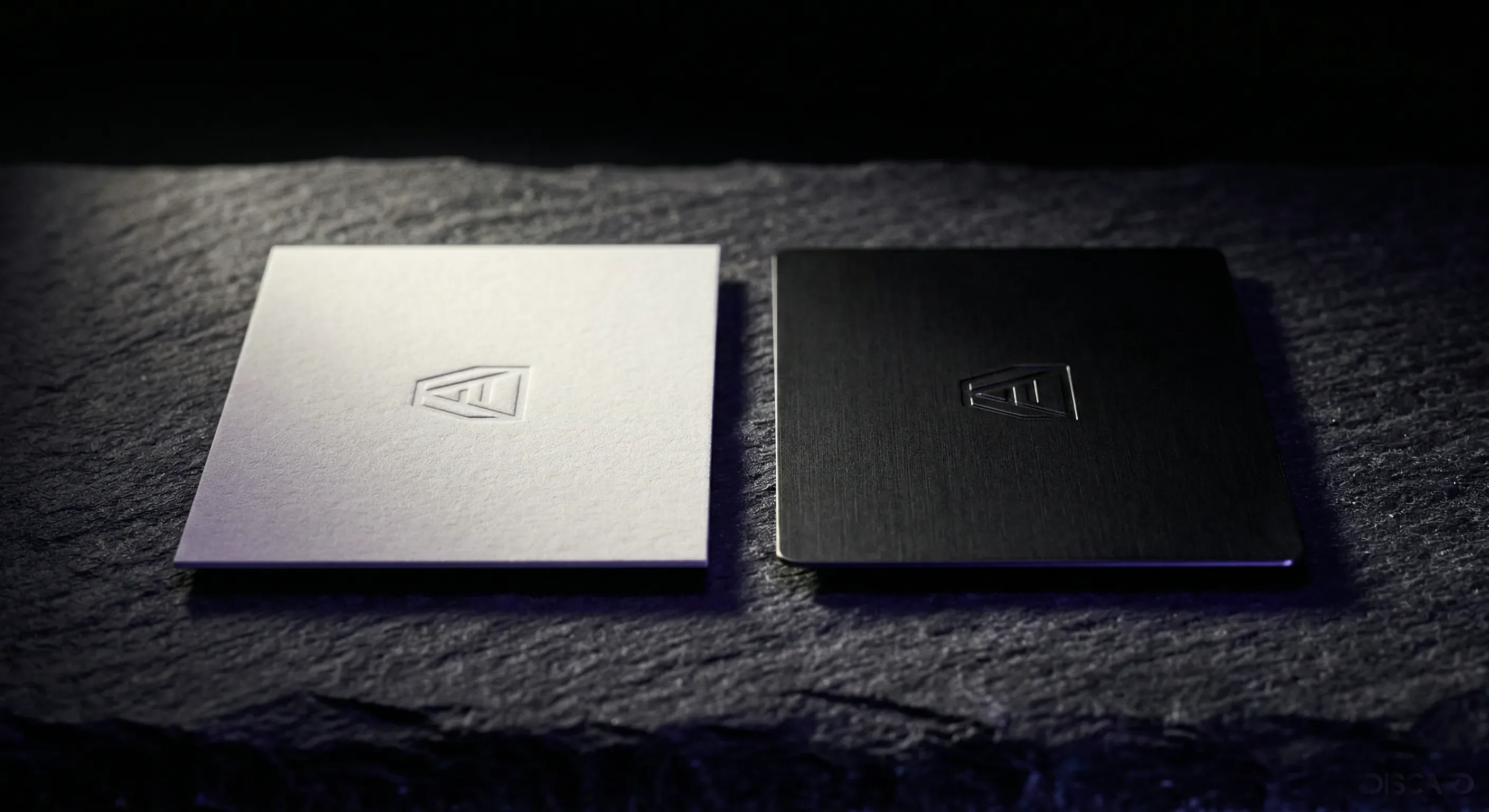
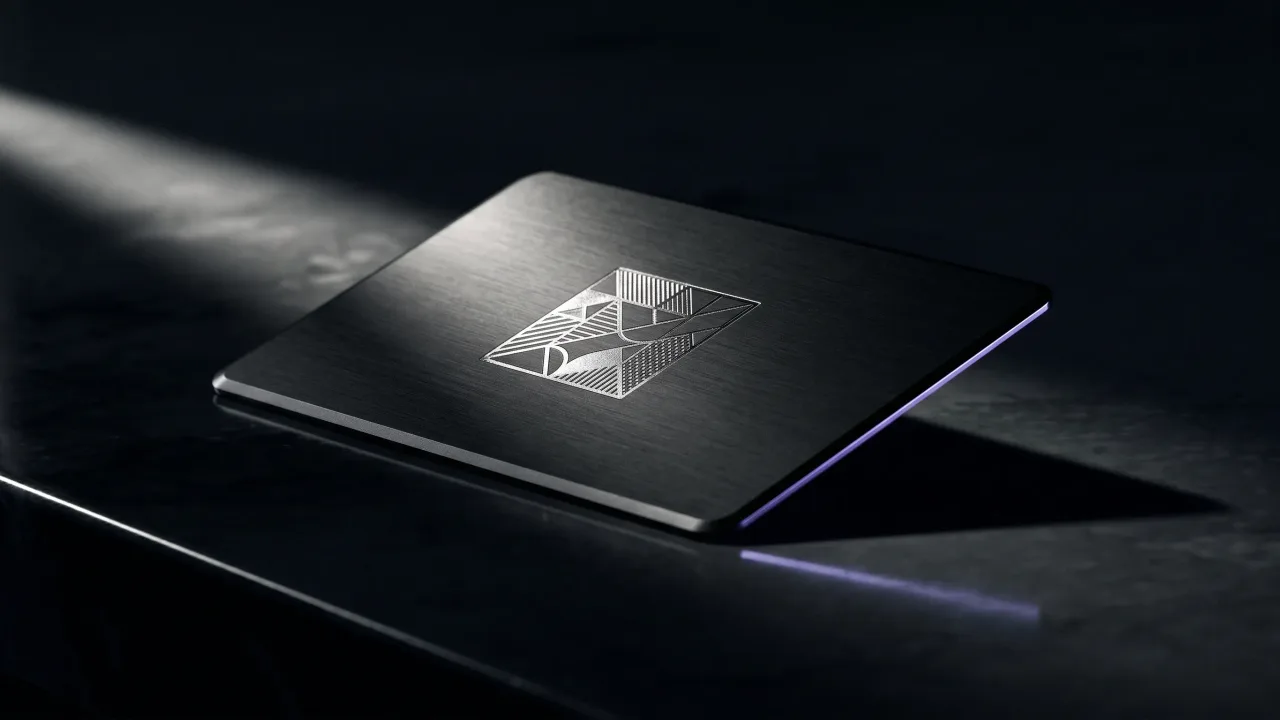
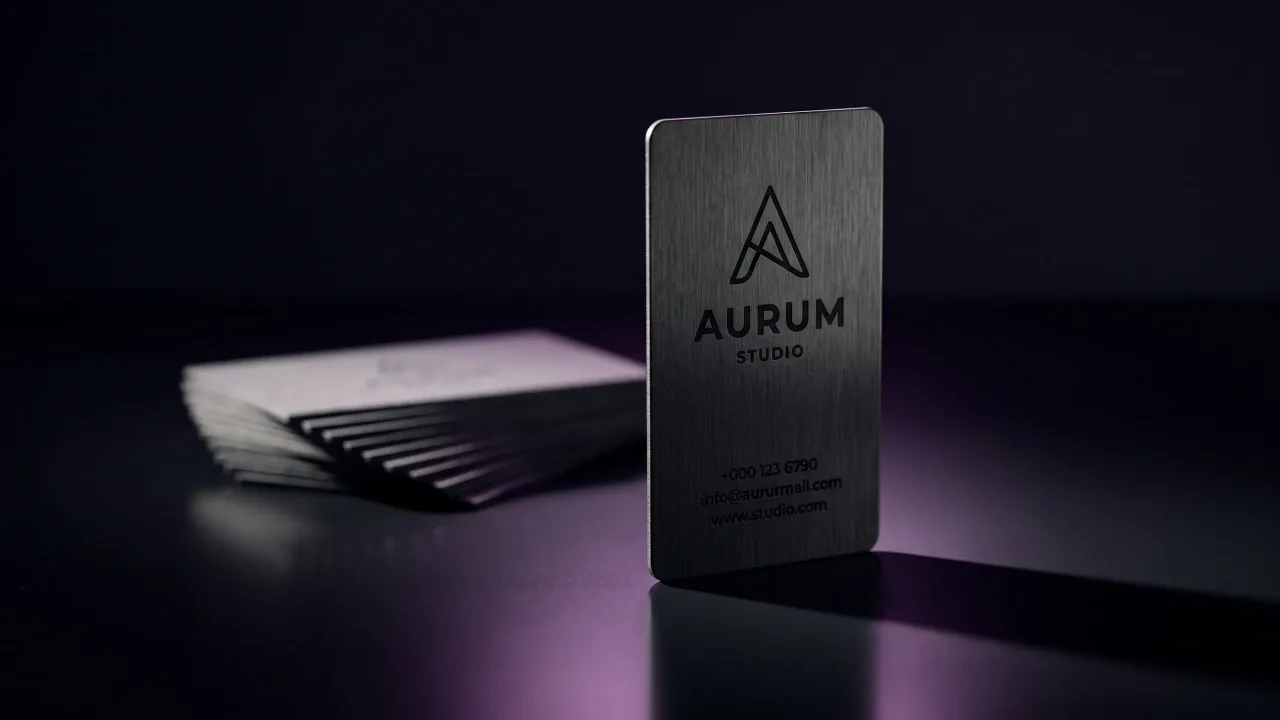
- Is the design engraved or printed? Ink sits on top of steel and wears off from the top down. Laser engraving removes material, so the mark is the absence of metal and there is no layer left to scratch away.
- Is the colour electroplated or painted? Plating bonds to the metal. Paint is a coat, and coats chip at the edges first.
- Where does the profile live? The card is a doorway to a hosted page. If that host disappears, so does your card's only function. An EU-made, EU-hosted card also keeps the contact data under GDPR.
- Was the card tap-tested before it shipped? Ask. A read test on two phones is the only way anyone knows the cavity work landed on that specific card.
The chip itself is the least interesting variable, though it is the one specs pages love. NTAG-class chips are the standard, and the memory sizes involved are tiny because a URL is tiny. A card that fails does not fail on chip memory. It fails on the cavity, the lock, or the finish.
Metal, wood, or plastic: what the material changes
The chip and the profile are identical across all three. What changes is what the object says while someone is holding it, and how much work the NFC has to do to get out.
| Metal | Wood | Plastic | |
|---|---|---|---|
| Weight in the hand | Reads as an instrument | Warm, light, tactile | Reads as a hotel key |
| NFC engineering | Cavity and ferrite isolation | Minimal, wood is transparent to the field | None, chip laminates in |
| Marking | Laser engraved into the surface | Laser burned into the grain | Printed on top |
| Wear over years | Effectively none | Patinas | Scuffs, then peels |
| Discard price | €44.90–€49.90 | €39.90 | Not sold |
We do not sell a plastic card, which is a position rather than an oversight. Plastic removes the one advantage the physical object still has over a link in a chat window. If the card is not worth keeping, send a URL and save everyone the landfill.
Between metal and wood the honest answer is temperament, not quality. Metal is cool, exact, and slightly severe. Wood is warmer and softer and no less considered. Both are engraved, both tap the same. You can hold each finish against your own layout in the configurator and watch the engraving preview update as you go.
What a metal NFC business card costs
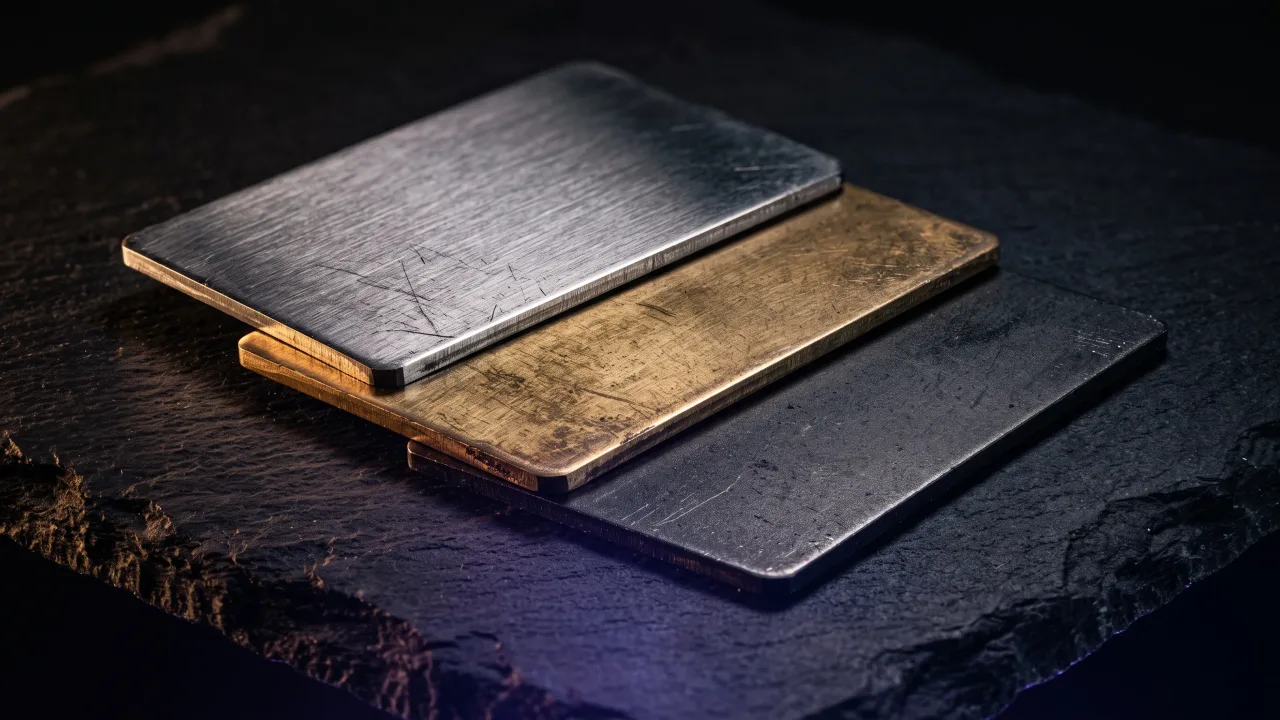
At Discard, black, silver, gold, and rose gold metal are €44.90 (87.82 лв). White metal is €49.90 (97.60 лв) because the finish takes an extra plating pass. Wood is €39.90 (78.04 лв). That is the whole price, once, including the digital profile and the engraving.
The number looks absurd next to a box of 500 paper cards until you notice you are not comparing the same thing. Paper is priced per card because it is consumed per card. You reprint when the title changes, when the number changes, when the logo gets a refresh, and when the box runs out. Metal is priced per person, and the reprint cycle simply stops, because the part that goes stale is the page and the page is free to edit.
One card, carried for years, handed to the people who matter. That is the arithmetic, and it collapses the moment you stop being selective about who gets one.
Who a metal NFC business card is wrong for
If you empty a stack of 200 cards into a fishbowl at every trade show, do not buy this. A metal card you never see again is a €45 donation to a stranger's junk drawer. Paper is the correct tool for volume, and there is no shame in the correct tool.
If your work depends on leaving something behind with a printed price list, a metal card is not that either. It carries a link, not a catalogue.
The card earns its price in the opposite situation: a small number of conversations where being remembered changes the outcome. You hand it over, they feel the weight, they tap it, and the card goes back in your pocket because it is yours. It is a card you show rather than surrender, and that only makes sense if the person in front of you is worth the gesture.
How ordering one actually works
The order runs design-first, which is the opposite of buying paper. Nothing gets engraved on a guess.
- Build the layout in the configurator. Pick a material, a finish, a template, and a font, then put your name and details where you want them. The engraving preview updates as you type, so you are looking at the card rather than imagining it.
- Add a logo if you have one. Vector artwork engraves cleanly at any size because the laser traces outlines rather than dots.
- Set up the profile behind the card. This is the page the chip opens, and it is the part you will actually maintain.
- Approve the proof. Only after you sign off does a sheet of steel get cut, the cavity routed, the inlay seated, and the chip encoded and locked.
- The card is tapped on two phones before it ships. Production runs in days rather than weeks, because the line is tuned rather than bespoke per order.
The step people underestimate is the first one. A metal card gives you less room than paper, not more, because engraving has no colour to hide behind and every line you add competes with the ones already there. The restraint is the design. If you want to see what other people have done with the same 85 by 54 millimetres, metal business card designs is a decent place to steal from.
Buying a metal NFC business card in Bulgaria
Cards are made in Europe and priced in both euro and leva, so there is no customs surprise and no three-week wait on a shipment from another continent. Local delivery runs in days, and the invoice is a Bulgarian invoice, which matters more than it should if you are expensing the card.
The profile is EU-hosted too. That is the boring compliance answer, and it is the one that matters if you hand your card to anyone in a regulated industry, since the contact details on that page stay under GDPR rather than sitting on a server in a jurisdiction nobody asked about. For the wider local picture, smart business cards in Bulgaria covers how the market here has moved.
A metal NFC business card is worth the money for a specific person: someone who hands out few cards and needs each one to land. The engineering that makes it work is real and invisible, which is exactly why it is worth checking before you buy. Ask whether the chip is locked, whether the cavity is sealed, whether the design is engraved rather than printed, and whether anyone tapped the card before it shipped. A seller who answers those four questions clearly is selling you an object. A seller who talks about finishes and skips the cavity is selling you a photograph of one.
Build your metal NFC card — pick the material, layout, and engraving, and see it before it's cut.
Open the configuratorDoes metal block NFC in a business card?
Bare metal blocks it, yes. Eddy currents in the steel quench the chip's antenna and detune the phone's 13.56MHz field. Metal NFC cards get around this by seating the inlay in a routed cavity with a ferrite layer that isolates the antenna from the metal. A chip glued to a metal surface will not read.
Do metal NFC business cards work with iPhone?
Yes. Apple lists the iPhone XS and newer as reading NFC tags automatically in the background, with no app and no setup. The iPhone 7, 8, and X can read tags after the NFC reader is opened from Control Centre. Every modern Android with NFC works without any extra step.
Does the other person need an app to receive my details?
No. The chip holds a web link, and tag reading is built into the phone's operating system. Your profile opens in their normal browser and one button saves your details to their contacts. Nobody installs anything on either side.
Can someone overwrite the chip in my card?
Not if it was locked in production. After the URL is encoded, the tag is write-locked, so it cannot be rewritten by a stranger with a phone app. Ask the seller directly, because locking is a step cheap manufacturers skip.
What happens when I change jobs or phone number?
Nothing happens to the card. The chip points at a hosted profile, so you edit the title, number, or links from your dashboard and every card you have already given out shows the new version on the next tap. The steel never goes out of date.
How long does a metal NFC business card last?
The steel outlasts the job. It is 304-grade stainless, which does not corrode or discolour with handling, and the design is engraved rather than printed so there is no ink layer to wear off. The chip is passive with no battery to die.
What if someone's phone has no NFC?
A QR code on the reverse opens the same profile through the phone's camera. It covers older phones, phones with NFC switched off, and the occasional person who would rather scan than tap.