Search for the best NFC business cards and the top three results run to roughly 6,500, 7,500 and 15,800 words. All three are published by companies that sell NFC business cards. So is this page. The difference is that this one will also tell you when not to buy one.
An NFC business card is two purchases wearing one price tag. There is the object you hand over, and there is the profile it opens, which keeps running long after the card picks up its first scratch. Most roundups rank the software and photograph the object. People remember the object.
What best actually means when you buy an NFC business card
The chip inside almost every card on the market is the same class of part. A standard NTAG chip holds a web address, costs a few cents, and follows the tag specifications published by the NFC Forum. No brand has a secret chip, and none of them will tap faster than another.
So the ranking never comes down to the technology. It comes down to the material in your hand, who controls the link the chip points at, and what happens to your page in year three when the company that sold you the card has quietly changed its pricing tiers.
A €25 plastic card and a €45 engraved metal one do exactly the same thing on the tap. They do very different things across a hundred handshakes, and only one of them still looks deliberate after a year in a wallet.
Five checks that separate a good card from a drawer ornament
Run any card you are considering through these before you look at a single product photo.
- Does the chip arrive written and locked, or do you have to program it yourself with a phone app when it lands?
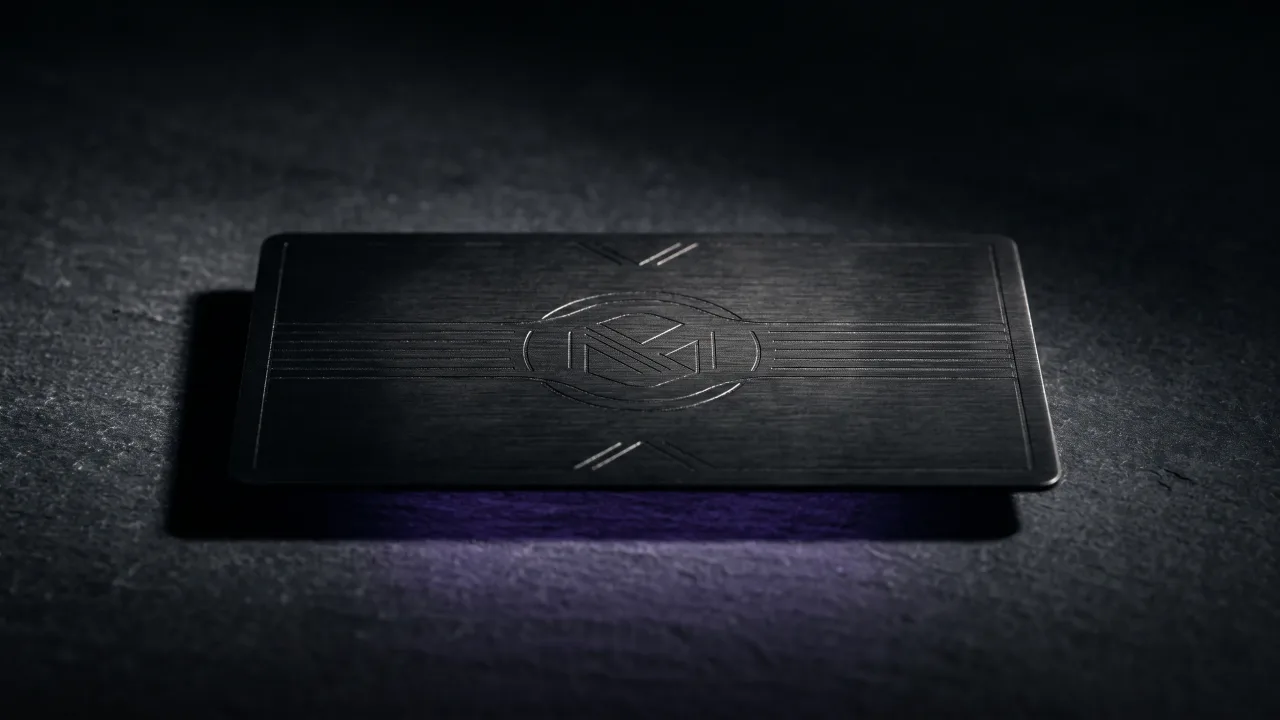
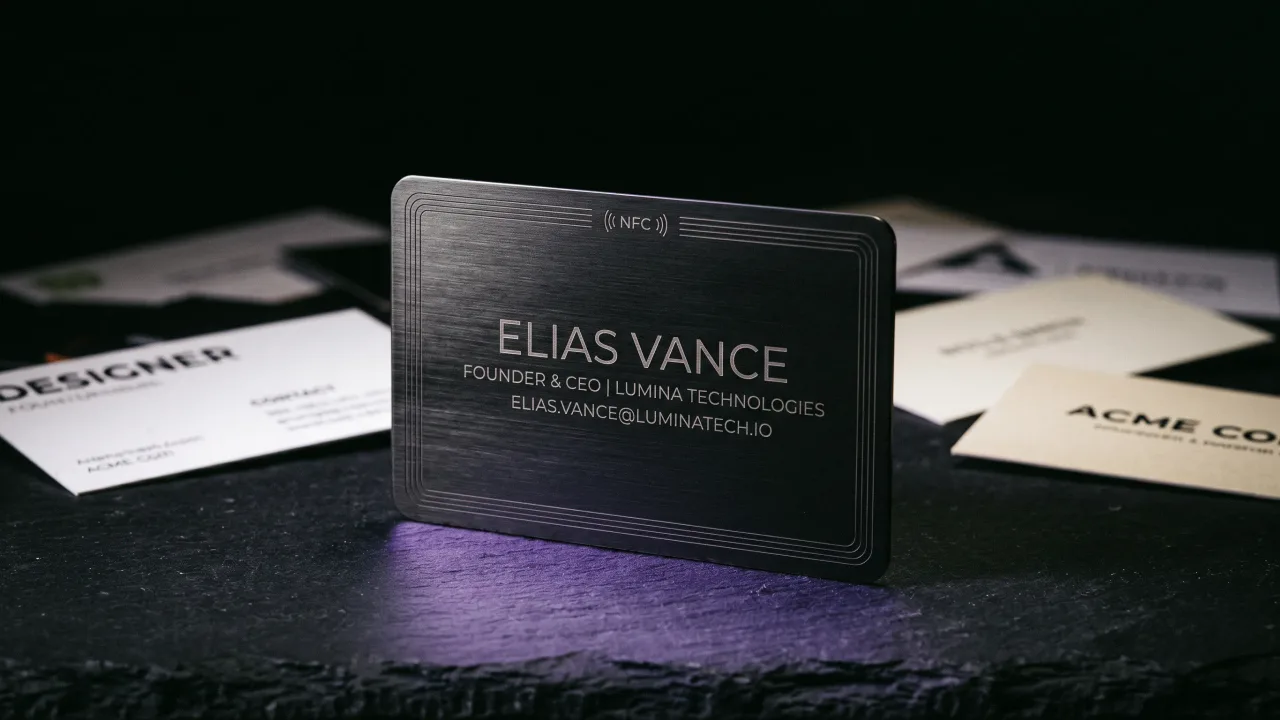
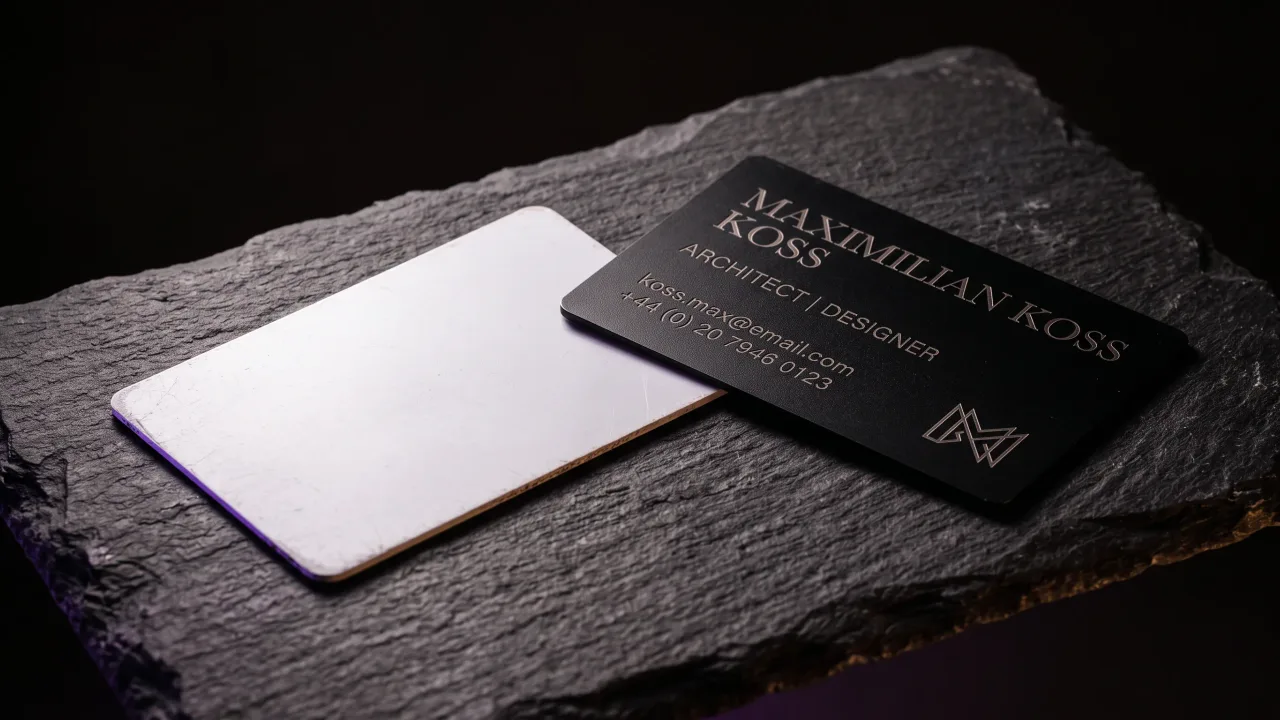
- Is the design engraved into the surface or printed on top? Printed layers wear at the edges and eventually peel. Engraving does not.
- Can you edit the profile after the card ships, and what does that cost per year, forever?
- Is there a QR code on the card as a fallback for the phones that will not tap?
- Where is the card manufactured, and where does the contact data from your taps actually sit?
A card that fails the first check still works. It also means handing someone your card and then talking them through a setup app, which is never the moment you were hoping for. An unlocked chip carries a second problem: anyone with a writer app can overwrite it.
Metal, wood, or plastic: what the material decides
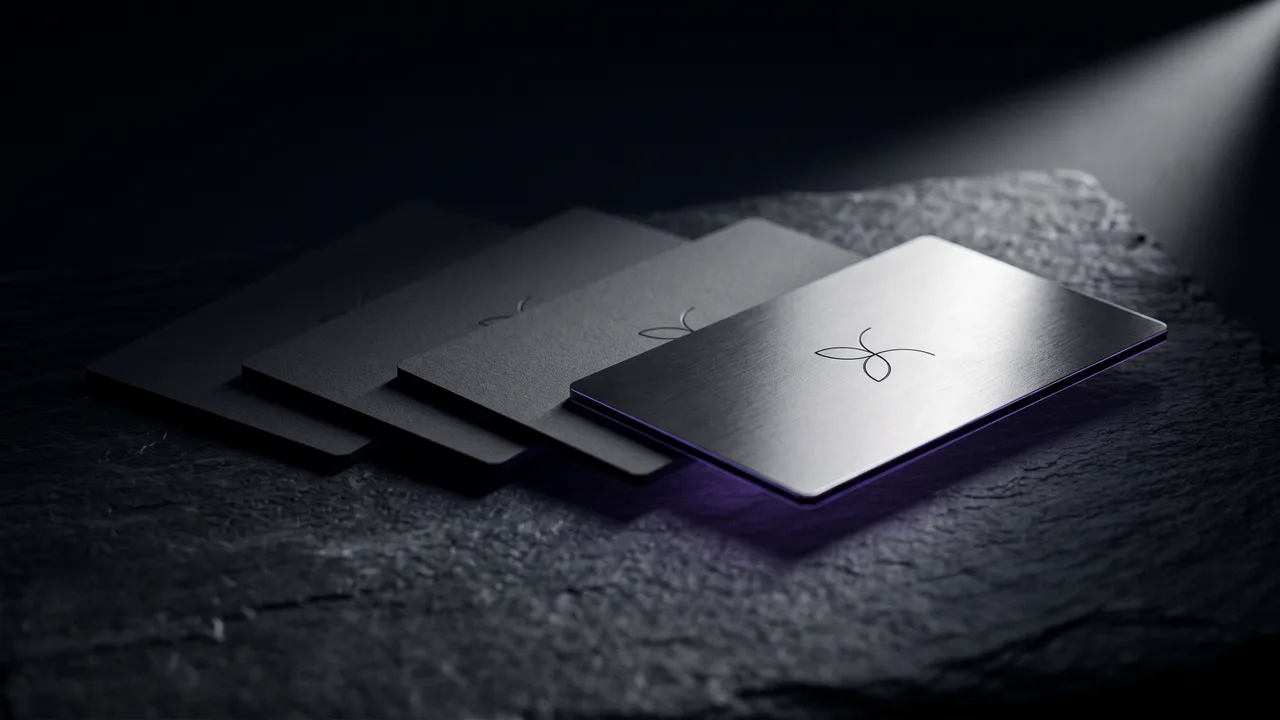
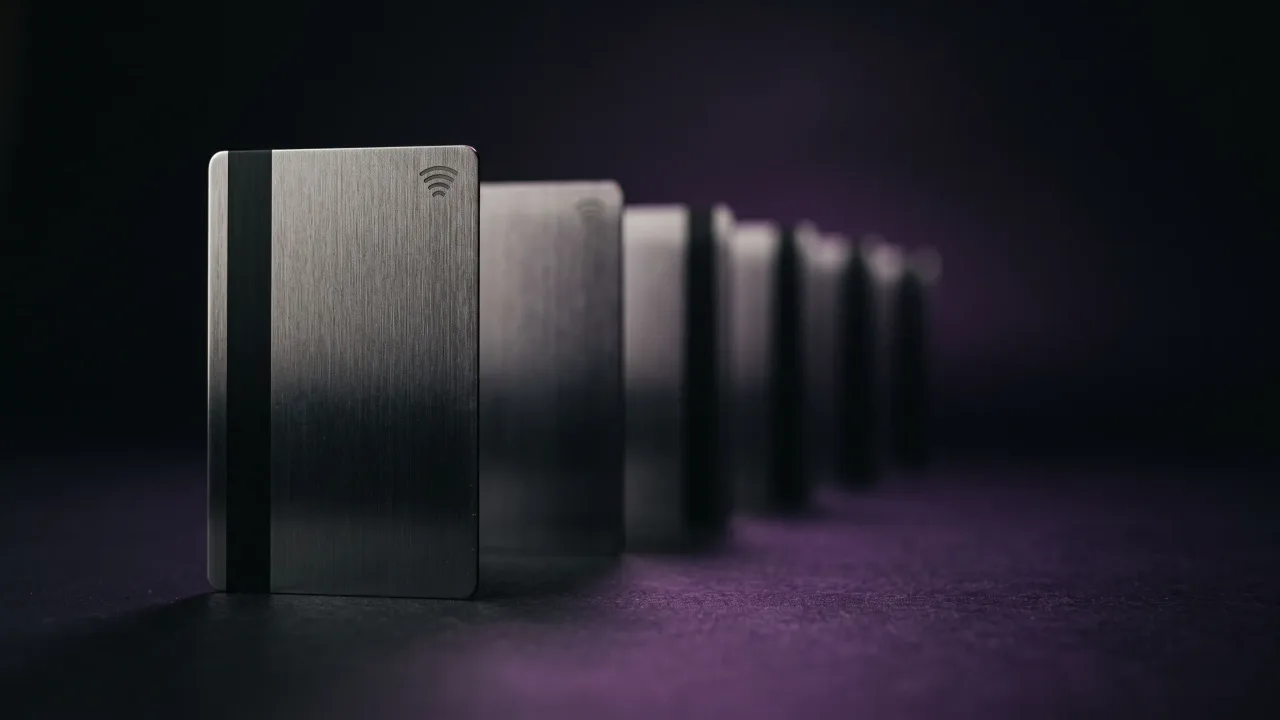
Metal blocks radio waves, so a metal NFC business card has to be built around that problem instead of ignoring it. The chip and antenna sit in a cut-out window or a non-metallic slot in the body. That engineering is why a good metal card costs more than a plastic one, and why a badly made one taps from only one corner.
Wood sits in between. It does not interfere with near-field communication at all, takes a laser burn cleanly, and darkens as it ages instead of peeling.
| Material | Typical market price | How it ages | Where the chip sits |
|---|---|---|---|
| Plastic (PVC) | €20–€40 | Print scuffs, then lifts at the corners | Anywhere in the card body |
| Wood | €35–€50 | Darkens slightly, keeps the laser burn | Anywhere in the card body |
| Metal | €40–€90 | Engraving stays, surface picks up faint marks | In a cut-out window, because metal blocks the signal |
Discard prices wood at €39.90 and metal between €44.90 and €49.90, and does not sell a plastic card at all. That is a position rather than a gap in the range: plastic removes the one thing the object was supposed to do.
Subscription or one-time: what you are actually paying for
The card is a one-time cost everywhere. The profile is where the pricing models split, and it is the part that decides what three years cost you, not what today costs.
Some platforms hand you a generous free tier and then paywall the things you will want inside a month: analytics, a second card, a custom domain, lead capture. Others charge nothing recurring and give you a page you can barely change. A flat annual fee with the whole feature list included is the easiest model to reason about, which is why Discard charges €19.90 a year for the digital profile and leaves the features alone.
Whichever you choose, ask one question before you pay: what happens to the page if you stop. A card whose link has gone dead is a coaster with your name engraved on it.
Do the best NFC business cards need an app?
Never on the receiving side. The chip carries a web address, the other phone opens it in the browser, and the person you just met installs nothing. Any card that asks them to download something first has failed at the only job it has. We take that apart in do NFC business cards need an app.
On your side an app is a preference, not a requirement. Editing a profile in a browser works fine and survives phone upgrades. What matters more is whether the platform lets you change your details without reordering the card, because that is the whole argument for the category.
Where your contacts live, and who is allowed to read them
Every tap is a small data event. Someone opened your page, maybe saved your number, maybe filled in a form that landed in a database. That database sits on a server somewhere, and the somewhere matters more than most product pages let on.
For a buyer in Europe, a card from a US platform means your lead data sits under a different privacy regime than the one you operate in, and it usually means customs and a two-week wait on the way in. Cards built and shipped inside the EU skip both, and the contact data lands under GDPR and the EU data protection rules by default. Privacy is not a feature you have to go looking for on the pricing page.
Read what the platform does with contact data before you hand out fifty cards. If lead capture syncs into a CRM, ask where that sync runs and who else can query it.
The best NFC business card for your situation
Drop the overall-winner framing. The right card depends on how often you hand one over and what you need it to say when you do.
| If you | Look for |
|---|---|
| Hand out two cards a month | Wood or plastic with a cheap profile. The object matters less than the link staying alive. |
| Meet clients who judge materials | Engraved metal. This is the entire reason the premium tier exists. |
| Run a sales team of ten or more | CRM sync and lead capture first, material second. |
| Work and sell inside the EU | An EU manufacturer, for delivery times and for where the data lands. |
| Want no recurring cost at all | A card pointing at a link you own and host, and accept that editing is on you. |
If the software side is what you are weighing, our comparison against the platform-first brands goes deeper than a table can.
What an NFC business card really costs over three years
Paper looks cheaper for about four months. A run of 500 decent cards costs €30 to €60, and the average professional reprints two to four times a year as a title, a number or a company name changes underneath them. Across three years that is six to twelve print orders, or somewhere around €240 to €480.
A metal card at €44.90 plus €19.90 a year for the profile comes to about €105 over the same three years, and none of that is a reprint. The card outlasts the job title, because the title lives on the page rather than on the metal.
Where Discard fits, and where it does not
Discard is a metal-first card, built and shipped in the EU, engraved rather than printed, with a QR fallback on the back and a profile at €19.90 a year with no feature tiers. You can build one in the configurator and see the engraving rendered before you pay for anything.
It is the wrong card if you need deep CRM automation for a thirty-person outbound team, or if you want the cheapest possible object to hand out by the hundred at a trade show. Both are real needs, and plastic with a lead-capture platform serves them better than we would.
The best NFC business card is the one whose link still resolves in three years and whose surface still looks like you chose it on purpose. That rules out most printed plastic, and it rules out any platform that paywalls basic editing once you are locked in. For a European professional handing a card across a table in meetings that decide something, engraved metal from an EU maker on a flat annual profile fee is the setup that holds up. For a thirty-person outbound team, the software matters more than the metal, and the honest answer is to buy on CRM integration and treat the card as a consumable. Anyone selling you a single overall winner, ourselves included, is selling.
Build a metal card in the configurator and see the engraving before you pay.
Design your cardWhat is the best NFC business card overall?
There is no single best one, because the category splits by material and by what the profile costs to keep alive. For a premium in-person impression, engraved metal wins on every measure except price. For high-volume handouts at events, plastic is the rational choice.
Are metal NFC business cards better than plastic ones?
Better in the hand and better over time, since engraving does not peel and the card survives years in a wallet. The tap itself works identically on both. Metal costs roughly double, so the question is whether the object earns that back in the room.
Do NFC business cards need a subscription?
The card itself is a one-time purchase everywhere. The profile behind it usually carries a recurring fee, which is what keeps the page live and editable. Discard charges €19.90 a year with all features included and no tiers.
Do NFC business cards work on every phone?
Almost every one. Every iPhone from the XR onwards and nearly every Android sold in the last decade reads them with nothing installed. A printed QR code on the card covers the handful of phones that will not tap.
How much should I pay for an NFC business card?
Roughly €20 to €40 for plastic and €40 to €90 for metal at current market prices. Above that band you are paying for branding. Below it you are usually paying for a printed layer that will not last the year.
Can I change my details after the card is made?
Yes, on any card that points at a hosted profile rather than a fixed vCard written to the chip. You edit the page, and every card already in circulation opens the new version on the next tap.
Which are the best NFC business cards for teams?
Whichever ones integrate with the CRM you already run, because at team scale the lead data matters more than the card material. Check whether people can be added and removed without reordering hardware every time someone joins.