The chip inside an NFC business card is rated to hold its data for ten years without a battery. Tapping it does not use it up. So how long do NFC business cards last? The electronics are almost never the part that fails, which means the answer is really about everything built around them.
In practice a card lasts somewhere between three years and the rest of your career, and the spread comes down to two things: what the card is made of, and how often your job title changes. The chip is the dependable component. The body around it, and the information printed on it, are where the trouble starts.
How long does an NFC business card actually last?
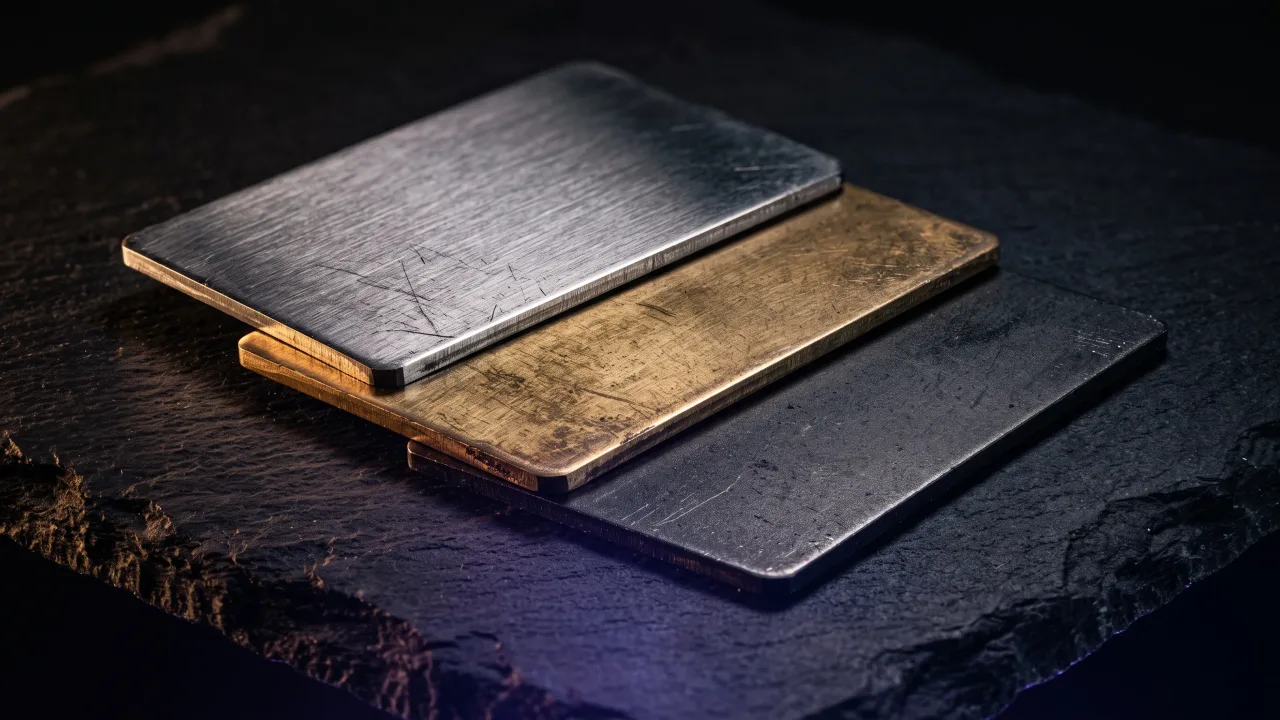
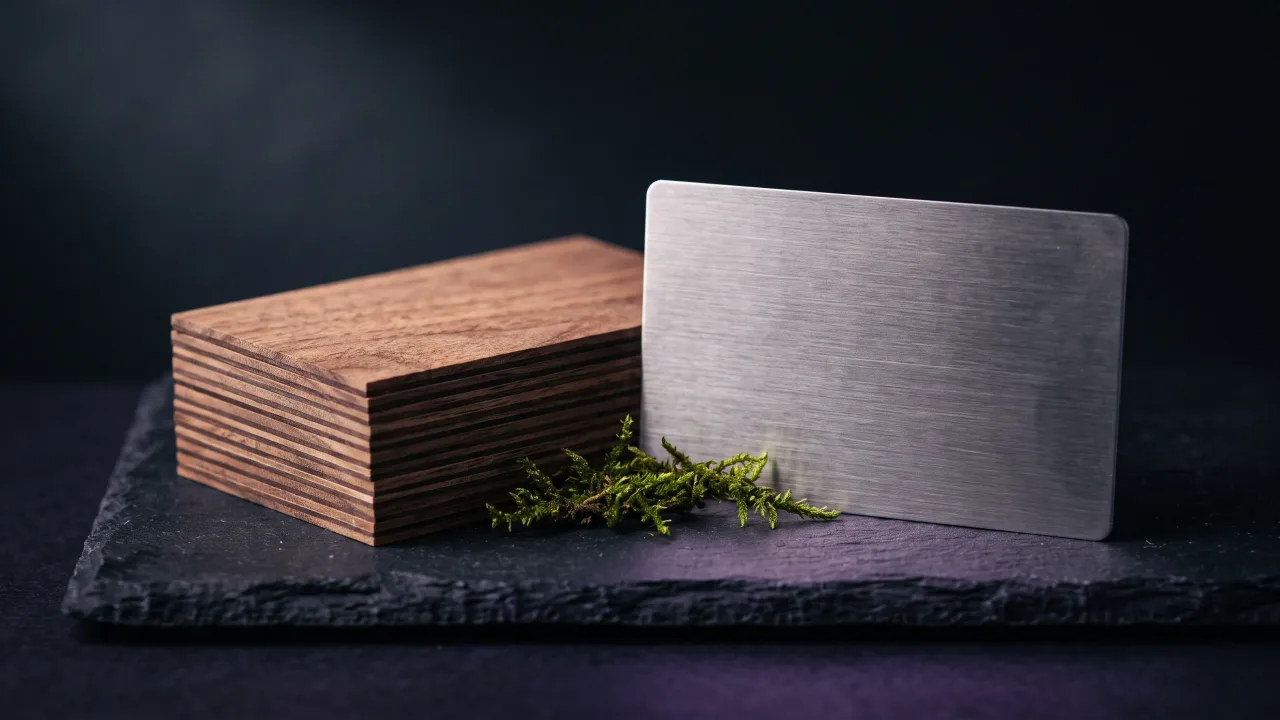
A metal card in ordinary wallet-and-pocket use should give you ten years or more. PVC cards, the plastic ones that feel like a hotel key, usually give up between year three and year five as the laminate lifts and the print scuffs away. Wood sits between the two and ages rather than wears.
Those numbers describe the object, not the chip. Snap a metal card in half and it stops working, but that is a hinge problem, not an electronics problem. Every published lifespan figure for NFC business cards is really a durability rating for the material somebody chose to bury the chip in.
Even the pessimistic end of the range is a long time next to the alternative. A box of 250 paper cards becomes wrong the day your phone number changes, and most of it was going in a bin anyway. We did that arithmetic in the hidden cost of paper business cards, and the ratio is worse than most people guess.
The chip and the card age at completely different rates
Discard cards carry an NXP NTAG215, the chip class used across most NFC tags and cards. The datasheet figures are ten years of data retention, 100,000 write cycles and 504 bytes of user memory.
Data retention is the number that matters, and the one people misread most often. It means the chip will keep what was written to it for at least a decade sitting in a drawer with no power reaching it. It does not mean the card wipes itself in year eleven. Memory of this type is generally guaranteed for ten years or more, and chips routinely stay readable well past the rated figure because the rating is a conservative floor, not an expiry date.
So the chip sits there, unbothered, holding a few hundred bytes. The card around it is out in the world being sat on, dropped on tile, and shuffled against keys. Guess which one goes first.
Tapping does not wear the chip out
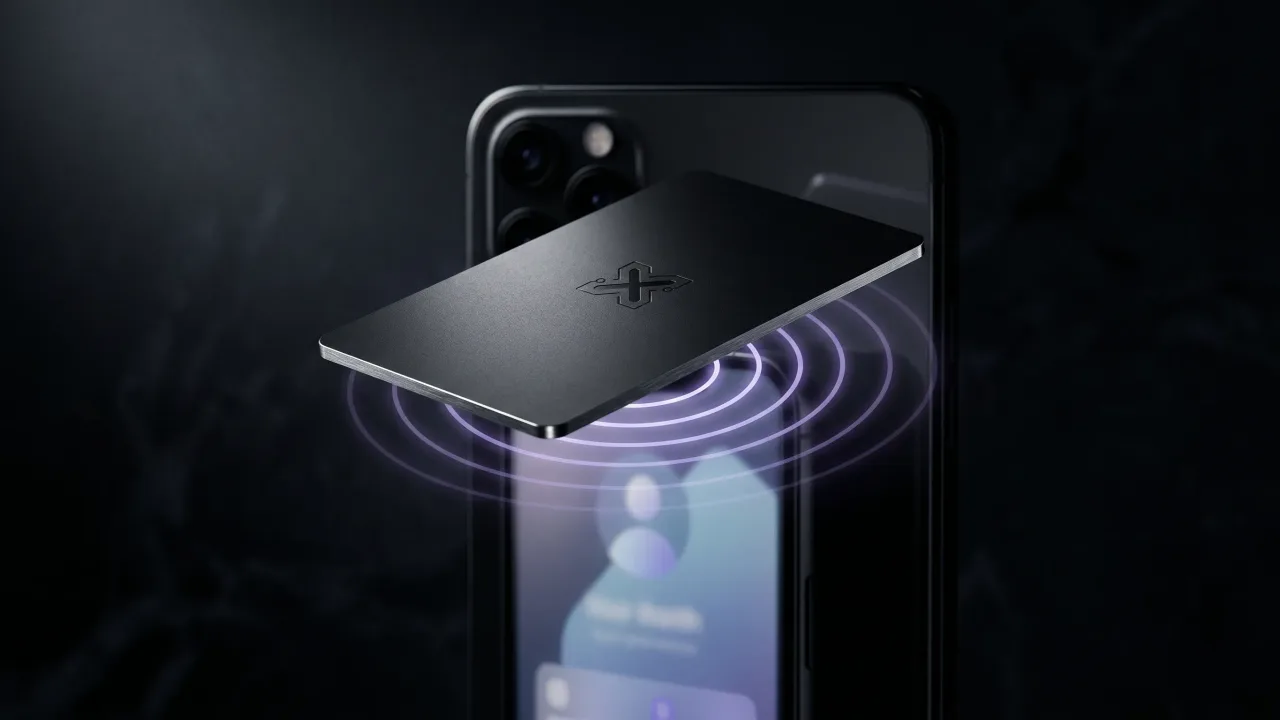
This is the anxiety hiding inside most versions of the question, and it is misplaced. Reading an NFC tag consumes nothing. The phone's field powers the chip for a fraction of a second, the chip answers with what it stores, and not one bit in the memory changes.
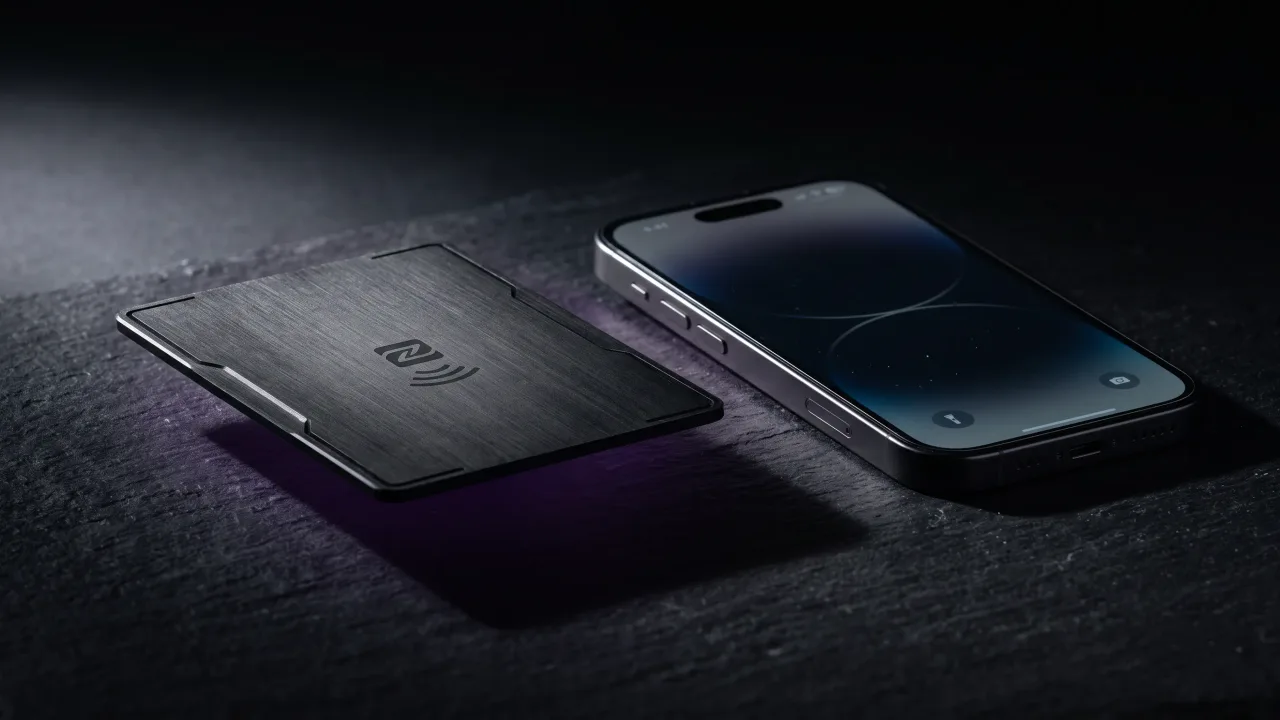
The technology is built for exactly this. Passive NFC tags have no power source of their own and draw what they need from the device held against them, at 13.56 MHz across a working distance of about four centimetres. Nothing inside it ages on a charge cycle, because there is no charge to cycle. Your card does nothing whatsoever until a phone wakes it, which is why a card left in a drawer for two years still works on the first tap.
Writing is the operation with a ceiling, and that ceiling is 100,000 cycles. Your card is written once, at the factory, when the profile link goes onto the chip. Rewrite it every working day and you would need roughly four centuries to hit the limit.
Which makes "how many times can you tap an NFC card" a dull question with a dull answer: more times than you will ever tap it. The NFC Forum tag specifications were designed around objects embedded in packaging and posters that nobody would ever service, so read durability was never going to be the weak link. If you want the mechanics in full, how NFC business cards work covers the tap end to end.
What actually kills an NFC card
Real failures cluster into a short list, and the chip is not on it. NFC business card durability comes down to the antenna and the card body, and both of those can be broken by hand.
- Repeated bending. The antenna is a fine loop of wire running around the edge of the card. Flex it often enough and it fractures. This is the failure that catches people out, because it is silent. Nothing looks wrong from the outside.
- Sustained heat. A card left on a car dashboard through August takes more punishment in a week than a year of normal carrying does, because heat attacks adhesive and laminate rather than the silicon.
- Cheap construction. Thin PVC delaminates, printed layers peel at the corners, and the chip works loose from a card that was never really built to hold it in the first place.
- The washing machine. Cards shrug off water. Water plus a spin cycle plus a hot dryer is a different proposition, and the laminated ones rarely come back.
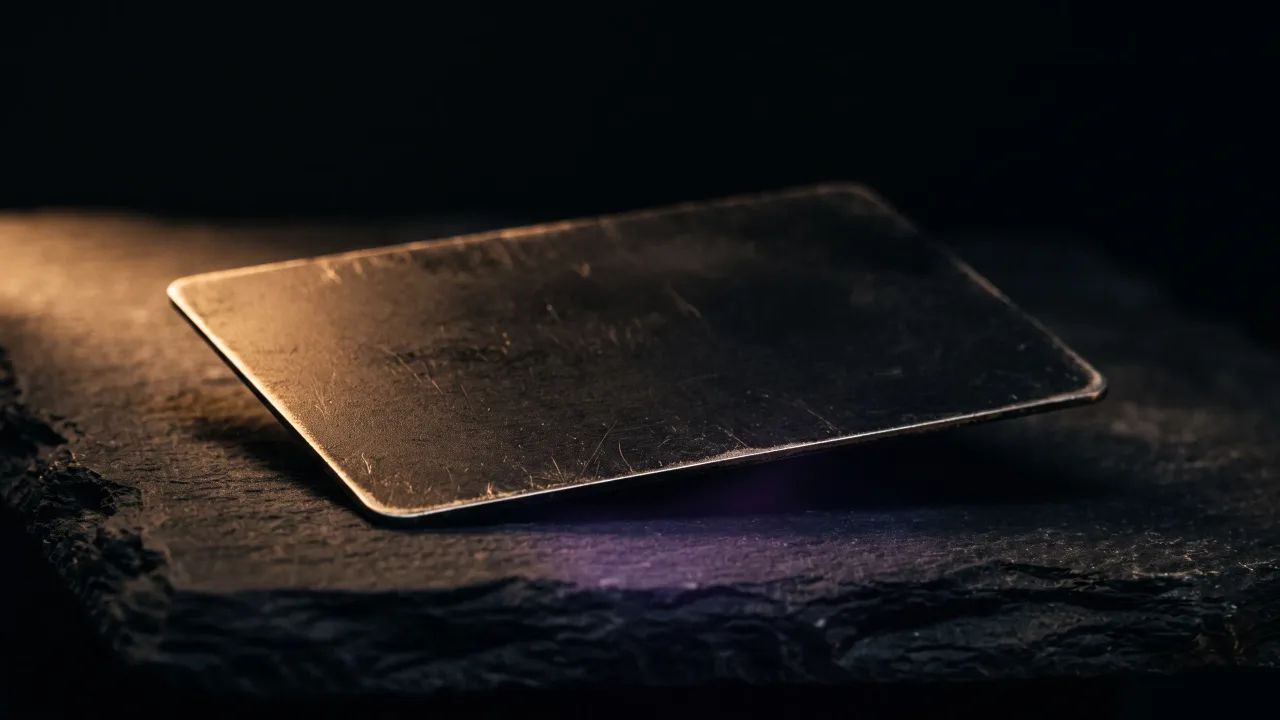
- One hard crease. Not repeated flexing, just a single sharp fold across the antenna line. Metal cards resist this well. Plastic ones do not, and the damage is permanent.
Notice what is missing. Age, tap count, sunlight, sitting next to a phone, going through airport security, being kept beside a bank card. None of those are on the list, and the last one comes up constantly. Magnetic strips and NFC chips are unrelated technologies, and one does not erase the other, which we get into in whether metal business cards are magnetic.
When a card does stop responding, the antenna or the body has usually failed around a chip that is still perfectly fine. There is a short diagnostic list worth running before you write the card off, and we put it in what to do when an NFC business card stops working.
Metal, wood and PVC compared
| PVC / plastic | Wood | Metal | |
|---|---|---|---|
| Realistic lifespan | 3–5 years | 5–10 years | 10+ years |
| How it usually fails | Laminate lifts, print peels | Surface marks, cracks if soaked | Almost only by being bent |
| After a year in a wallet | Creased and warped | Marked but sound | Comes out flat |
| What ages the appearance | Print fades and scuffs | Wood darkens, which suits it | Engraving does not fade |
| Feels like | A hotel key card | A guitar pick | A tool |
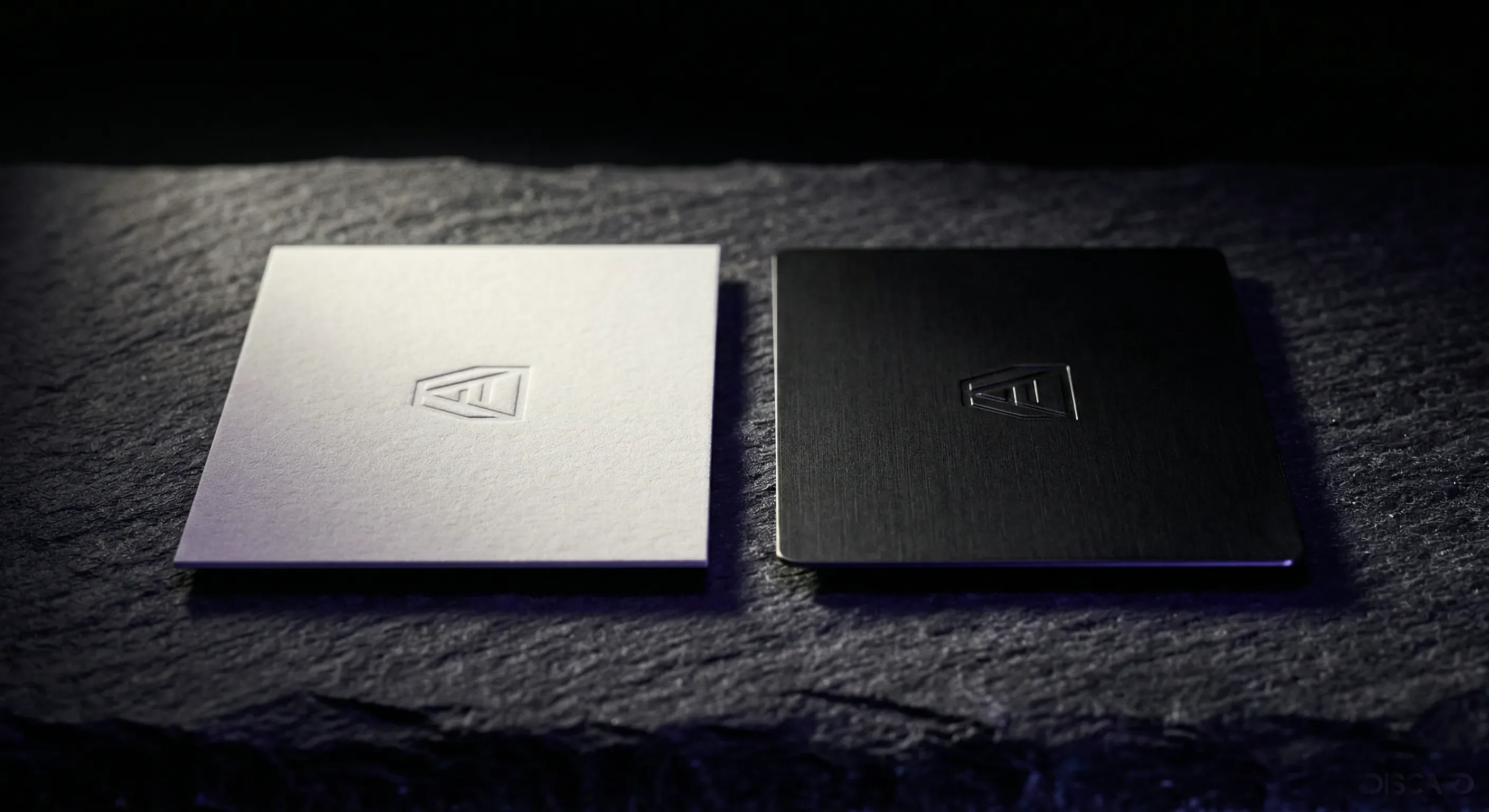
The last row of that table is doing more work than it looks. Print sits on top of a card; engraving is cut into it. That single difference is why a laser-engraved metal card reads the same in year eight while a printed plastic one looks tired by year three, and it is the reason we engrave rather than print.
Wood deserves a fairer hearing than it usually gets. It marks, and it will darken with handling, but it does both in a way that looks deliberate rather than worn. It is the option for people who want the card to acquire a history. Metal is the option for people who want it to look identical for a decade.
The failure nobody plans for
Ask how long NFC business cards last and you get an answer about materials. What actually retires most cards is a promotion.
This is where the design of the system matters more than the metal does. A card with your phone number written directly into the chip is finished the moment that number changes. A card holding a link to a profile is not, because the part that changes is the profile and the link stays where it is.
Discard cards work the second way. The chip carries one stable URL and nothing else. Your title, your number, your new company, the photo you finally stopped hating, all of it lives on your digital profile and you edit it from the dashboard in about a minute. A card you handed someone three years ago still opens the current version of you.
So there are two different claims here, and they get conflated constantly. One is that a card will physically last ten years. The other is that a card will still be useful in ten years. Only the second one is worth paying for, and a printed plastic card with a hard-coded number fails it the first time anything on it changes, however well the plastic holds up.
How to make yours last longer
None of this is demanding. An NFC card asks less of you than a phone does, and the whole maintenance routine fits in five lines.
- Keep it flat. A card slot or a holder, not the back pocket you sit on for eight hours a day.
- Stop using it as a tool. No scraping ice off a windscreen, no slitting tape on boxes, no wedging a door.
- Keep it out of sustained heat. Dashboards, radiators, and the vent side of a laptop.
- Clean metal with a dry cloth, or a barely damp one. Solvents and abrasives go after the finish, never the chip.
- Stack it freely, separate it to tap. Two NFC cards touching cannot corrupt each other, but a phone seeing both at once often reads neither.
There is no firmware to update and nothing to plug in. Neither you nor the person tapping installs anything either, which surprises people often enough that it comes up in almost every conversation we have about these cards.
A well-made NFC business card outlasts the job you ordered it for. The chip holds its data for a rated ten years without power, tapping costs it nothing, and the 100,000-write ceiling is a number you would have to work hard to approach. Metal takes a decade without complaint, wood manages most of one and wears it well, and cheap PVC gives out around year four with the print already going. That settles the material question, which is the less interesting half of it. The card that genuinely lasts is the one whose contents you can rewrite, because job titles and phone numbers move a great deal faster than steel corrodes. Buy for the ten years. Then buy the version you can edit, because that is the part that decides whether year four is still worth carrying.
Engraved in metal, ordered once, with a profile you can rewrite every time your details change.
Design your cardHow long do NFC business cards last?
A metal NFC card lasts ten years or more in normal use, wood five to ten, and PVC three to five. The chip itself is rated for ten years of data retention with no power, so the material is what decides the answer. Physical damage to the card, not chip failure, is what ends almost every card's life.
Do NFC business cards expire?
No. There is no subscription clock and no expiry date built into the chip. The ten-year figure on the datasheet is a guaranteed minimum for how long the memory holds data unpowered, and chips commonly stay readable long after it.
Do NFC cards wear out from being tapped?
No. Reading an NFC tag changes nothing in its memory, so tap count is not a wear factor at all. The 100,000-cycle limit applies to writing, and your card is written once when the profile link is loaded onto it.
Do NFC business cards need charging or a battery?
Neither. The chip is passive and draws the tiny amount of power it needs from the phone held against it. That is why a card can sit in a drawer for years and still work on the first tap.
Can an NFC business card stop working?
Yes, though usually because the antenna has cracked from repeated bending rather than because the chip has failed. Heat, delamination on cheap plastic cards and a single hard crease across the antenna are the other common causes. Check the tap position and the phone's NFC setting before assuming the card is dead.
Which NFC business card material lasts the longest?
Metal, by a clear margin. It does not delaminate, the engraving cannot scuff off the way print does, and it comes out of a wallet flat after a year. Its one real weakness is being bent hard enough to fracture the antenna.
How many times can an NFC business card be tapped?
Effectively without limit. Read operations do not consume the memory, so there is no tap budget to spend. A card in daily commercial use goes years without anything changing inside the chip.
Do I need a new card if my phone number or job title changes?
Not if the chip stores a profile link rather than the details themselves. Discard cards hold one fixed URL, so you edit the profile and every card you have ever handed out shows the new information. Cards with contact details written straight onto the chip do have to be replaced.