The fear is almost always the same. Someone brushes past you in a crowd, waves a phone near your pocket, and quietly lifts your details out of the air. It is a real worry pointed at the wrong object. The data people picture being stolen was never sitting on the card to begin with.
So are NFC business cards safe? Yes, for one simple reason: the chip holds nothing but a public web link, the same kind of address you would happily print on paper. It cannot store your passwords, drain your battery, or hand over anything you have not already chosen to show. The rest of this guide explains why, and covers the few real risks worth knowing about.
What is actually stored on an NFC business card?
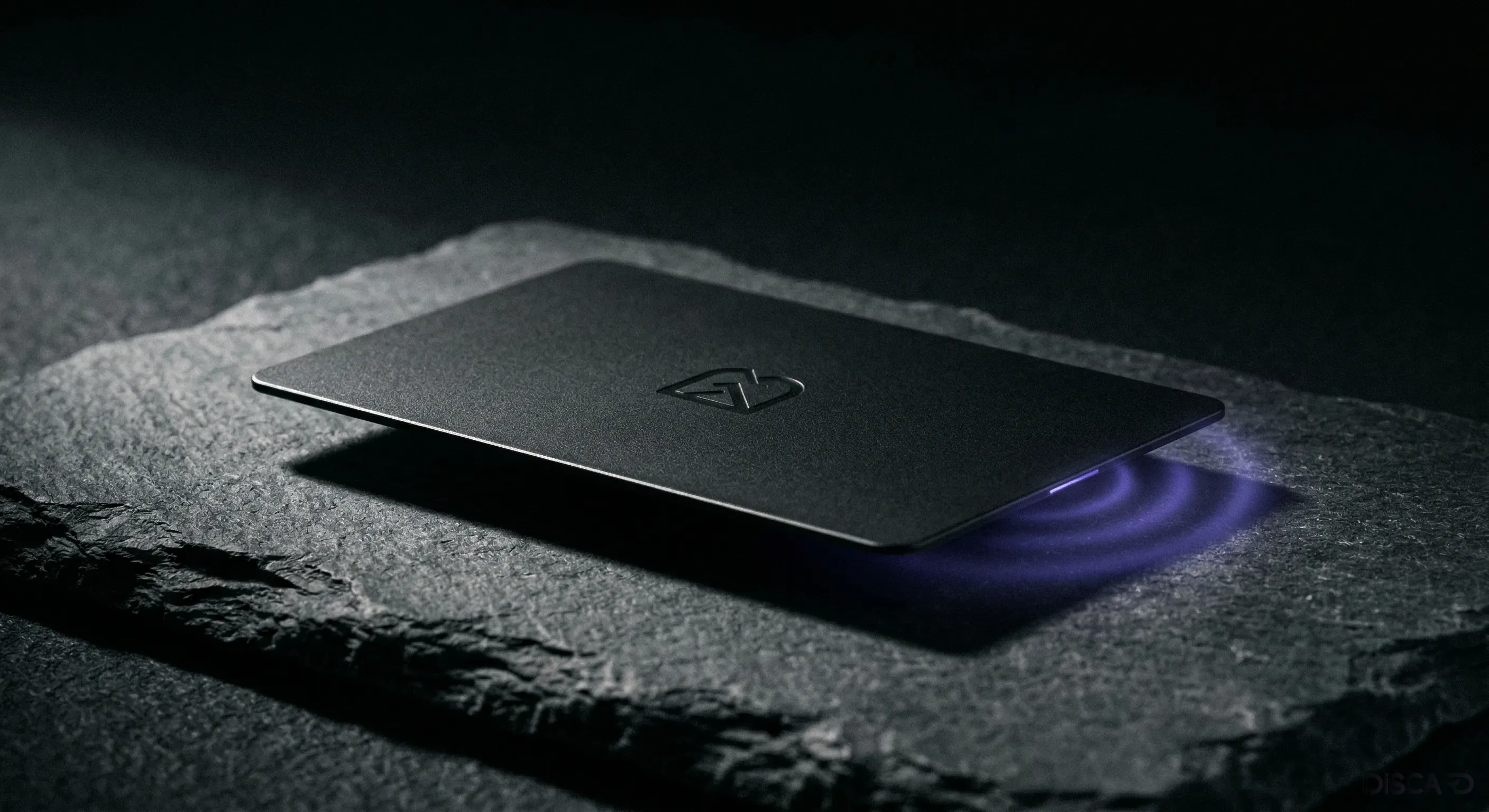
Almost nothing, and that is the point. Inside the card sits a passive chip wired to a thin antenna, with no battery and no memory of your personal life. All it holds is one short piece of text: a web address that points to your digital profile. It is a passive near-field communication tag, which means it only wakes up when a phone touches it and feeds it power for an instant.
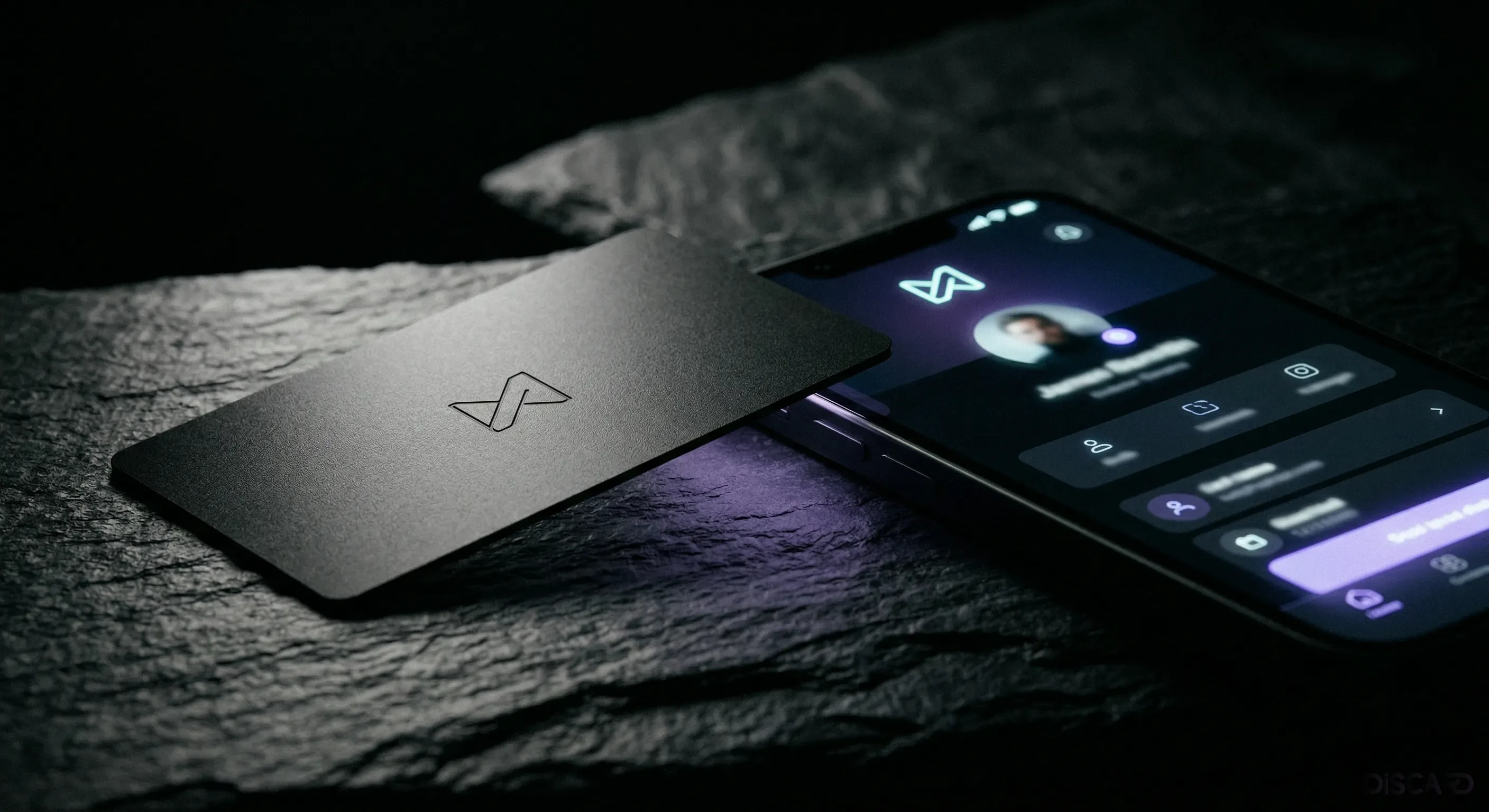
Your name, number, and photo do not live on the chip. They live on the profile page that the link opens, hosted online where you can edit it. So even if someone got hold of your card and read the chip, all they would find is the same link you hand out on purpose. There is no hidden payload to steal.
Can an NFC business card be hacked or skimmed?
Skimming is the fear borrowed from payment cards, and it does not transfer. RFID skimming works because a bank card carries account data worth grabbing. A business-card chip carries a public link, so there is nothing on it a thief could turn into money or access.
Range makes casual interception harder still. NFC only answers within about four centimetres, so a card cannot be read from across a room or out of a bag while you walk past. Someone would have to press a reader directly against your card, and the reward for doing so would be a link you would have given them anyway.
Cloning ends the same way. A chip can be copied, but copying a public link only produces a second card that opens the same public page. No account, no login, nothing private moves. The copy is as harmless as a photocopy of a paper card.
Can tapping a card give your phone a virus?
No. The chip cannot run code, install an app, or push anything onto a phone. All it does is reply with a web address, and the phone treats that like any link you tap in a message: it shows you the address and waits for you to open it.
The one risk here is not the chip but the link itself. If a chip is left unlocked, someone with physical access could rewrite it to point at a phishing page instead of your profile. The defence is simple. A properly made card ships with the chip locked, so the address cannot be changed after it leaves the factory. Discard cards are written and locked in production, which closes that gap before you ever hold the card.
What does the other person see when they tap?
Only what you put on your profile. The tap opens your page, and your page shows the fields you chose to publish: your name, your role, the links you want shared, a save-contact button. Anything you leave off simply is not there.
You decide how much to reveal. A profile can be as open as a full portfolio with a direct phone number, or as guarded as a name and a single booking link. Because you build it in the configurator and edit it any time, you can change your mind later without touching the card.
Does an NFC business card track the person who taps it?
The card does not. A passive chip has no clock, no location sensor, and no way to log who touched it. It answers a tap and goes dormant, so nothing about the person on the other end is recorded by the card itself.
The profile behind the link can count taps, the same way any website counts visits, so you can see how often your card is getting used. That is a tally of opens, not a file on the people who opened it. The analytics tell you a card is working, not who is holding the phone, and the recipient installs nothing and is asked for nothing.
Is the digital profile behind the card secure?
The card is only half the system; the other half is the page it opens. A digital profile is a normal web page, so the things that keep any reputable site safe apply here. It loads over an encrypted HTTPS connection, and you sign in to edit it, which means no one can change what your profile says without your login.
For the rare case where you want a layer of friction, keep the profile lean and publish only a booking link or a work email, so even a fully open page reveals little. The sensitive material was never meant for a card you hand to strangers, and leaving it off is simpler and safer than hiding it behind a gate.
Are NFC business cards a privacy risk?
The honest answer is that the privacy question is about your profile, not the chip. A digital profile lives at a web address, and a web address can in principle be found, shared, or indexed by a search engine. So the rule is the one you would use for any public page: put on it what you are comfortable being public.
Keep the sensitive things off. Your home address, personal documents, and private accounts have no place on a card you hand to strangers. For the contact details you do publish, EU providers handle them under the GDPR, which sets real limits on how your data is stored and used. A card made and hosted in Europe keeps that protection by default.
NFC card vs QR code vs paper: which is safer?
Each format exposes a different amount, and the gaps show up fast once you line them up. The table below compares an NFC card against a QR code and a traditional paper card on the questions people actually worry about.
| Security question | NFC business card | QR code | Paper card |
|---|---|---|---|
| What a stranger can read | A public link, on contact | A public link, in view | Whatever is printed |
| Readable from a distance | No, about 4 cm range | Yes, a camera can scan from afar | No, but it can be photographed |
| Can it carry malware | No, it only serves a link | No, but the link can be faked | No |
| Holds private or payment data | No | No | No |
| You control what is shown | Yes, edit the profile anytime | Only if it points to a page you control | No, fixed once printed |
QR codes are the interesting comparison, because one can be photographed and scanned from a distance, while an NFC tap demands physical contact. Both share only a public link, so neither leaks private data on its own. We weigh the full trade-offs in NFC vs QR code business cards.
How to use an NFC business card safely
Most safe-use advice comes down to two choices: buy a card with a locked chip, and treat your profile like the public page it is.
- Buy from a provider that locks the chip in production, so the link cannot be rewritten later.
- Publish only details you are happy to share with anyone who taps.
- Keep home addresses, documents, and private logins off the profile entirely.
- Edit or take down the profile the moment a card is lost, since the chip itself holds nothing worth taking.
- Prefer an EU-made, EU-hosted card so your contact data stays under GDPR.
Do that and an NFC card is at least as safe as the paper one it replaces, with the bonus that you can switch off a lost profile in seconds. There is more on the everyday upside in the benefits of NFC business cards.
The verdict: are NFC business cards safe?
Safe enough to carry without a second thought, because the worry is aimed at data that was never on the card. The chip is a passive signpost holding a public link, not a wallet full of secrets. It cannot be skimmed for anything valuable, cannot infect a phone, and cannot reveal more than the profile you built on purpose. The one genuine risk, a rewritten link, disappears the moment the chip is locked in production, which is how a serious card ships. Treat the profile like the public page it is, keep the private things off it, and the honest conclusion is that a well-made NFC business card is safer than the paper card it replaces. You can edit it, lock it, and switch it off the day you lose it.
Build a card with the chip locked in production and a profile you control, edit, and switch off whenever you choose.
Design your cardFrequently asked questions
Can NFC business cards be hacked?
Not in any way that exposes private data, because the chip only holds a public web link. There is no account, password, or payment information on it to steal. The one thing an attacker could try is rewriting an unlocked chip to point elsewhere, which is why a properly made card locks the chip in production.
Can someone steal my information by tapping my NFC card?
No. Tapping reads the public link on the chip and opens the profile you already chose to share. Your private details are not stored on the card, so there is nothing hidden for a tap to pull out.
Can an NFC business card give my phone a virus?
No. The chip cannot run software or install anything; it only replies with a web address. Your phone treats that address like any other link and shows it to you before opening it.
Can NFC business cards be skimmed like credit cards?
No, because there is no payment or account data on the card to skim. Skimming targets the financial information on bank cards, while a business-card chip holds only a public link. The few-centimetre range also means it cannot be read without a deliberate, close tap.
Do NFC business cards store personal data?
The chip itself stores only a link, not your personal data. Your name, number, and other details live on the digital profile the link opens, where you control exactly what is shown and can edit it at any time.
Is an NFC business card safer than a QR code?
They are close, with one difference: a QR code can be photographed and scanned from a distance, while an NFC card needs a close tap to read. Both share only a public link, so neither exposes private data on its own.
What happens to my data if I lose my NFC card?
Nothing sensitive is at risk, because the chip holds only a public link and no private information. If you want, you can edit or take down the profile behind that link so the lost card opens nothing useful.
Are NFC business cards GDPR compliant?
They can be, and it depends on where the profile is hosted. A card made and hosted in the EU keeps your contact data under GDPR, which limits how it is stored and used. Keeping sensitive details off a public profile is still the most important safeguard.