Search for a contactless business card and the top results can't agree on what you're buying. One page sells a QR code that lives on your phone screen. The next sells a metal card with a chip inside. Both use the same two words, and one of them involves touching a card to a phone, which is a funny thing to call contactless.
The term is fine. It also covers a lot. Here is what it covers, which of the neighbouring words mean the same thing, and what to ask a seller before you pay.
What does contactless business card mean?
A contactless business card is any way of sharing your contact details without the other person typing them in. That is the only thing all the versions have in common. The word "contactless" says how the details travel. It doesn't tell you whether there is a physical card at all.
The word comes from banking. Contactless payment means holding a card or phone near a terminal instead of swiping it, and most people already know that gesture from the supermarket. Card sellers took the word over. You will also see the same product sold as an "NFC business card" or a "digital business card".
The three products sold under this name
| Type | What it is | What you hand over | Typical cost |
|---|---|---|---|
| NFC card | A physical card with a chip that opens your profile | The card, or a tap of it | One payment for the card |
| QR card | A printed card with a code that opens your profile | The card | The price of printing |
| App or wallet card | A code or link on your phone, with nothing physical | A look at your screen | Free, or a monthly plan |
The first is the one most people picture. The second is a paper card with a useful addition. The third is a digital business card with no object behind it, and some sellers call that contactless too, which is where most of the confusion starts.
How a contactless NFC card works
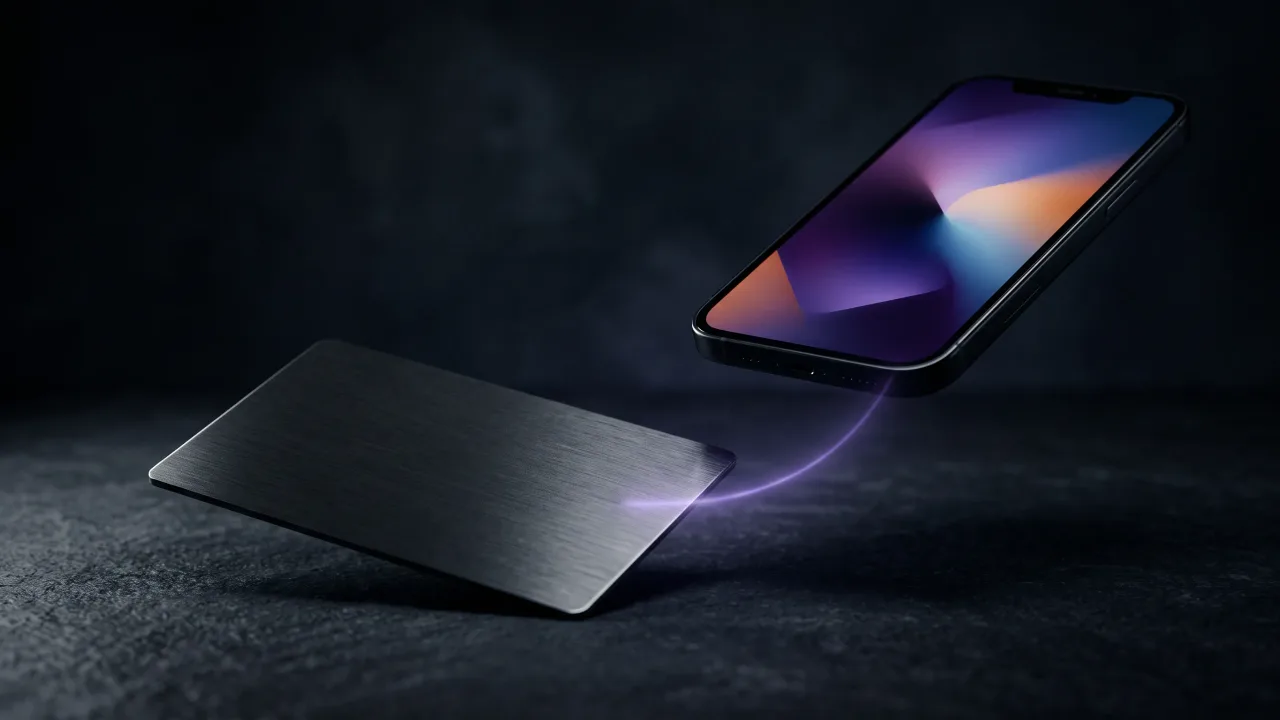
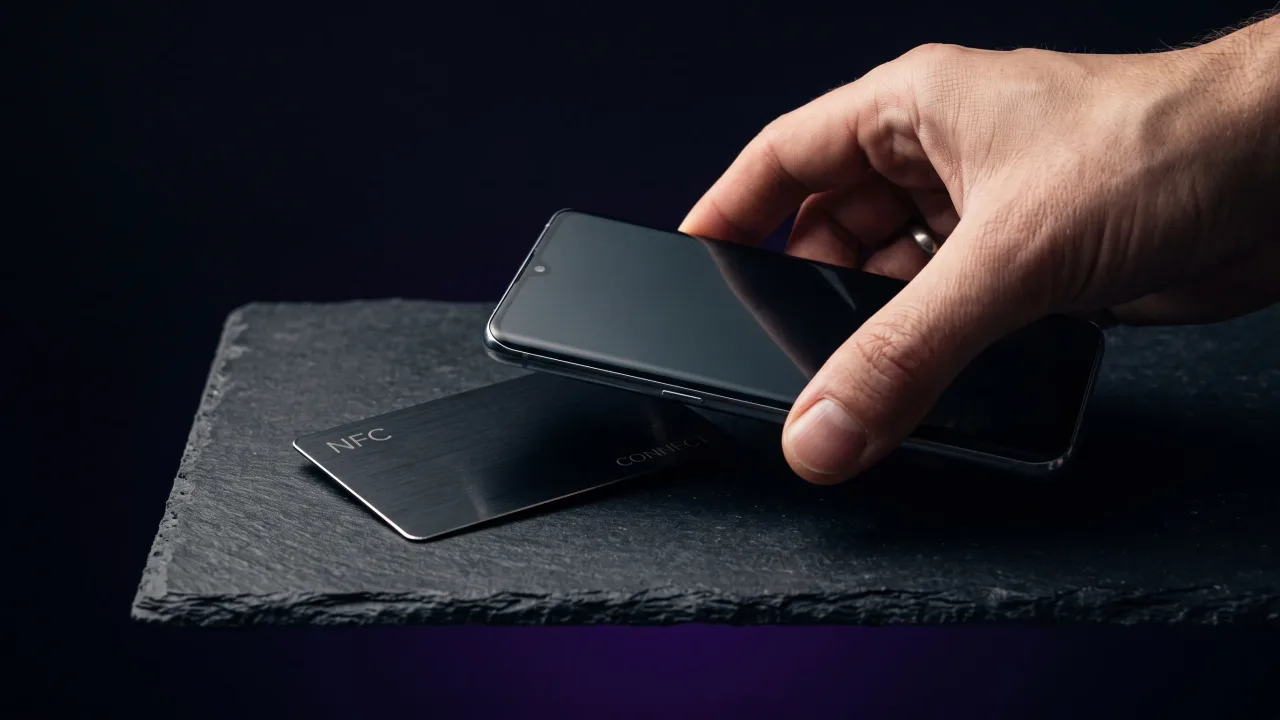
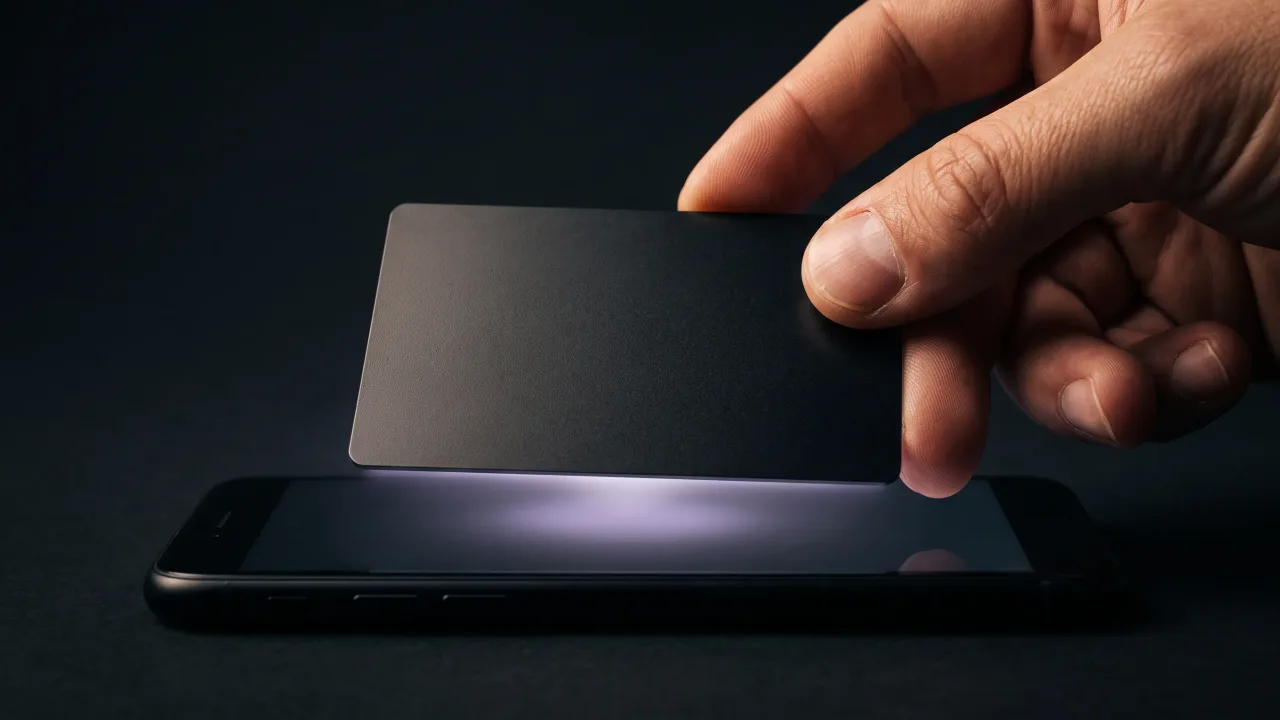
An NFC card holds a small chip and an antenna, and it has no battery. When a phone comes close, the phone's own field powers the chip, which hands over one thing: a web address. The phone opens that address in its browser. The NFC Forum puts the typical range at up to 2 cm, which is why it feels like a touch even though nothing has to touch.
So the name is accurate after all. The card and the phone can stay a hair apart, and in practice most people let them touch because it's easier. The longer version is in how NFC business cards work.
The comparison with a bank card stops at the gesture. A bank card and terminal run an encrypted exchange to move money. A contactless business card gives out a public link, the same link you would put in an email signature. It can't reach your bank details, because it doesn't hold any.
Contactless, NFC, tap, smart: which words mean the same thing?
Most of the vocabulary comes from marketing, so the overlap is large. Here is how the words usually map:
- NFC business card names the technology, and it's the most exact term.
- Tap card and tap business card mean the same product, named after the gesture.
- Smart business card usually means an NFC card too, though a few sellers use it for app-only products.
- Digital business card is the profile page, with or without a physical card.
- Virtual business card usually means app-only.
- Contactless business card can be any of the above, so ask.
If a product page says only "contactless", look for a photo of the object and the word NFC. If neither appears, you are probably buying an app.
Do people need an app or a special phone?
For an NFC card, no app is needed on either side. Reading the card is a built-in phone feature. iPhone XS and newer read a tapped card automatically, iPhone 7, 8 and X read it through the Control Center NFC reader, and almost every modern Android does it as long as NFC is switched on.
That leaves older phones and the odd person with NFC turned off, which is why a good card also carries a QR code. Our cards have one on the back. A camera reads it, and it opens the same profile. A contactless card without a printed fallback will fail in front of someone sooner or later, and that person is usually the one you wanted to impress.
Where QR and app versions make sense
An app-only card is free or cheap and you can't lose it, so it's a fair place to start if you meet few people and mostly online. Its weak moment is the handover. You unlock your phone, find the code, hold it out and wait while the other person opens their camera. And you leave nothing behind, so the person's only reminder of you is whatever they saved.
A printed card with a QR code does leave something behind, and it costs little. If the code points to a page you control, it stays useful after your details change. The trade-off is the paper itself, which bends and gets binned.
An NFC card costs more once and then asks nothing else of you, assuming the seller doesn't add a subscription. It's also the version people pick up and turn over in their hands, and that counts for more in a meeting than any spec sheet suggests.
What to check before you buy
Five questions sort out most contactless cards on the market:
- Is there a physical card, or only an app?
- Does the card need a monthly plan to keep working, and what happens to the link if you stop paying?
- Is there a QR code on the card for phones that can't tap?
- Can you change the profile yourself without reprinting anything?
- What is the card made of, and will it survive a wallet for years?
The second question is the one sellers answer least clearly. Some cards stop working when a subscription ends, because the link runs through the seller's account. We wrote up how to buy an NFC card without a subscription.
What a contactless card costs
Apps run from free to a monthly fee that never ends. NFC cards are usually paid for once, and the price depends mostly on the material.
Our wood cards start at €39.90 and metal cards at €44.90, with a QR code on the back and an editable digital profile included and no subscription.
"Contactless" is a loose word, and we wouldn't buy on it alone. If you want something to hand over, buy an NFC card with a QR code on the back and no monthly fee attached to the link. If you rarely meet people in person, a free app will do and you can skip the rest of this page. The word on the product page matters less than two facts: whether there is a card in the box, and who controls the link inside it.
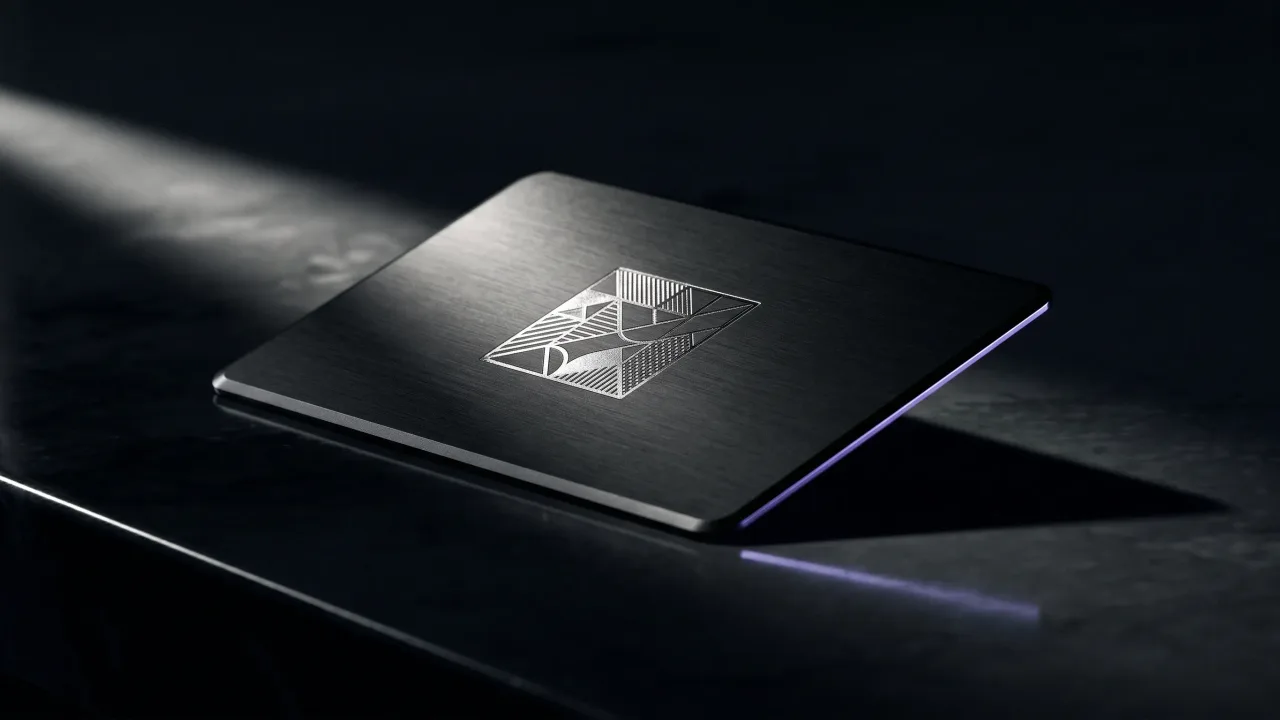
A metal or wood NFC card with a QR code on the back and a profile you can edit, paid for once.
Design your cardWhat is a contactless business card?
A contactless business card shares your contact details without anyone typing them in. Usually it is a physical card with an NFC chip, but the term also covers QR cards and app-only cards. Check which one a seller means before you buy.
Is a contactless business card the same as an NFC business card?
Often, but not always. Every NFC business card is contactless, while some products sold as contactless are only an app or a QR code. NFC is the more exact term.
How does a contactless business card work?
The other person holds their phone near the card, and the phone reads a web link from the chip and opens your profile in the browser. The chip needs no battery, because the phone powers it. On a QR version, the phone camera reads the code instead.
Do contactless business cards work on all phones?
They work on iPhone 7 and newer and on almost every modern Android with NFC switched on. Older phones can't tap, so a good card also has a QR code that any camera can read.
Are contactless business cards safe?
Yes. The chip holds a public link and nothing else, so there are no payment details or passwords on it to steal. You choose what appears on the profile it opens.
How much does a contactless business card cost?
App versions are free or charge a monthly fee, and printed QR cards cost what printing costs. NFC cards are usually a one-off purchase, and ours start at €39.90 for wood and €44.90 for metal.