Clients don't stay loyal to barbershops. They stay loyal to barbers. When a good barber moves two streets over, the regulars follow, as long as they can find out where.
So business cards for barbers have a narrower job than most. The card has to get the client back in your chair in four weeks, and it has to find you wherever you are cutting by then. Most printed barber cards manage neither, because they carry the shop's details and stop working the day you leave.
Why barbers still need a business card
Most barbers work for themselves. In the US, the Bureau of Labor Statistics counts about 80% of barbers as self-employed, a figure that takes in shop owners as well as barbers who rent a chair in someone else's shop. Your client list is your business, and nobody else is going to keep it full for you.
Instagram does part of the work, but it can't answer the question every barber hears at some point: a client's friend asks, "Who does your hair?" A card in the client's wallet answers it in two seconds. An Instagram handle he has to remember and spell usually doesn't.
What to put on a barber business card
Less than you think. The card has to tell people who you are and how to book, and everything else can live behind a link.
- Your name, larger than the shop name, because clients follow the barber
- The shop name and address, or your area if you cut at home or on call
- Your booking link, or the phone number you take bookings on
- Your Instagram handle, since that is where clients check your cuts
- One line on what you do best, if it sets you apart: skin fades, beard work, kids' cuts
Leave the price list off. Prices change every year or so, and a card with old prices on it starts an argument at the chair. Opening hours are borderline: if they never change, keep them, otherwise point people to the booking page, which is always current.
The booking link is the most valuable line on the card
A haircut wears off on a schedule. The BLS puts it plainly: clients who receive timely hair care are more likely to return. The client who books his next cut before the current one grows out comes back. The one who "will call next week" often ends up in whichever chair is free on a Saturday morning.
So make booking the easiest thing on the card. A QR code or an NFC chip that opens your booking page beats a phone number, because it works at 11 at night when the client notices his neckline and you are not answering calls. Some barbers still hand out appointment cards with the next date written in pen. That works too, but it means two cards where one could do both jobs.
Barber business card ideas that suit the trade
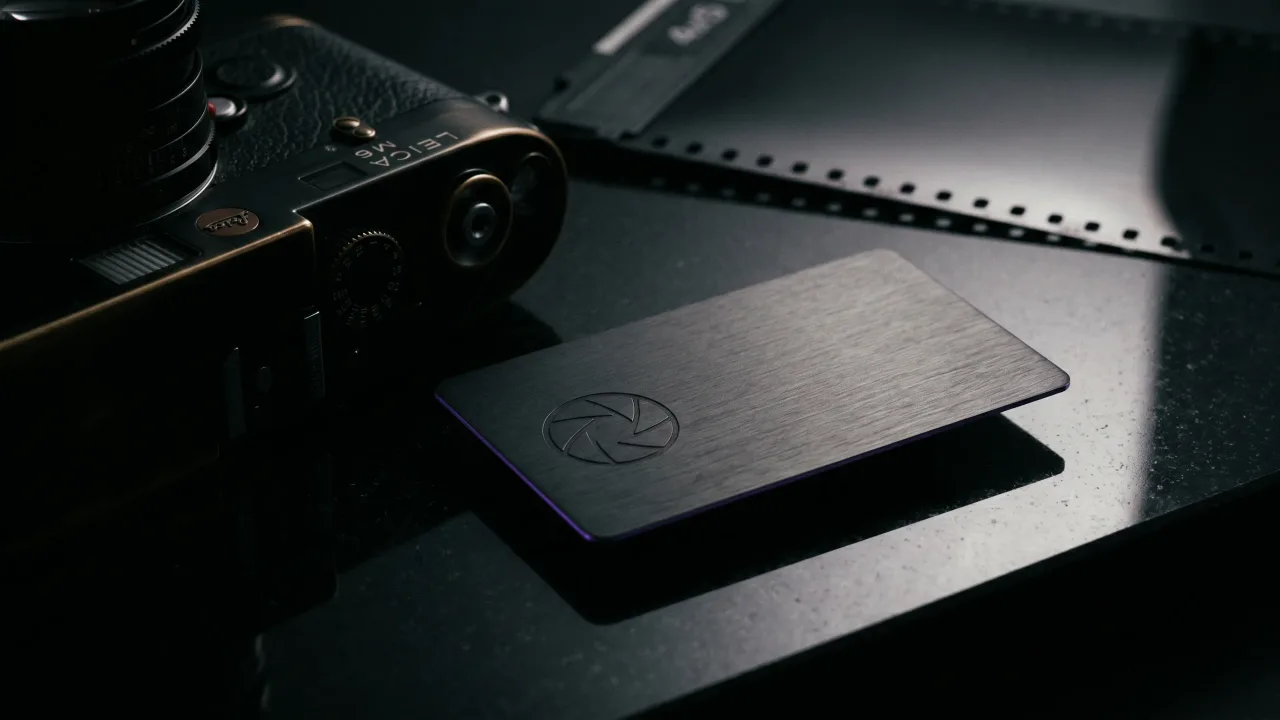
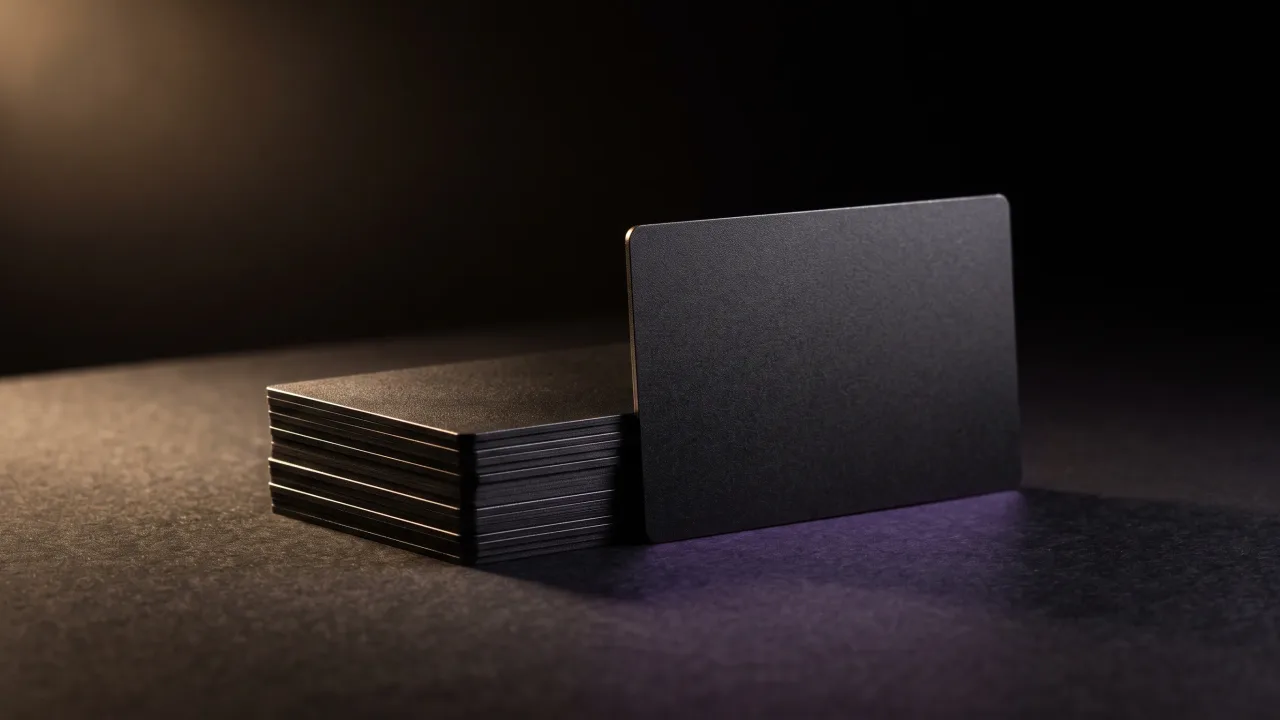
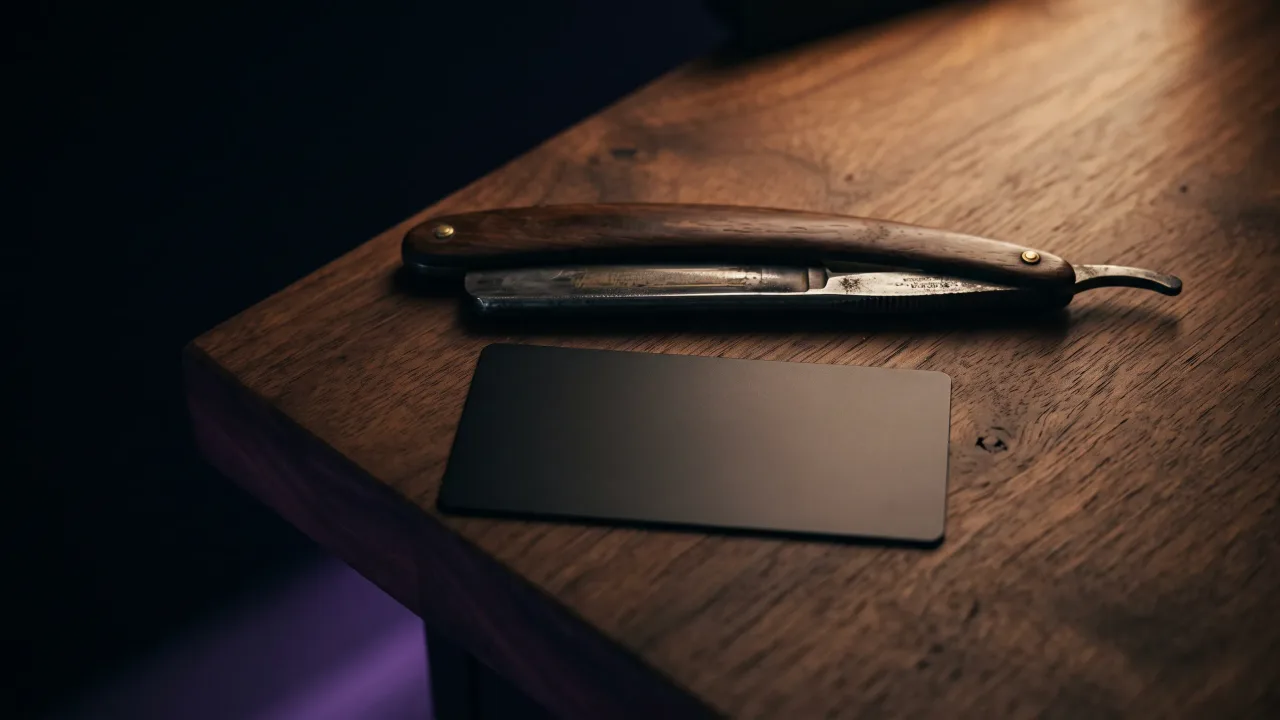
Barbering already has a look: black, chrome, a bit of leather, a lot of straight lines. The card should match the shop, not a template from a print website. Matte black with your logo in one colour is the usual choice, and it earns its place: it reads well under shop lights and doesn't fight the branding on the window.
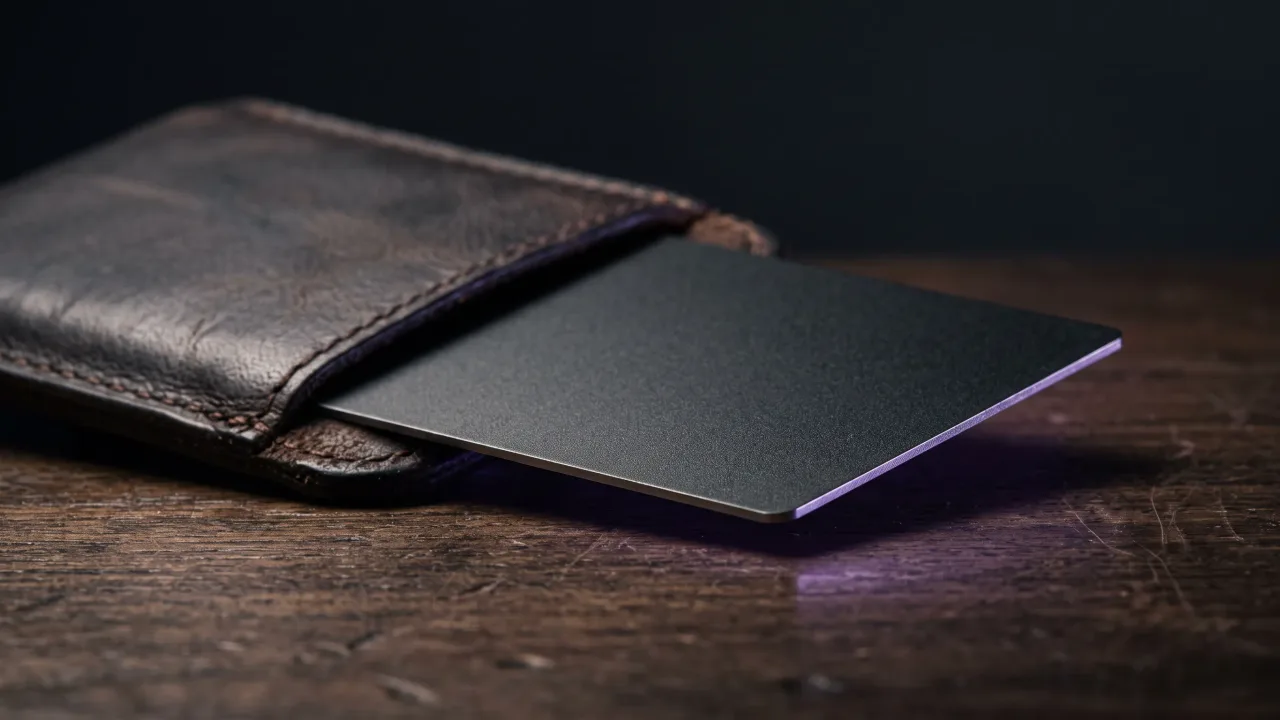
Think about where the card lives too. A barbershop is wet, full of hair, pomade and talc, and paper cards left on the counter soon curl and stain. An engraved metal card wipes clean and still looks the same a year later in the client's wallet. Keep the type large and the layout simple. A fine script font that nobody can read at arm's length looks good on the printer's proof and nowhere else.
Paper, QR code or NFC for a barbershop
Paper is cheap, and that is its whole case. The weakness is that every detail on it is fixed. Move shops, change your booking app or your number, and the box of 500 cards in the drawer is wrong.
A QR code or an NFC card fixes that by pointing to a page instead of printing the details. With NFC, the client touches his phone to the card and the page opens, no app needed. Near-field communication works over a few centimetres, so it only fires when someone means it to. Our comparison of NFC and QR code business cards goes into the details, and the short answer for barbers is to have both: tap for the client in the chair, QR code for the friend he shows the card to.
On a Discard card the chip opens your digital profile: your name, phone, Instagram, a button that saves your contact, and custom link buttons where your booking page goes first. Change shops and you edit the address on the profile. The card stays the same.
How to hand out cards from the chair
The best moment is the end of the cut, when the client is looking in the mirror and happy with what he sees. Hand him the card with the booking link pointed out: "Book the next one from here, the button at the top." If he books on the spot, even better.
Give every new client a card, and give regulars a second one for whoever asks about their haircut. Referrals come from people who already sit in your chair, so make it easy for them to pass you on. Our guide on how to hand out business cards covers the wording in more detail.
What it costs and how many cards you need
Paper cards for barbers cost very little per box, and you will reorder them every time a detail changes. A metal NFC card is a one-time buy: our metal cards start at €44.90 and the wood cards at €39.90, with the first year of the profile included and €19.90 a year after that.
You don't hand a metal card to every client. You keep one or two, the client taps, and your contact and booking page land on his phone. For the regulars who want something to pass on, a short run of paper cards with a QR code to the same profile does the job. We worked through the numbers in how many business cards to order. In a shop with several barbers, give each barber their own card. Clients follow people, and each barber's card should send them to that barber's book.
A barber's card should be built around one action: booking the next cut. Put your name above the shop's, put the booking link where it can't be missed, and leave the prices to the booking page. Paper is fine if you never move and never change your number. If there's a chance you will change shops, rent a chair or go independent, put your details on a profile you control and point the card at it, so the clients you built up come with you.
A metal or wood NFC card that opens your booking page and follows you from shop to shop.
Design your cardDo barbers still need business cards?
Yes, mainly for referrals. When a client's friend asks who cuts his hair, a card answers faster than an Instagram handle he has to remember. A card that opens your booking page also brings existing clients back on time.
What should a barber put on a business card?
Your name, the shop name and address, a booking link or booking phone number and your Instagram handle. Add one line about your specialty if it sets you apart. Leave the price list off, since it goes out of date.
Should I put prices on my barber business card?
No. Prices change, and an old price on a card leads to an awkward talk at the chair. Put prices on your booking page, where you can update them in a minute.
What happens to my card if I move to another barbershop?
A printed card with the old shop's address is wrong from that day. An NFC card that opens a digital profile keeps working: you change the address on the profile, and every card already in clients' wallets points to the new shop.
Can clients book an appointment from an NFC business card?
Yes, if the profile carries your booking link. The client taps the card, the profile opens, and the booking button takes him to your calendar. Most phones from the last several years read NFC without an app.
Do metal business cards hold up in a barbershop?
Yes. Water, pomade and hair wipe off a metal card, and engraving doesn't fade or peel like ink. Paper cards on a wet counter curl and stain quickly.