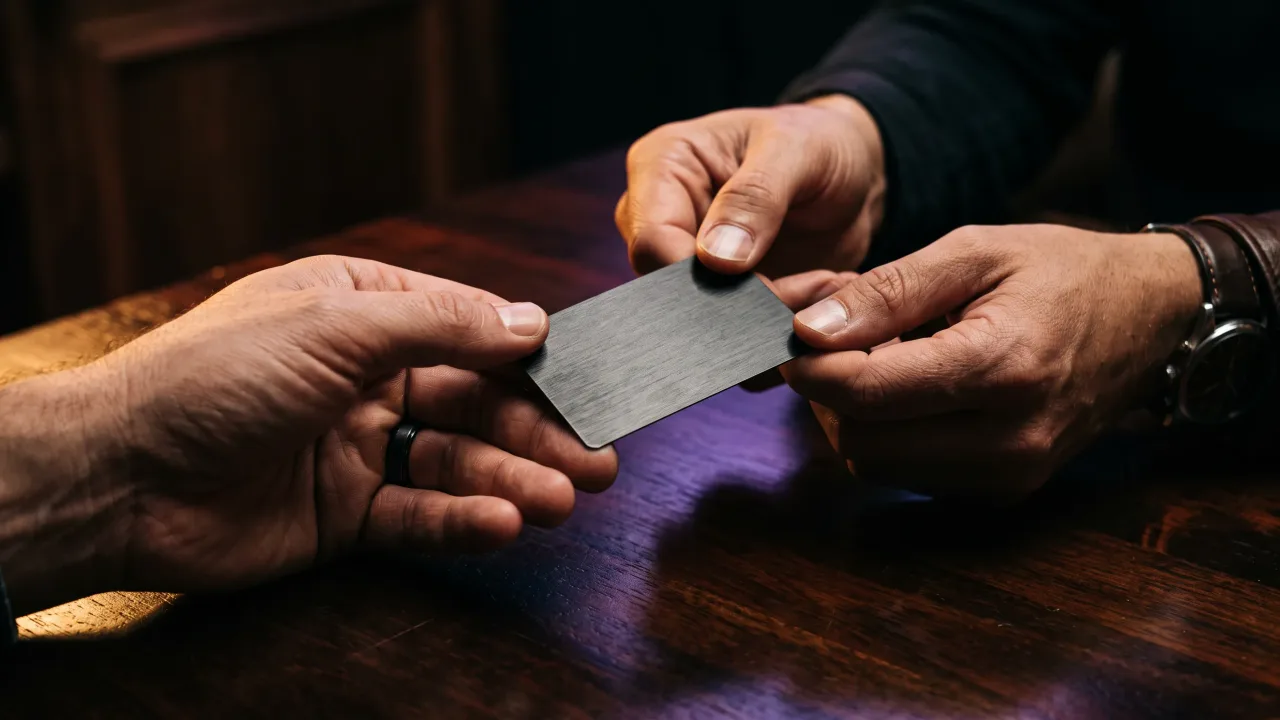
In Seoul, sliding someone's business card into your back pocket tells them you are about to sit on their face. That is how the gesture can read there, and it is the kind of rule nobody mentions until you have broken it.
Business card etiquette is close to invisible at home. In Sofia, London or Chicago you hand the card over, the other person glances at it, and the meeting moves on. A few time zones east the same rectangle stands in for the person who gave it to you, and there are rules about hands, tables, pockets and who goes first.
Business card etiquette around the world comes down to one idea: treat the card the way you would treat its owner. Countries differ mainly in how far they take it, and Japan takes it furthest.
The rules that hold almost everywhere
Four habits travel well. Keep your cards clean and flat, in a case and not loose in a pocket. Hand the card so the text faces the other person and reads the right way up for them. When you receive one, look at it for a few seconds before you put it anywhere. And do not write on someone's card while they are watching.
Everything else is a matter of degree. Reading the card you are handed is a pleasant extra in Europe and the bare minimum in East Asia. We wrote about why an object gets judged before its owner does in our piece on the psychology of a premium first impression. International business card etiquette is that effect with a rulebook attached.
Business card etiquette in Japan
Japan is where the card is taken most seriously. The Japanese word is meishi, and the US Commerce Department's guide for business travellers to Japan says cards are exchanged "to formalize the introduction process and establish the status of the parties relative to each other". The same page notes they are still in wide use despite rapid digitalisation, and tells visitors to bring a large supply.
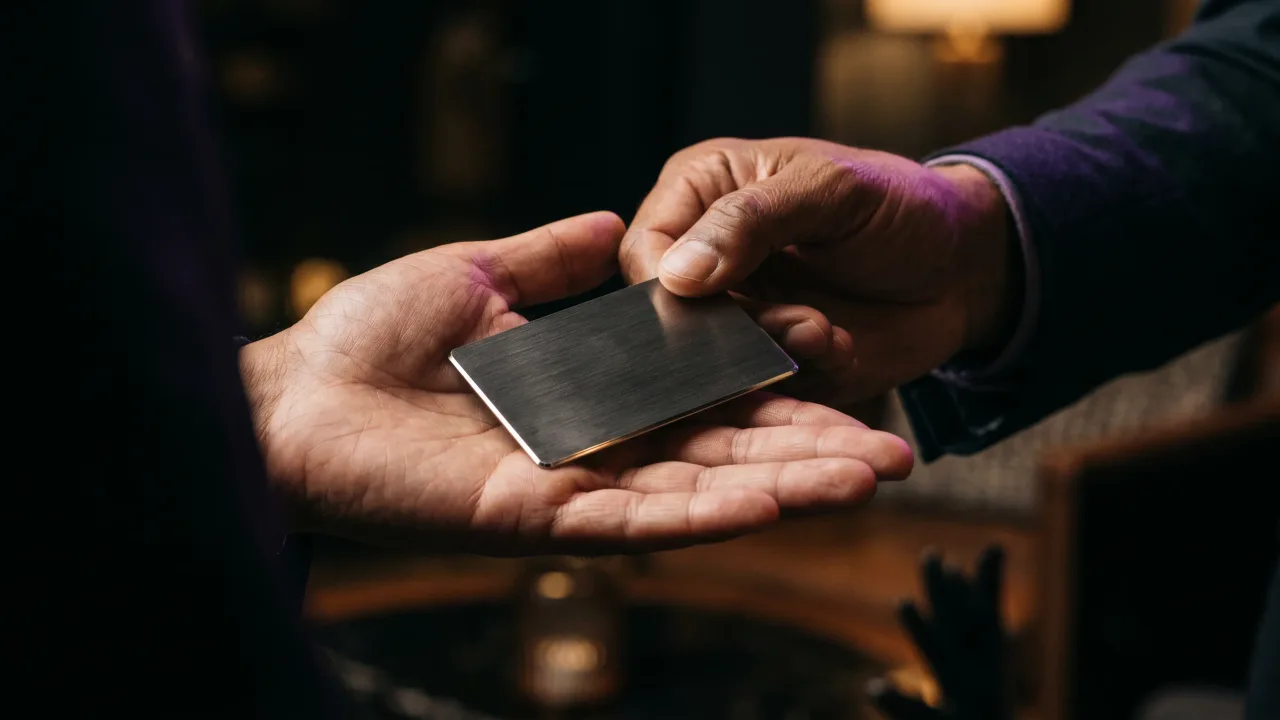
The protocol is short and strict. Present your card with both hands and a slight bow, with the text facing the recipient and your fingers clear of the name. Receive theirs with both hands, thank them and read it properly. In a group the exchange follows rank, most senior first. In a meeting, lay the cards you have been given on the table in front of you, in the order people are sitting, and leave them there until you get up.
Do not fold a card, write on it or put it in a trouser pocket. A card with Japanese on the reverse is a courtesy people notice. Bring more than you think you need, too. Running out halfway round a table of eight is a small disaster of its own.
Business card etiquette in China
The gestures in China look similar and carry a plainer meaning: respect, minus the choreography. The same department's guide to business travel in China is blunt about it. Hold the card in both hands when you offer it, because offering it with one hand "is considered ill mannered". When you receive one, take it with two hands and study it before you carry on.
Print the card on both sides, simplified Chinese on one and English on the other, and hand it over Chinese side up. Have a native speaker translate your title and company name. A literal translation can end up meaning something you never intended, and your title is how your hosts work out where you sit in your company.
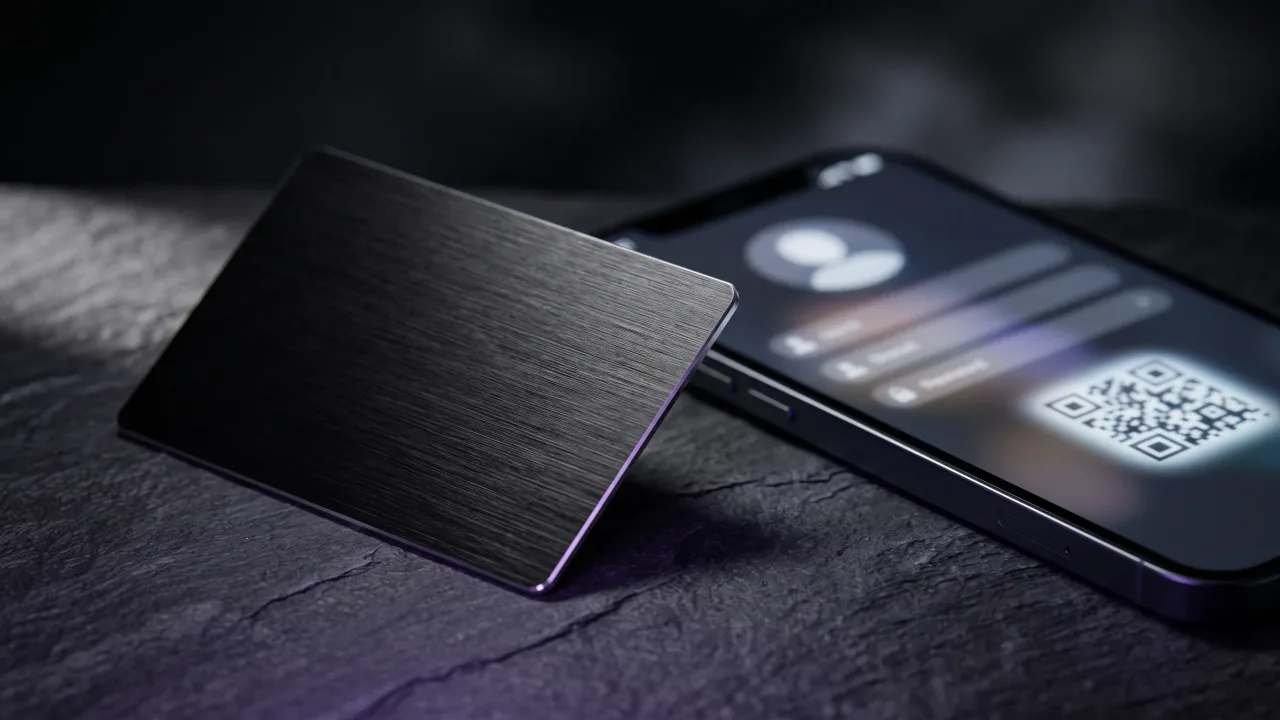
Then there is WeChat. The same guide says swapping contact details over WeChat is increasingly common, particularly among younger professionals, and that some businesspeople and officials no longer carry cards at all. So bring cards, and do not be thrown when your counterpart holds out a phone with a QR code on it. Scanning is the default gesture there, which is one argument for having a code on your own card. We compared the two technologies in NFC vs QR code business cards.
Business card etiquette in South Korea
Korea follows the same logic as Japan with a little less ceremony. Offer and receive with both hands, or with the right hand alone, and make sure the writing faces the other person. Look at the card, then put it on the table in front of you until everyone is seated.
The Cultural Atlas guide to South Korean business culture gives the back-pocket rule its reason: a card kept there "could be taken as you sitting on the individual's face". It also warns against dealing your cards out around the table as if you were playing a game. Give each person a card separately, and give each exchange its own few seconds.
Rank shapes the whole exchange. Address people by their title and family name, and expect your own card to be read for the same information. A card with Korean on one side saves your hosts the guessing.
India and the Gulf: mind which hand
In India the ceremony is lighter and the rule that matters is the hand. Give and receive cards with the right hand, or with both. The left hand is traditionally kept for unclean tasks, and using it to pass a card is the mistake visitors make without noticing.
Qualifications carry weight in India. If you have a university degree or a professional title, put it on the card. You do not need a Hindi side, because English is the working language of business there.
The right-hand rule holds across the Gulf as well. In Saudi Arabia cards matter less than they do in East Asia. You may exchange them, and no meeting depends on it, but when you do, pass and receive with your right hand.
Europe and North America: less ceremony, same idea
In the UK the etiquette is relaxed to the point of being hard to spot. One hand is normal, nobody minds a card going into a pocket, and nobody will lay yours on the table. The US is much the same, with one difference: writing a note on someone's card is not rude there. It counts as ordinary note-taking.
Germany is a step more formal. Cards change hands during introductions and titles are respected, so if you hold a doctorate the card should say so.
Bulgaria is one of the informal countries. We hand cards over one-handed, as often at the end of a meeting as at the start, and nobody bows. The four universal habits still do the work here. And if you wonder whether any of this matters now that everyone is on LinkedIn, we made the case in are business cards still relevant.
NFC business card etiquette: where a tap fits
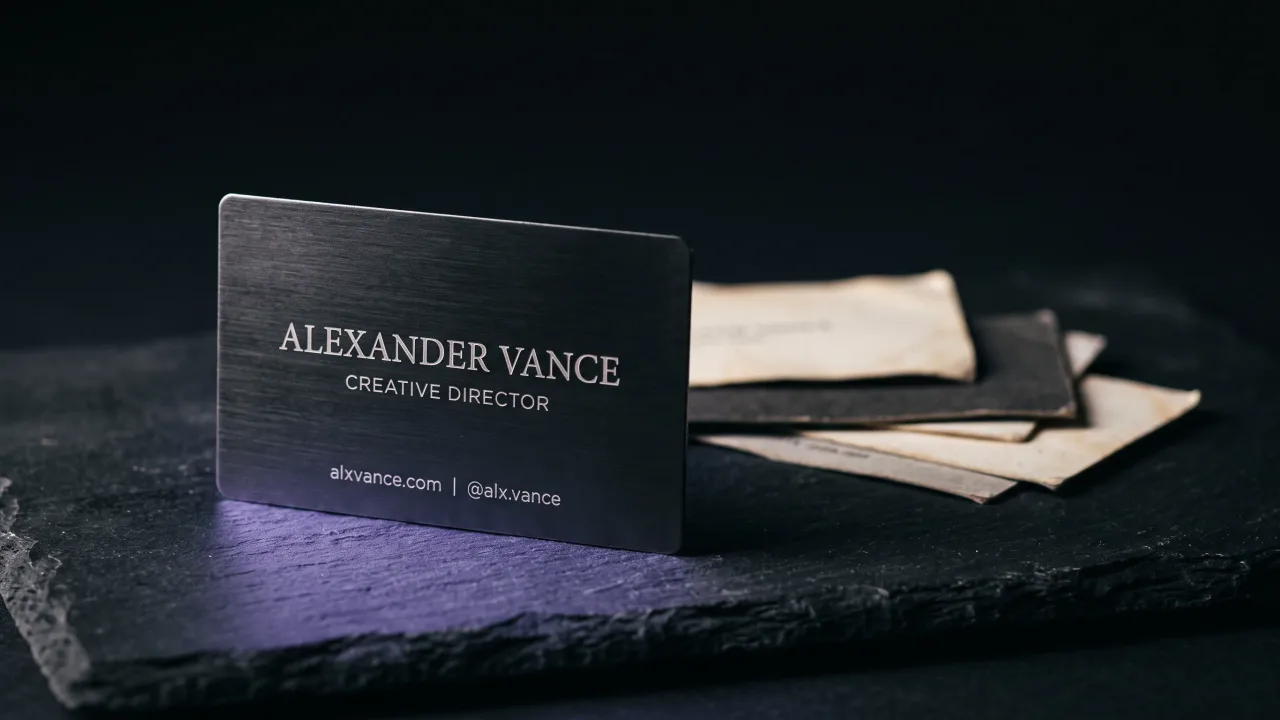
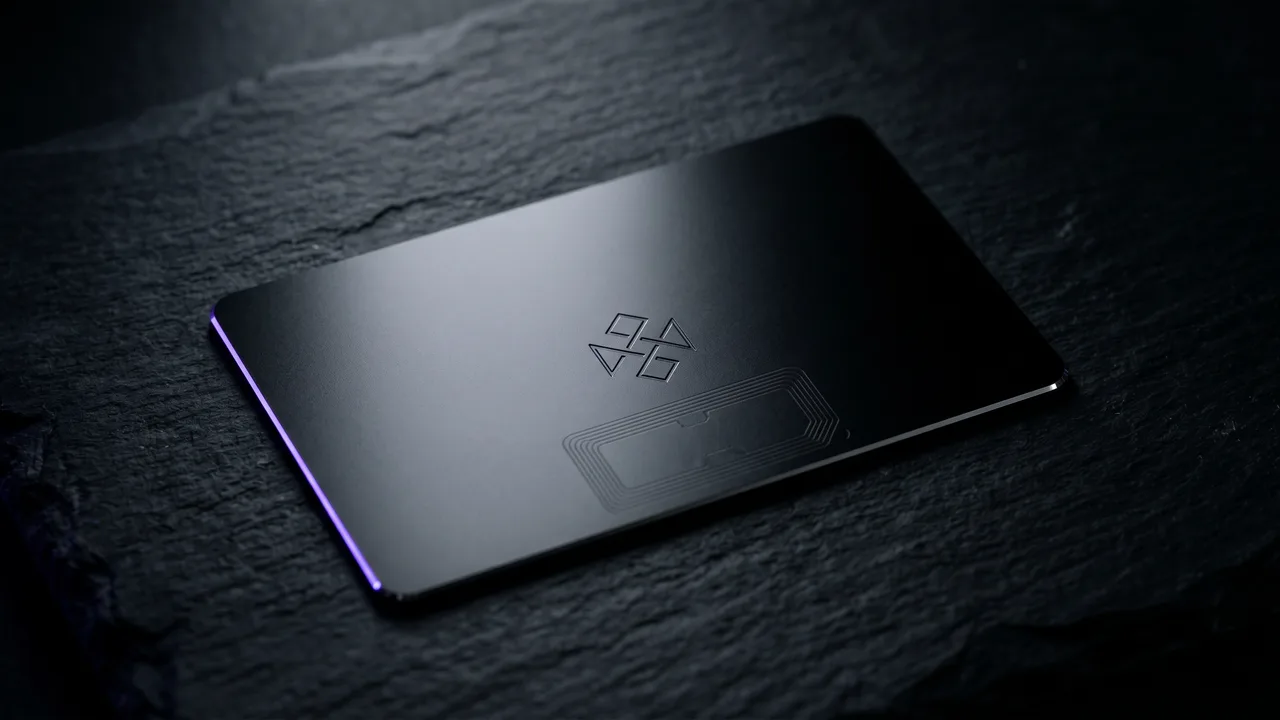
A metal NFC card changes one step of the exchange. The other person holds their phone to it, your digital profile opens in their browser, they save your contact, and the card comes back to you. In Europe and the US that slots into the existing manners. You still wait for the right moment, hand it over text up, and say what it does before they tap.
Be more careful in Japan and Korea, and we say this as the people who sell these cards. The ritual there assumes the other person keeps your card, lays it on the table and files it afterwards. If you take yours back, there is a gap on the table where it should be. For a formal first meeting in Tokyo or Seoul, carry paper meishi for the table and keep the metal card for the conversations around it, like the dinner and the trade fair.
The manners transfer directly. Present the metal card with both hands, let the person read the engraving, then invite the tap instead of pushing the card at their phone. Keep it in a case, same as paper. Because the profile is a web page, you can change your title or contact details before the trip, and nothing has to be reprinted. The configurator shows both sides of the card and the profile before you order.
Learn the local version before you fly. It takes ten minutes, and a mistake is remembered for much longer than that: two hands in Japan, China and Korea, the right hand in India and the Gulf, and no back pockets anywhere in Asia. At home the stakes are lower, but the habit underneath is the same one, which is to treat the card as you would treat the person. On NFC cards abroad our view is deliberately mixed. They suit Europe, the US and most informal settings in Asia, and they should not be the only card you bring to a formal table in Tokyo. Take both.
A metal NFC card that opens a digital profile you can edit before every trip, with nothing to reprint.
Design your cardWhat is proper business card etiquette?
Keep your cards clean and in a case, hand them over with the text facing the other person, look at any card you receive before putting it away, and do not write on it in front of the giver. In East Asia use both hands. In India and the Gulf use the right hand.
Why do Japanese people exchange business cards with both hands?
Because the card (meishi) stands in for the person, and two hands with a slight bow show respect to them. The exchange also establishes each side's rank, which sets how formal the rest of the conversation will be.
Is it rude to write on a business card?
In Japan, China, Korea and India it is, unless the owner tells you to. In the US it is normal. Anywhere else, wait until the person has walked away.
Which hand do you use to give a business card?
The right hand in India and across the Gulf. Both hands in Japan, China and Korea, although the right hand alone is acceptable in China and Korea. In Europe and North America there is no rule, and the right hand is the usual one.
Should I translate my business card for an international trip?
For Japan, China and Korea, yes: put the local language on one side and present the card with that side up. For China use simplified characters and have a native speaker translate your title. For India there is no need, because business runs in English.
Are business cards still used in China, or is everything on WeChat?
Both. Cards are still part of a formal introduction, but the US Commerce Department notes that exchanging contacts over WeChat is increasingly common and that some people no longer carry cards. Bring cards and be ready to scan a QR code.
Can I use an NFC business card in Japan?
Yes, in informal settings. For a formal meeting bring paper cards as well, because your host expects to keep your card and place it on the table. Present the NFC card with both hands, the same way you would a paper one.